Mid-ocean

Definition and stakes

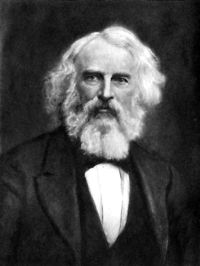
Clyde Furst,  The Observations of Professor Maturin

“ The open sea is, of course, familiar to us all, [58] and yet its apparent boundlessness and immeasurable depth are ever new as the most immense thing in our knowledge—the sky belonging rather to the realm of the intangible. Mid-ocean always makes me feel the infinite continuity of time, the omnipresence of natural law, and a stimulus to greater harmony with its workings. Nowhere else are my ‘cosmic emotions’ so stirred. One gets something of the same impression on land wherever one can mark the ceaseless rising, pausing, and falling of the tide, under the mysterious governance of the moon. ”
Source: Gutenberg

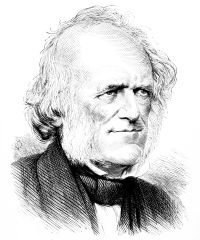
Portrait of Archibald Geikie Archibald Geikie,  The Story of a Boulder; or, Gleanings from the Note-book of a Field Geologist

“ And thus, in what may seem to us sublime antagonism, land is ever rising in the domain of ocean, and ocean ever encroaching on the regions of land. No sooner does a new island, or mountain peak, or wide area of continent, appear above the waves, than the abrading agencies are at work again. Rain, air, frost, rivers, currents, breakers, all begin anew the process of destruction, and cease not until the land has utterly disappeared, and its worn debris has sunk in mid-ocean to be in process of time once more dry land, and suffer another slow process of obliteration. ”
Source: Gutenberg

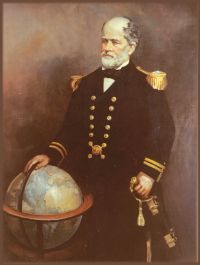
Portrait of Matthew Fontaine Maury Matthew Fontaine Maury,  Physical Geography of the Sea and its Meteorology (1864)

“ We thus see actually existing in nature a force perhaps quite sufficient to give rise to just such a system of currents as that which mariners find in the Pacific (§ 401) —currents which appear to rise in mid ocean, run at unequal rates, sometimes east, sometimes west, but which always lose themselves where they rise, viz., in mid ocean. ”
Source: Wikisource

Get perspective with Kwize: daily news enlightened by great literature