Moral accountability

Definition and stakes

Portrait of F. H. Bradley F. H. Bradley,  Ethical Studies — Essay I. (1876)

“ But we must not allow our client, or ourselves, too great a liberty in what may be considered the assertion of a theory; for we have not to assert, but to understand and criticize. We must see for ourselves, in what the consistent determinist can not endorse the plain man’s notion of moral accountability.
We saw above that responsibility and liability to punishment might be taken as convertible, and that, hence, the theory, which would justify punishment, would account for responsibility
”
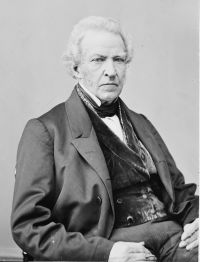
Source: Wikisource

Ethan Allen,  Reason, the Only Oracle of Man…

“ Admitting that moral good and evil has taken place in the system of rational agents, yet, on the position of imputation, it would be impossible, that a retribution of justice should be made to them by God or by man, except it be according to their respective personal merits and demerits; which would fix upon the basis of our own moral agency and accountability, and preclude the imputation of righteousnes.
Truth respects the reality of things, as they are in their various complicated and distinct natures, and necessarily conforms to all facts and realities.
”
Source: Gutenberg

Cora May Williams,  A Review of the Systems of Ethics Founded on the Theory of Evolution

“ The theory assumes that one is before he is. An act of choice presupposes a chooser, and, according to his own words, "Every existentia [Pg 219] presupposes an essentia"; that is, every existence must have a particular being, essence.
Accountability assumes that some one is held answerable for an action or event, and is, as answerable, amenable to punishment. The punishment may be one of law, of society, or a moral punishment. The concept of responsibility is closely allied to that of accountability; it assumes, in general, that a person is the author of a deed.
”
Source: Gutenberg

Get perspective with Kwize: daily news enlightened by great literature