Mortgage (law)

Definition and stakes

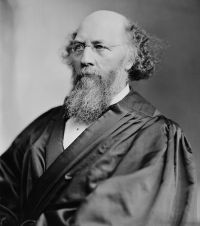
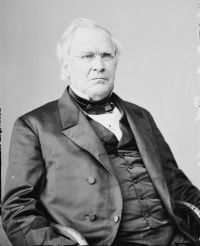
Portrait of Robert Cooper Grier Robert Cooper Grier,  Sheldon v. Sill — Opinion of the Court

“ A mortgage is a conveyance of the fee simple of real estate, liable to be defeated subsequently by payment of money, to secure the payment of which it was made. It is in no sense a chose in action, which is a thing in action, a right of action, a thing recoverable in action, a debt, a demand, a promissory note, a right to recover damages. A chose in action was originally a right of action not assignable at law. It was a cause of suit for a debt due or a wrong. The bond with the mortgage may be a chose in action; but the estate conveyed by the mortgage is not. It is a realty. ”
Source: Wikisource

Richard D. Currier,  Commercial Law

“ MODERN AMERICAN MORTGAGES.—At the present day in many jurisdictions a mortgage still remains, both in the form of the instrument and in the legal conception of the rights of the parties fundamentally, the same as under the early doctrines just outlined. In other jurisdictions, of which New York may be taken as a typical State, the theory is no longer that the mortgagee has title to the property, but that he has only a lien on it, which he may enforce if the debt is not paid. ”
Source: Gutenberg

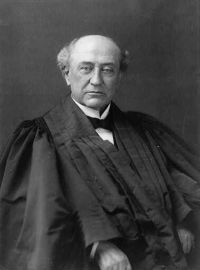
Edward Douglass White,  Royal Insurance Company v. Miller…

“ As, then, the mortgage, by operation of law, embraced the crop, and as also, by operation of law, the mortgage creditor was entitled to the benefits of the indemnity resulting from the insurance, it follows that the right of the mortgage creditor did not depend upon an assignment of the policy, and the contentions upon that subject are without merit.
The doctrine common to countries governed by the civil law is that a mortgage is indivisible.
”
Source: Wikisource

Get perspective with Kwize: daily news enlightened by great literature