“ Tracings of a bow among the sculpture of the ancients have been sought for in vain: no piece is known upon which a bow is distinguishable. A century since, an important discovery was thought to have been made by musical antiquarians in the Grand Duke's Tribuna at Florence, wherein was a small figure of Apollo playing on a kind of Violin with something of the nature of a bow. ”
Musical bow
Definition and stakes
The theme of “musical bow” has been addressed by authors such as Henry Saint-George, Arthur Broadley, Edith Lynwood Winn, Carl Schroeder and Frederick Herman Martens. It is often associated with terms like violin, instrument, tone, string and fiddle.
Quotes about “musical bow”
Carl Engel, Musical Instruments [1908]
“ The non-occurrence of any instrument played with a bow on the monuments of the nations of antiquity is by no means so sure a proof as has generally been supposed, that the bow was unknown. The fiddle in its primitive condition must have been a poor contrivance. It probably was despised by players who could produce better tones with greater facility by twanging the strings with their fingers, or with a plectrum. Thus it may have remained through many centuries without experiencing any material improvement. ”
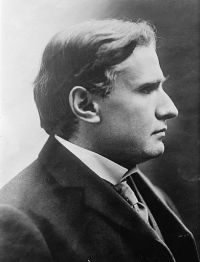 Walter Damrosch,
My Musical Life
“ We lay great stress on unanimity of bowing, for proper phrasing can only be secured if the sixteen first violins, for instance, who have to play a phrase in unison, play as one. To the educated ear there is a great difference in the effect if one or two or more notes are played on the same bow or if a phrase is begun with an up or a down bow. Generally speaking, this unanimity in our playing impressed and delighted our London audiences and critics, but one of the latter was evidently annoyed by it as he began his analysis of our concert with the head-line: “Orchestra Too Perfect to be Good.” ”
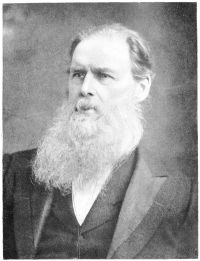 Edward B. Tylor,
Anthropology
(1881)
“ It is told in the Odyssey (xxi. 410) how the avenging hero, when he has strung his mighty bow compact of wood and horn, gives the stretched string a twang that makes it sing like a swallow in a soft tone beautifully. One might well guess that the strung bow of the warrior would naturally become a musical instrument, but what is more, it really is so used. The Damara in South Africa finds pleasure in the faint tones heard by striking the tight bowstring with a little stick. The Zulu despises the bow as a cowardly weapon, but he still uses it for music; his music-bow, shown in Fig. ”
Alfred J. Hipkins, Musical Instruments, Historic, Rare and Unique
“ With stretched-out fourth finger the player strains the slack hair of the bow, then takes up the instrument, vertically resting it upon the knees, between which the metal string-holder is grasped. Bringing the hair of the bow to the edge of the resonance body, the bow is simply moved horizontally backwards and forwards, the middle part of the bowstring only being employed. The strings are brought into contact with the bow by a rotary movement of the instrument. Sometimes only one E flat string is used, sometimes both. Double notes are very rarely used. ”
Carl Engel, Musical Instruments [1876]
“ Indeed, we have now scarcely a musical instrument which can be called beautiful. The old lutes, spinets, viols, dulcimers, &c., are not only elegant in shape but are also often tastefully ornamented with carvings, designs in marquetry, and painting.The player on the viola da gamba, shown in the next engraving, is a reduced copy of an illustration in “The Division Violist,” London, 1659. It shows exactly how the frets were regulated, and how the bow was held. The most popular instruments played with a bow, at that time, were the treble-viol, the tenor-viol, and the bass-viol. ”
Nikolay Rimsky-Korsakov, Principles of Orchestration, with Musical Examples Drawn from His Own Works
“ The position of the bow on the string will affect the resonance of an instrument. Playing with the bow close to the bridge (sul ponticello) , chiefly used tremolando, produces a metallic sound; playing on the finger-board (sul tasto, flautando) creates a dull, veiled effect.Note. Another absolutely different sound results from playing with the back or wood of the bow (col legno) . This produces a sound like a xylophone or a hollow pizzicato. It is discussed under the heading of instruments of little sustaining power. Table A. String group. (These instruments give all chromatic intervals.) ”
“ The head man of the village, or any other person, male or female, may officiate. The dress is grotesque, consisting of a sort of coat of various colours, a cap, and other vestments, arranged so as to strike the spectators with their comic appearance. In this service several musical instruments [Pg 653] are used, but the most notable among them is one called a bow. It consists of a bow strung and ornamented with bells. ”
Henry Saint-George, The Bow, Its History, Manufacture and Use
“ For wind instruments we have a prototype in the human voice, and one may reasonably suppose that the trumpet class were evolved by slow process from the simple action of placing the hands on either side of the mouth to augment a shout. The harp may have been suggested by the twanging of a bow-string as an arrow left the archer's hand, and a seventeenth century play writer fancifully attributed the invention of string instruments to the finding of a "dead horse head." ”
Esther Singleton, The orchestra and its instruments (1917)
“ The stick of a violin bow is made of Brazilian snake wood, or lance wood, reddish and slightly mottled. It is cut straight, following the grain of the wood and then it is slightly bent by the application of heat. The hair, fastened into the tip by a plug, is inserted into the nut of the bow (made of ebony, or tortoise shell) ; it can be made tighter, or looser, by turning the screw in the nut. There are from 175 to 200 hairs in a bow and these are taken from tails of stallions. White hair is used for the violin, viola and violoncello and black for the double-bass. ”
Henry Saint-George, The Bow, Its History, Manufacture and Use
“ Many people imagine that the plates of silver or gold with which the nut of a bow is inlaid are nothing more than mere ornamentation. But their first purpose is distinctly one of utility, which is as it should be in a work of art; superfluous decoration has no beauty for an artist. It is by means of these metal "loadings" at the heel that the weight of the head is counteracted and the exact point of equilibrium determined. The centre of gravity in a violin bow should be at 19 centimètres (7.48 inches) from the nut; in a 'cello bow at 175 to 180 millimètres (6.89 to 7.087 inches) from the nut. ”
Henry Saint-George, The Bow, Its History, Manufacture and Use
“ Too much attention cannot be paid to the study of sustained bowing which can be practised in a variety of ways. Firstly, long drawn semibreves—at one of the Continental Conservatoires they make the violin students play scales of two octaves, taking one bow to each note, the same to last two minutes, thus the whole scale, ascending and descending, occupies one hour! ”
Henry Saint-George, The Bow, Its History, Manufacture and Use
“ The method of performance readily suggests itself in this case as it will be seen that it would be quite possible and convenient for the player to pass his rod—probably a rough surfaced reed—between the strings. I do not think it could have been used for percussion as, in that case, it would surely have had some hammer like projection at its end; a salient feature hardly to be missed by the artist as were the less obtrusive details of the true bow in later ages. ”
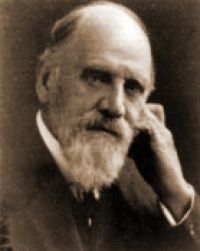 Sir Francis Darwin,
Springtime and Other Essays
“ Mr Galpin (p. 75) gives a figure of a man playing a Crowd with a bow, instead of plucking the strings with the fingers as shown in sculptured Irish Crosses. What makes the figure so especially interesting, is that there is clearly no means of stopping the strings, i.e., of altering the length of the vibrating region, and therefore altering the pitch. No one, I fancy, would have guessed that the bow was of more ancient lineage than the fiddle. The finger-board, which transforms the instrument into an undeniable relative of the violin, is known to have existed in the thirteenth century. ”
Henry Saint-George, The Bow, Its History, Manufacture and Use
“ There was in general amongst violinists an anticipation of the grand, yet simple law set forth by De Beriot in his Violin School that the human voice was the pure archetype upon which all played music should be modelled.It was found that the violin was capable of simulating all the subtle inflexions of song, whether of passion or tenderness, and players sighed for an ideal bow that should be tongue-like in its response to the performer's emotion. A bow that should at once be flexible to "whisper soft nothings in my lady's ear"; strong—to sound a clarion-blast of defiance ”
George T. Ferris, Great Violinists and Pianists
“ While the left hand of the violin-player fixes the tone, and thereby does that which for the pianist is already done by the mechanism of the instrument, and while the correctness of his intonation depends on the proficiency of the left hand, it is the action of the right hand, the bowing, which, analogous to the pianist's touch, makes the sound spring into life. It is through the medium of the bow that the player embodies his ideas and feelings. ”
Henry Saint-George, The Bow, Its History, Manufacture and Use
“ Truly these grand old craftsmen were not afraid of work. The screw-nut is as perfect as one could wish, saving, only, in the meagre allowance of hair provided for.These early bows with screw-nuts quite dispel the generally accepted theory that this mechanical contrivance for regulating the tension and preserving the elasticity of the stick was the invention of the elder Tourte. The majority of writers on the history of the violin, and, incidentally, the bow, are content to take their data from that much quoted historian and scientist, Fétis. ”
Karl Wilson Gehrkens, Essentials in Conducting
“ The signs commonly employed in music for violin, viola, violoncello, and double-bass, to indicate various manners of bowing, are as follows:The ordinary staccato mark ( or ) means a long quick stroke, either up or down as the case may be. The absence of slurs indicates a separate stroke of the bow for each tone. Sometimes the player is directed to use the lower half, the upper half, or the middle of the bow, such directions being given by printing the words "lower half," et cetera, above the passage, or by giving the initials of these words (sometimes in German) . ”
Henry Saint-George, The Bow, Its History, Manufacture and Use
“ It must be understood, however, that a good maker never uses a stick that is palpably unequal. He will only take this trouble to correct infinitesimal weaknesses (discernible only to a hand of great experience) in wood of exceptionally good grain. It is astonishing how many violinists seem to think good bows are made by accident. Few know that there are some men who can make a fine bow.The prime factor in the "setting" of a bow is heat, by the judicious application of which the straight rod is made to assume and retain the desired cambre. ”
George T. Ferris, Great Violinists and Pianists
“ The thin, bent, elastic stick of the bow, with its greater length of sweep, gives the modern player incalculable advantages over those of an earlier age, enabling him to follow out the slightest gradations of tone from the fullest forte to the softest piano, to mark all kinds of strong and gentle accents, to execute staccato, legato, saltato, and arpeggio passages with the greatest ease and certainty. ”
Henry Saint-George, The Bow, Its History, Manufacture and Use
“ Woolhouse laid great stress on a point overlooked by many other students of the subject, the same being that the success of a bow depends quite as much on its purity as a vibrating body as does the violin.Unless the bow is so adjusted in its weight and proportions that it vibrates with absolute uniformity throughout its entire length it is useless to an artist. ”
Sara Chapman Thorp Bull, Ole Bull: A Memoir
“ In piano passages, the little finger should partially sustain the weight, and the stick should be inclined toward the neck, so that only part of the hairs act upon the strings.The great stiffness and elasticity of the heavy bow gives a freer, clearer tone than can be produced by one of a lighter and more sluggish nature. ”
Esther Singleton, The orchestra and its instruments (1917)
“ The bowing of a violinist is what breath is to a singer and what touch is to a pianist. The beauty and delicacy of tone and the astonishing effects of scattering showers [41] of notes about are all the work of the loose wrist, strong and flexible arm and yielding fingers that hold the bow and draw it across the strings.INSTRUMENT-MAKER’S WORKSHOPEighteenth CenturyThe rich, velvety, smooth and peaceful legato; the detached or short, sharp strokes; the hammered; the jumping; and the harp-like effects, the arpeggios (or open chords) swinging back and forth, are all accomplished by the bow. ”
Arthur Broadley, Chats to 'Cello Students
“ To acquire this skill, and also in some measure to educate the ear to the various tone-colour effects which are possible on the violoncello, much thoughtful practice is necessary. The student must not only know the correct movements which the hand and arm are to make in performing any particular style of bowing, but with much practice, he must so develop the muscles of his bow-arm, that they respond instantly to effect the slightest change in the amount of pressure required for the different degrees of sound-volume, or for the various parts of the bow used. ”
Sara Chapman Thorp Bull, Ole Bull: A Memoir
“ They surrender only to majestic power. Hence we have the strange spectacle of an immense [219] and miscellaneous audience hanging enchanted upon this wondrous bow, through performances of a length which, in itself, would be enough to wreck most success. Like the voice of an orator speaking for a people its hopes, its indignation, its pity and sorrow, so this violin sings for those who listen their own shifting, wild, and vague fancies. It is because the artist magnetizes them, for the time, and they think and dream as he chooses. ”
Arthur Broadley, Chats to 'Cello Students
“ Most amateurs who fail to acquire this bowing, may blame their misfortune either to gripping the bow too firmly, thus not allowing the wrist and fingers sufficient play, or being "weary in well doing" with respect to practice. Modern compositions for violoncello abound with this bowing, fine examples may [Pg 40] be found in Am Springbrunnen, Davidoff; Papillon, Elfentanz, etc., etc., by Popper, last movement Military Concerto, and other solos by Servais; in fact nearly all modern player-writers, have composed works which introduce this fairy-like bowing. ”
George T. Ferris, Great Violinists and Pianists
“ It is therefore evident that herein rests one of the most important and difficult elements of the art of violin-playing, and that the excellence of a player, or even of a whole school of playing, depends to a great extent on its method of bowing. It would have been even better for the art of violin-playing as practiced to-day that the perfect instruments of Stradiuarius and Guarnerius should not have been, than that the Tourté bow should have been uninvented. ”
P. L. Jacob, The Arts in the Middle Ages and at the Period of the Renaissance
“ A movable bridge, which was shifted up and down between the string and the scale, produced whatever notes the performer wished to bring out. In the eighth century there was a kind of violin or mandolin furnished with a single metallic string played on with a metallic bow. Later still, we find a kind of harp formed of a long sounding-box traversed by a single string, over which the musician moved a small bow handled with a sudden and rapid movement.The instruments we have named do not, however, embrace all those in use in the Middle Ages and the Renaissance. ”
 A. Frederick Collins,
Handicraft for boys
(1918)
“ Fig. 115. plans for an egyptian fiddle How to Make the Bow. —The best kind of wood to make a violin bow of is Brazilian lance-wood or of [272] snake-wood, but for this one stringed fiddle of yours you can use a piece of beech.Take a strip of wood 1⁄2 an inch thick, 1 inch wide and 24 inches long and saw it out as shown at D; then round up the stick and sandpaper it smooth. Cut out two blocks to fit the ends, or frogs as they are called: drill a hole in each one and screw it to the bow but not very tight. Fig. 115d. how the bow is madeNow comes the hard part and that is putting on the hairs ”
Joseph Pearce, Violins and Violin Makers
“ Suffice it to say that whoever boasts of an excellent violin should match it with a superior bow. One is incomplete without the other. There are many excellent makers, but we must content ourselves with briefly noticing the most prominent. Suffice it to say in the way of advice and warning that whether the amateur buy an old or a new bow, let him see that its flexibility, which is its great merit, is perfect, and that it is still strong though light and straight. Mr. Bishop in his edition of Otto says the finest bows are those of Vuillaume! ”
Related terms
Authors who wrote about “musical bow”
Henry Saint-GeorgeArthur Broadley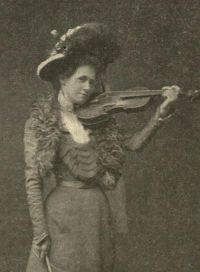 Edith Lynwood WinnCarl SchroederFrederick Herman MartensSaxton T. PopeSara Chapman Thorp Bull
 François-Joseph FétisCharles BarnardGeorge HartGeorge T. FerrisSir J. A. FlemingVariousHidalgo MoyaCarl Engel
 Mayne ReidJoseph PearceEsther SingletonJ. G. WoodAlfred J. Hipkins
Edith Lynwood WinnCarl SchroederFrederick Herman MartensSaxton T. PopeSara Chapman Thorp BullFrançois-Joseph FétisCharles BarnardGeorge HartGeorge T. FerrisSir J. A. FlemingVariousHidalgo MoyaCarl EngelMayne ReidJoseph PearceEsther SingletonJ. G. WoodAlfred J. Hipkins