| editor, The Modern Review (1921)
“ By national education we understand, among other things, such education as will make and keep us a nation. National education, then, should promote national solidarity, and prevent national disintegration. ”
| editor, The Modern Review (1921)
“ By national education we understand, among other things, such education as will make and keep us a nation. National education, then, should promote national solidarity, and prevent national disintegration. ”
Herbert David Croly, The Promise of American Life
“ The mutual loyalty and responsibility, consequently, embodied and inculcated in a national school, depends for its efficient expression upon the amount of insight and intelligence which it involves. The process of national education means, not only a discipline of the popular will, but training in ability to draw inferences from the national experience, so that the national consciousness will gradually acquire an edifying state of mind towards its present and its future problems. ”
 Arthur Greenwood,
The War and Democracy
Arthur Greenwood,
The War and Democracy
“ The first object of national education is—not anything national at all, but simply education. It is the training of individual young people. It is the gradual leading-out (e-ducation) , unfolding, expanding, of their mental and bodily powers, the helping of them to become, not soldiers, or missionaries of culture, or pioneers of Empire, or even British citizens, but simply human personalities. ”
Herbert David Croly, The Promise of American Life
“ The processes of national and individual education should, of course, parallel and supplement each other. The individual can do much to aid national education by the single-minded and intelligent realization of his own specific purposes; but all individual successes will have little more than an individual interest unless they frequently contribute to the work of national construction. The nation can do much to aid individual education ”
Ellwood Patterson Cubberley, The History of Education
“ Beginning with the nations which were earliest to the front of the onward march of civilization, the movement for the state control of education, itself an expression of new world forces and new national needs, has in a century spread to every continent on the globe. To-day progressive nations everywhere conceive of education for their people as so closely associated with their social, political, and industrial progress, and their national welfare and prosperity (R. 336) , that the control of education has come to be regarded as an indispensable function of the State. ”
Herbert Croly, The Promise of American Life — Chapter XIII (1909)
“ There is, however, a sense in which it is really true that the American national Promise can be fulfilled only by education; and this aspect of our desirable national education can, perhaps, best be understood by seeking its analogue in the training of the individual. An individual's education consists primarily in the discipline which he undergoes to fit him both for fruitful association with his fellows and for his own special work. Important as both the liberal and the technical aspect of this preliminary training is, it constitutes merely the beginning of a man's education. ”
| editor, The Modern Review (1921)
“ The last question to which we wish briefly to advert is the object of national education. Suppose our national institutions make us masters of all existing knowdege, Eastern and Western, suppose they promote research according to Western methods or methods devised by ourselves, suppose we are equipped with all knowledge, training and appliances to develop and exploit the resources of our country. ”
 Johann Gottlieb Fichte,
Addresses to the German Nation…
(1922)
Johann Gottlieb Fichte,
Addresses to the German Nation…
(1922)
“ The education of the future scholar for manhood will, therefore, as formerly, proceed in general simultaneously with the universal national education, and along with all the others he will attend the instruction it supplies. ”
Popular Science Monthly (1885)
“ Let our common schools which penetrate everywhere be placed on as sound a basis as possible; let high-schools be established in centers where they can be vigorously and generously sustained; let our colleges and universities be proportioned in number to the need actually existing for the highest culture, and let them have such support as national and individual interest in such culture prompts—and we shall then have all the necessary means for making the American people the equals in education of any other nation in the world. ”
 John Stuart Mill,
Autobiography (Mill) — Chapter VII. 1840-1870
(1874)
John Stuart Mill,
Autobiography (Mill) — Chapter VII. 1840-1870
(1874)
“ If it ever overcomes the strong feeling which exists against it, this will only be after the establishment of a systematic National Education by which the various grades of politically valuable acquirement may be accurately defined and authenticated. ”
Johann Gottlieb Fichte,
Addresses to the German Nation…
(1922)
“ It is a principal requirement of this new national education that in it learning and working shall be combined, that the institution shall appear, to the pupils at least, to be self-supporting, and that everyone shall be reminded to contribute to this aim with all his strength. ”
George Herbert Walker Bush, Proclamation 6344
“ Of course, one of the most important keys to opportunity in our society is a high-quality education. Accordingly, AMERICA 2000, our strategy for achieving our National Education Goals, is designed to ensure that every American has access to a world-class education. ”
 Wilhelm von Humboldt,
The Sphere and Duties of Government…
(1854)
Wilhelm von Humboldt,
The Sphere and Duties of Government…
(1854)
“ Now all systems of national education, inasmuch as they afford room for the manifestation of a governmental spirit, tend to impose a definite form on civic development, and therefore to repress those vital energies of the nation. ”
Ellwood Patterson Cubberley, The History of Education
“ Deciding clearly where the nation was to go and the route it was to follow, and that education for national ends was one of the important means to be employed, the different parts of the educational systems in the States—elementary schools, secondary schools, universities, normal schools, professional schools, technical schools, continuation schools— were carefully integrated into a unified state system, thoroughly national in spirit, and given a definite function to perform in the work which the Nation set itself to carry through. ”
 William Morris,
Hopes and Fears for Art
William Morris,
Hopes and Fears for Art
“ That to my mind is the meaning of what we call National Education, which we have begun, and which is doubtless already bearing its fruits, and will bear greater, when all people are educated, not according to the money which they or their parents possess, but according to the capacity of their minds. ”
Wilhelm von Humboldt,
The Sphere and Duties of Government…
(1854)
“ The grand, leading principle, towards which every argument hitherto unfolded in these pages directly converges, is the absolute and essential importance of human development in its richest diversity; but national education, since at least it presupposes the selection and appointment of some one instructor, must always promote a definite form of development, however careful to avoid such an error. And hence it is attended with all those disadvantages which we before observed to flow from such a positive policy; ”
Herbert Croly, The Promise of American Life — Chapter XIII (1909)
“ The reader may now be prepared to understand why the American faith in education has the appearance of being credulous and superstitious. The good average American usually wishes to accomplish exclusively by individual education a result which must be partly accomplished by national education. The nation, like the individual, must go to school; and the national school is not a lecture hall or a library. Its schooling consists chiefly in experimental collective action aimed at the realization of the collective purpose. ”
Ellwood Patterson Cubberley, The History of Education
“ For ages a Church and private affair, of no particular concern to government and of importance to but a relatively small number of the people, education has to-day become, with the rise and spread of modern ideas as to human freedom, political equality, and industrial progress, a prime essential to the maintenance of good government and the promotion of national welfare, and it is now so recognized by progressive nations everywhere. ”
Johann Gottlieb Fichte,
Addresses to the German Nation…
(1922)
“ According to its principles, the future scholar, too, must have gone through the universal national education and have received completely and clearly its first part, the development of knowledge by sensation, perception, and whatever is connected with the latter. Permission to take up this profession can be granted by the new national education only to the boy who shows an excellent gift for learning and a conspicuous inclination for the world of ideas. ”
Richard Roberts, The Unfinished Programme of Democracy
“ The first has to do with national education the aim of which should be to make every individual capable of thinking for himself and imparting to him a social vision which will discipline and fructify his thought. ”
Ellwood Patterson Cubberley, The History of Education
“ The great needs of the modern world also call for that form of education and training which will not merely impart literacy and prepare for economic competence and national citizenship, but which will give to national groups a new conception of national character and international morality and create new standards of value for human effort. ”
 Rutherford B. Hayes,
Second State of the Union Address
(1878)
Rutherford B. Hayes,
Second State of the Union Address
(1878)
“ To education more than to any other agency we are to look as the resource for the advancement of the people in the requisite knowledge and appreciation of their rights and responsibilities as citizens, and I desire to repeat the suggestion contained in my former message in behalf of the enactment of appropriate measures by Congress for the purpose of supplementing with national aid the local systems of education in the several States. ”
Ellwood Patterson Cubberley, The History of Education
“ In many of these States, despite early beginnings, but little real progress has even yet been made in developing systems of national education that will provide gratuitous elementary-school training for all and inculcate the national spirit. In many of these States the illiteracy of the people is still high, [1] the people are poor, the nations are economically backward, the military and clerical classes still dominate, and intelligent and interested governments have not as yet been evolved. ”
Ellwood Patterson Cubberley, The History of Education
“ Suffice it here to say that from mere teaching institutions, engaged in imparting a little religious instruction and some knowledge of the tools of learning, the school, in all the leading nations, has to-day been transformed into an institution for advancing national welfare. ”
Ellwood Patterson Cubberley, The History of Education
“ NEW PROBLEMS TO BE MET BY EDUCATION. As participation in the political life of nations has been extended to larger and larger groups of the people, and as the problems of government have become more and more complex, the schools have found it necessary to add instruction in geography, history, government, and national ideals and culture to the earlier instruction. ”
Ellwood Patterson Cubberley, The History of Education
“ Education to-day has become intricate and difficult, requiring careful professional training on the part of those who would exercise intelligent control, and so intimately connected with national strength and national welfare that it may be truthfully said to have become, in many respects, the most important constructive undertaking of a modern State. ”
| editor, The Modern Review (1921)
“ The answer to this question will show whether our national education has any distinctively national ideal at its back and any distinctively national motive and object before it. We know what use Western nations have made of their national education. ”
Various, Graham's Magazine, Vol. XXXVI, No…
“ The great system of general education, now disseminating its light throughout our land, will place knowledge a welcome guest at every cottage hearth, and national intelligence will form the firm basis of our national literature. ”
Ellwood Patterson Cubberley, The History of Education
“ The problem of the twentieth century, then, and probably of other centuries to come, is how the constructive forces in modern society, of which the schools of nations should stand first, can best direct their efforts to influence and direct the deeper sources of the life of a people, so that the national characteristics it is desired to display to the world will be developed because the schools have instilled into every child these national ideals. ”
Charlotte M. Mason, An Essay Towards a Philosophy of Education…
“ I have enumerated some of the points in which our work is exceptional in the hope of convincing the reader that unusual work carried on successfully in hundreds of schoolrooms—home and other—is based on principles hitherto unrecognized. The recognition of these principles should put our national education on an intelligent basis and should make for general stability, joy in living, and personal initiative. ”
“ Every citizen of our wide-spread country should be fully persuaded that the education of the people is the only permanent basis of national prosperity not only, [326] but of national safety. This, in theory, is now conceded, and the importance of education is very generally admitted among men, especially in our own country. ”
 Leslie Stephen,
Dictionary of National Biography…
(1899)
Leslie Stephen,
Dictionary of National Biography…
(1899)
“ She was anxious to popularise education by bringing old endowments into closer contact with elementary schools, and she anticipated the demand that, as education is a national necessity, it should also be a national charge. ”
prepared by the President’s Advisory 1776 Commission, The 1776 Report (2021)
“ This great project of national renewal depends upon true education—not merely training in particular skills, but the formation of citizens. To remain a free people, we must have the knowledge, strength, and virtue of a free people. From families and schools to popular culture and public policy, we must teach our founding principles and the character necessary to live out those principles. ”
William Jefferson Clinton, Presidential Radio Address (1993)
“ It's a plan to invest in our country's future, a call to action and to responsibility that will involve one of our most precious national resources, our young people. With national service, hundreds of thousands of students will have a chance to pursue higher education. ”
Ellwood Patterson Cubberley, The History of Education
“ With the development of democratic government there has everywhere been a softening of old laws, the growth of humanitarianism, the wider and wider extension of the suffrage, important legislation as to labor, a previously unknown attention to the poor and the dependents of society, a vast extension of educational advantages, and the taking over of education from the Church by the State and the erection of the school into an important institution for the preservation and advancement of the national welfare. ”
J. N. Larned, History For Ready Reference, Volume 7 (1895)
“ A good and efficient education has been made not only accessible but also compulsory in every corner of the country, and one of the most priceless features of this education has been and is the inculcation of real, personal interest in the national welfare. ”
Ellwood Patterson Cubberley, The History of Education
“ The national schools have accordingly been compelled to give attention to the needs of these new elements in the population, and to direct their attention less exclusively to satisfying the needs of the well-to-do classes of society. Educational systems have in consequence tended more and more to become democratic in character, and to serve in part as instruments for the assimilation of the stranger within the nation's gates and for the perpetuation and improvement of the national life. ”
 George Washington,
State of the Union Addresses
George Washington,
State of the Union Addresses
“ and a primary object of such a national institution should be the education of our youth in the science of government. In a republic what species of knowledge can be equally important and what duty more pressing on its legislature than to patronize a plan for communicating it to those who are to be the future guardians of the liberties of the country? ”
League of Arab States, Arab Charter on Human Rights
“ The States parties shall guarantee to provide education directed to the full development of the human person and to strengthening respect for human rights and fundamental freedoms.5. The States parties shall endeavour to incorporate the principles of human rights and fundamental freedoms into formal and informal education curricula and educational and training programmes.6. The States parties shall guarantee the establishment of the mechanisms necessary to provide ongoing education for every citizen and shall develop national plans for adult education. ”
Various, Popular Science Monthly (1893)
“ Vive la république!—the welfare of the nation—is the keynote of this book. Educators who would have a complete and well-balanced understanding of their own field should not omit to study the relation of education to national interests. ”
 John Dewey
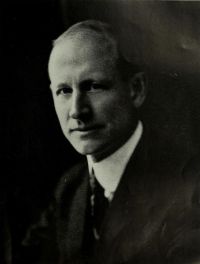 Frank Pierrepont GravesIra Mayhew
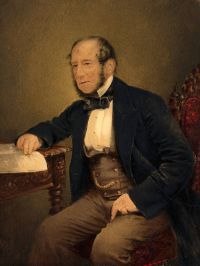 Henry AdamsAlexander Darroch
 Keshub Chunder SenCharles William Eliot and William Allan NeilsonCharlotte M. MasonJohann Gottlieb Fichte
 James Hutchins BakerVariousJoseph R. Gay
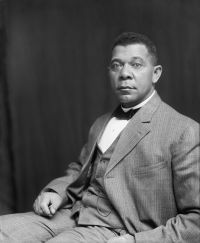 Booker T. Washington
 George S. BoutwellRichard RobertsRobert Campbell MoberlyRobert Elliott Flickinger
 Platoprepared by the President’s Advisory 1776 Commission