Natural economy

Definition and stakes

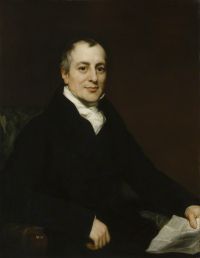
Portrait of John Stuart Mill John Stuart Mill,  Principles of Political Economy (1871)

“ The implements and processes of agriculture are however so wretched, that the produce of the soil, in spite of great natural fertility and a climate highly favourable to vegetation, is miserably small: and the land might be made to yield food in abundance for many more than the present number of inhabitants, without departing from the system of small holdings. ”
Source: Wikisource

Portrait of John Stuart Mill John Stuart Mill,  Principles of Political Economy (1871)

“ The warmth of the climate, the natural fertility of the country, the knowledge which the inhabitants have acquired of the arts of agriculture, and the discovery and gradual adaptation to every soil of the most useful vegetable productions, enable them very speedily to draw from almost any part of the surface, what is there esteemed an equivalent to much more than the labour bestowed in tilling and cropping it. ”
Source: Wikisource

Portrait of John Stuart Mill John Stuart Mill,  Principles of Political Economy

“ Therefore, the effect of labor-saving improvements will be to extend the demand for land, and, wherever the limit of the quality of land in use is reached, to bring into cultivation lands of less natural productiveness, or to extend cultivation on the same lands to a point of lower natural productiveness. ”
Source: Gutenberg

Get perspective with Kwize: daily news enlightened by great literature