“ Of course in the deep, primitive woods also are nests, but how rarely we find them! The simple art of the bird consists in choosing common, neutral-tinted material, as moss, dry leaves, twigs, and various odds and ends, and placing the structure on a convenient branch, where it blends in color with its surroundings; but how consummate is this art, and how skilfully is the nest concealed! ”
Nest (biology)
Definition and stakes
The theme of “nest (biology)” has been addressed by authors such as John James Audubon, W. H. Hudson, Arthur Cleveland Bent, Spencer Fullerton Baird and Alfred Edmund Brehm. It is often associated with terms like bird, egg, moss, insect and feather.
Quotes about “nest (biology)”
 Mary Howitt,
Birds and their nests
(1871)
Mary Howitt,
Birds and their nests
(1871)
“ This nest is a wonderful little fabric, built of moss, dry grass, and slender roots, lined with hair, wool, and thistle-down; but the true wonder of the nest is the exact manner in which the outside is made to imitate the bough upon which it is placed. All its little ruggednesses and lichen growths are represented, whilst the colouring is so exactly that of the old apple-tree that it is almost impossible to know it from the branch itself. Wonderful ingenuity of instinct, which human skill would find it almost impossible to imitate! ”
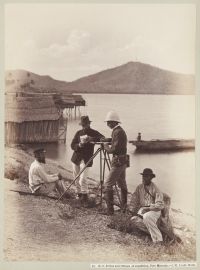 Henry Ogg Forbes,
A Hand-book to the Primates — Galaginae
(1894)
Henry Ogg Forbes,
A Hand-book to the Primates — Galaginae
(1894)
“ It makes a nest of leaves in the fork of a tree, and during its diurnal rest it either retreats thither, or composes itself on a branch, unwilling to move, and staring at passers-by, with its tail invariably folded across its body and round its neck. ”
Various, Bird-Lore, March-April 1916
“ When I drew aside the leaves that sheltered the nest and allowed the sun to shine upon it for purposes of photography, the mother, realizing with that wonderful instinct common to all birds which nest in the shade, the fatal effect on her babies of the sun’s direct rays, would take her stand on the edge of the nest and with outstretched wings would form of her own body a living shield for the comfort and protection of her young. ”
 Dallas Lore Sharp,
Roof and Meadow
Dallas Lore Sharp,
Roof and Meadow
“ These that flit through my smoky dusk may not make city nests, though the finding of such nests would not surprise me. Of course a night-hawk's nest, here or anywhere else, would surprise me; for like her cousin, the whippoorwill, she never builds a nest, but stops in the grass, the gravel, the leaves, or on a bare rock, deposits her eggs without even scratching aside the sticks and stones that may share the bed, and in three days is brooding them—brooding the stones too. ”
 William Beebe,
The Log of the Sun: A Chronicle of Nature's Year
William Beebe,
The Log of the Sun: A Chronicle of Nature's Year
“ A nest composed entirely of pale green hanging moss, with eggs of bluish gray, spotted and splashed with brown and black, guarded by a pair of these exquisite birds, is a sight to delight the eye.When the young have left the nest, if alarmed by an intruder, they will frequently, trusting to their protective dress of streaky brown, freeze into most unbird-like attitudes, drawing the feathers close to the body and stretching the neck stiffly upward,—almost bittern-like. ”
 John James Audubon,
Ornithological biography, Vol. 1…
John James Audubon,
Ornithological biography, Vol. 1…
“ When one approaches the nest of this species, the male exhibits the greatest anxiety respecting its safety, passes and repasses, fluttering and snapping its bill within a few feet, as if determined to repel the intruder. ”
 Bradford Torrey,
Everyday birds: Elementary studies
(1901)
Bradford Torrey,
Everyday birds: Elementary studies
(1901)
“ The nest is a tiny thing, looking for size and shape like a cup out of a child’s toy tea-set. Its walls are thick, and on the outside are covered—shingled, we may say—with bits of gray lichen, which help to make the nest look like nothing more than a knot. ”
John James Audubon,
Ornithological Biography
(1831)
“ For a while, each long day and pleasant night are thus spent; but at a peculiar note of the female he ceases his song, and attends to her wishes. A nest is to be prepared, and the choice of a place in which to lay it is to become a matter of mutual consideration. ”
Various, Birds, Illustrated by Color Photography…
“ This beautiful bird feeds on fruits and insects, and its nest is constructed of blades of grass, wool, hair, fine strings, and various vegetable fibers, which are so curiously interwoven as to confine and sustain each other. The nest is usually suspended from a forked and slender branch, in shape like a deep basin and generally lined with fine feathers. ”
John James Audubon,
Ornithological biography, Vol. 3…
“ On the contrary, when the nest was placed in the broken branch of a tree, it could easily 55 be observed from the ground, on account of the feathers, dead sticks, and withered grasses about it. If the nest is placed immediately over the water, the young, the moment they are hatched, scramble to the mouth of the hole, launch into the air with their little wings and feet spread out, and drop into their favourite element; but whenever their birth-place is at some distance from it, the mother carries them to it one by one in her bill, holding them so as not to injure their yet tender frame. ”
 Thomas Wallace Knox,
The Boy Travellers in the Far East…
Thomas Wallace Knox,
The Boy Travellers in the Far East…
“ When the framework of the nest is completed, the bird fills the interior with the softest down it can gather from plants, and it thus has a home which it is next to impossible to discover among the leaves. ”
 William Henry Hudson,
British birds
(1921)
William Henry Hudson,
British birds
(1921)
“ The nest is, in very many cases, conspicuous to the eye, but on the slightest alarm the sitting-bird quickly and deftly draws the dead, wet materials like a blanket over the eggs, and, slipping off, dives silently, to come up at a considerable distance, usually where it cannot be seen. The nest then presents the appearance of a mere bunch of dead and water-soaked weeds or grass floating on the surface. ”
Various, Birds, Illustrated by Color Photography…
“ After my mate and I are gone you may find our nest. But your eyes will be sharp indeed if they detect it when the leaves are on the trees, it is so small and blends with the branches. We use fern-wool and soft down to build it, and shingle it with lichens to match the branch it nests upon. You should see the tiny eggs of pure white. But we, our nest and our eggs, are so dainty and delicate that they should never be touched. We are only to be looked at and admired. ”
John James Audubon,
Ornithological Biography
(1831)
“ The male and the female sit alternately, and will not fly off at the sight of man, unless he attempts to catch them on the nest, when they skulk off as if badly wounded. Many nests may be found in the space of a few acres of these marshes, where the land is most elevated, and where small shrubs are seen. ”
William Spiers Bruce, Polar Exploration (1911)
“ The nest is built in a hollow among Arctic willow, lichen, and the like, and is very difficult to see, either when the eggs are bare or when the bird is sitting upon them, because of the remarkable resemblance of the bird, eggs, and nest to its surroundings. One may almost tread on the bird before it will rise, and even then the nest is difficult to find. A known nest at a definite number of feet in a certain direction from a prominent mark is very difficult to see. ”
 Richard Kearton,
Birds' Nests, Eggs and Egg-Collecting
Richard Kearton,
Birds' Nests, Eggs and Egg-Collecting
“ The nest is situated in trees, or amongst the reeds and rushes on the ground, the bird seeming, like the Heron, partial to society. If the nature of the position will permit, several nests are situated close together, and are composed of sticks, coarse grass, and dried roots, carelessly thrown together. ”
Henry Eliot Howard, Territory in Bird Life — Chapter 5 (1920)
“ But though the nest is in full view and within a few inches of her perch, and though the young stretch out their necks, yet so strong is the former habit that she is compelled to return to the opposite side and approach the nest by the usual circuitous route before she distributes the food amongst her offspring. ”
John James Audubon,
Ornithological biography, Vol. 3…
“ See how industriously they are engaged in raising this cold fabric into the form of a true nest, before the female lays her eggs, so that no wet may reach them, from the constant trickling of the waters beneath. ”
Arthur Cleveland Bent, Life Histories of North American Shore Birds…
“ The nest is substantially made of grasses and hollowed out by the pressure of the bird's breast and little in the way of extraneous matter is used, though occasionally, especially in open sites, quite a substantial cup may be built of stalks, grasses, bits of heath, moss, etc. ”
Lenore Elizabeth Mulets, Stories of Birds
“ Black head—wings and tail brown—touches of white on throat—entire breast a rusty red.—Female duller and paler in colouring, growing almost as bright as the male in the autumn. Food—principally insects and worms—does not disdain fruit, berries, cherries, etc., but prefers insect food—a ravenous eater. Nest—outer layer composed of sticks, coarse grasses, etc., seemingly rather carelessly arranged—on this the rather large round nest is woven with grasses—plastered with mud—lined with softer grasses. ”
John Gould, The Birds of Australia, Vol. 3 of 7
“ The nest so perfectly resembles the tufts of living moss which are attached to many of the extremities of the branches of the trees of the brushes, that it is impossible to distinguish the one from the other; and it is a question whether the bird purposely builds its nest in imitation of these hanging masses in order to elude pursuit, or whether it avails itself of the mass already formed, and by a little architectural skill converts it into a receptacle for its eggs. ”
Ethel Maltby Gehres, The Silent Readers: Sixth Reader
“ The nest is always built in some hollow among the Arctic willow or lichen, and the eggs are difficult enough to see, as is the bird itself when sitting on them—they all look so exactly like the ground. ”
Various, Popular Science Monthly (1887)
“ In this series of twenty-nine nests I determined that the foundations and lower portion of the sides, for about one half their extent, were unaltered to any significant extent; and many appeared as if a smaller bird's nest had been bodily removed, inverted, and so used as a roof to the lower structure. Whether the rougher exterior, to which I have alluded, was due to expoure since early summer, to unskillful work on the part of the mice, or a design of these mammals to render the nests less conspicuous, could, of course, not be determined. ”
Alfred Newton, 1911 Encyclopædia Britannica, Volume 26… (1911)
“ Wheresoever placed, the nest is formed of small lumps of moist earth, which, carried to the spot in the bird's bill, are duly arranged and modelled, with the aid of short straws or slender sticks, into the required shape. ”
 Charles Dixon,
British Sea Birds
Charles Dixon,
British Sea Birds
“ In most cases the nest is bulky and made of sticks, stalks of plants, and sea-weed, lined with straws, coarse grass, and turf, all more or less matted together with droppings, decaying fish, and slime, and smelling most unpleasantly. ”
 Arthur Humble Evans,
The Cambridge natural history, vol…
Arthur Humble Evans,
The Cambridge natural history, vol…
“ The nest is normally a mass of moss–and sometimes grass–with a felted lining of wool, hair, or fur, containing from five or six to twelve or more white eggs, which are in most cases spotted or freckled with various shades of red, but rarely with purplish or chocolate-colour. Sometimes more than one is laid in a day. The fabric is placed in holes in trees, stumps, rocks, walls, or the ground; pumps, post-boxes, and so forth are frequently selected: nooks behind loose bark, deserted habitations of other birds, or the foundations of those of Hawks and Crows are sometimes chosen ”
John James Audubon,
Ornithological biography, Vol. 4…
(1835)
“ The nest, wherever placed, is bulky, and formed of the vegetable substances found in the immediate vicinity, such as fresh or withered grasses and herbaceous plants. The internal part, or the true nest, which is rarely less than a foot, and is sometimes fifteen inches, in diameter, is raised upon the external or inferior mass, to the height of seven or eight inches. ”
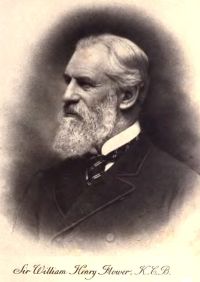 William Henry Flower,
Encyclopædia Britannica, Ninth Edition…
William Henry Flower,
Encyclopædia Britannica, Ninth Edition…
“ The nest is formed under a tussock of grass or a stone, and constructed of short dry straws, and usually lined with hair. The number of young in each nest is generally five, sometimes only three, occasionally seven or eight, and at least two broods are produced annually. ”
John James Audubon,
Audubon and His Journals
(1899)
“ The nest, or place of deposit, is usually rounded, and about eight inches in diameter, being globular, and well lined with the hair of the female. This nest is not placed at the end of a burrow, or in any particular one of their long galleries, but oftentimes in the road that may lead to hundreds of yards distant. From immediately around the nest, however, many galleries branch off in divers directions, all tending towards such spots as are well known to the parents to afford an abundance of food. I cannot ascertain how long the young remain under the care of the mother. ”
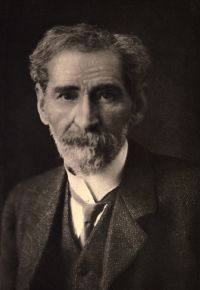 W. H. Hudson,
Argentine Ornithology, Volume 1…
W. H. Hudson,
Argentine Ornithology, Volume 1…
“ The nest is placed in a slight hollow in the ground, under a tussock of grass, and is sometimes elaborately made and lined with horsehair and fine grass, and sometimes with a few materials loosely put together. During the solstitial heats I have frequently found nests with frail shades, built of sticks and grass, over them, the short withered grass affording an insufficient protection from the meridian sun. ”
 John Timbs,
Eccentricities of the Animal Creation
John Timbs,
Eccentricities of the Animal Creation
“ Le Court often found a female taken in his trap and a male lying dead close to her. From four to five is [Pg 69] the general number of young. The nest is distinct, usually distant from the habitation. It is constructed by enlarging and excavating the point where three or four passages intersect each other; and the bed of the nest is formed of a mass of young grass, root fibres, and herbage. ”
Various, The Atlantic Monthly, Volume 17…
“ I find no authority in the books for this bird to build upon the ground, yet here is the nest, made chiefly of dry grass, set in a slight excavation in the bank, not two feet from the water, and looking a little perilous to anything but ducklings or sandpipers. There are two young birds and one little specked egg, just pipped. But how is this? what mystery is here? One nestling is much larger than the other, monopolizes most of the nest, and lifts its open mouth far above that of its companion, though obviously both are of the same age, not more than a day old. ”
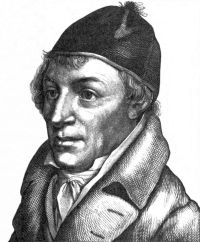 Johann Matthäus Bechstein,
The Natural History of Cage Birds
Johann Matthäus Bechstein,
The Natural History of Cage Birds
“ It feeds on fish, amphibious animals, field-mice, moles, and even weasels, which it catches coming out of their holes. It also eats insects, especially bees, which it catches by the beakfull on flowers. Its nest is only a heap of dry sticks woven together, and it occupies the same nest every year, after repairing it a little. I have been assured, that some nests have lasted a hundred years; and the circumference often becomes covered with sparrows and swallows’ nests. The male and female never separate, and are a true model of conjugal fidelity. ”
John Platts, The Book of Curiosities
“ Such, therefore, is the wonderful instinct of birds, even in the structure and disposition of their nests alone, that we may safely conclude they cannot be mere machines. But is it not also apparent, that in all their works they propose to themselves certain ends? They construct their nests hollow, forming the half of a sphere, that the heat may be more concentric. The nest is covered without by substances more or less coarse, not only to serve as a foundation, but to prevent the wind and insects from entering. ”
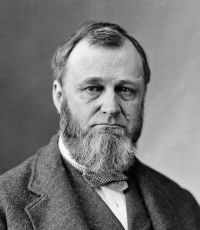 Spencer Fullerton Baird,
A History of North American Birds…
Spencer Fullerton Baird,
A History of North American Birds…
“ The cavity is small, but deep. The external periphery of the nest is made of coarse strips of bark, long dry leaves of wild grasses, and strong stalks of plants, intermingled with finer grasses, pieces of cotton cloth, and other materials. The inner nest is also a singular combination of various materials, yet carefully and elaborately put together. It is made up of fine grasses, feathers, lichens, mosses, fine roots, etc., all felted together and lined with a warm bedding of fur and feathers. ”
Spencer Fullerton Baird,
A History of North American Birds…
“ Their nest is constructed in the midst of a tussock of coarse high grass, the tops of which are ingeniously interwoven into a coarse and strong covering, spherical in shape and closed on every side, except one small aperture left for an entrance. ”
John James Audubon,
Ornithological biography, Vol. 1…
“ The nest, which in some instances is of great size, is usually placed on a very tall tree, destitute of branches to a considerable height, but by no means always a dead one. It is never seen on rocks. It is composed of sticks, from three to five feet in length, large pieces of turf, rank weeds, and Spanish moss in abundance, whenever that substance happens to be near. ”
Spencer Fullerton Baird,
A History of North American Birds…
“ The normal original nest, in a state of nature, is an elaborate and remarkably ingenious structure, sheltering its inmates from the weather and from their many enemies. Since they have sought the shelter of man and built under the eaves of barns and houses, the old style of their nests has been greatly changed, and the retort-like shape has nearly disappeared.In building and in repairing their nests they work with great industry, and often complete their task with wonderful celerity. ”
Related terms
Authors who wrote about “nest (biology)”
John James AudubonW. H. HudsonArthur Cleveland BentSpencer Fullerton Baird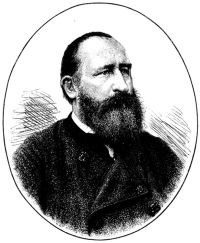 Alfred Edmund Brehm
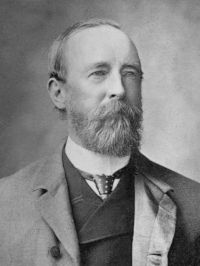 Allan Octavian HumeWilliam Henry MousleyRichard KeartonArthur Humble EvansWilliam Henry Hudson
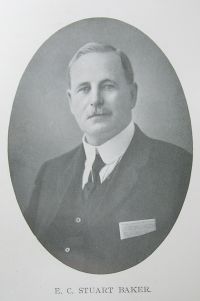 Edward Charles Stuart Baker
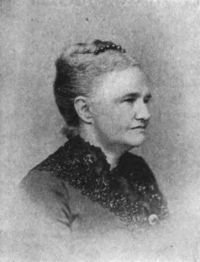 Olive Thorne MillerChester A. Reed
 C. A. JohnsJohann Matthäus BechsteinDallas Lore SharpLenore Elizabeth MuletsAlfred NewtonW. HoughtonJohn Gould