
Net (tennis)

Definition and stakes

Portrait of William T. Tilden William T. Tilden,  The Art of Lawn Tennis

“ The tennis this child plays is phenomenal. She serves with the power and accuracy of a boy. She drives and chops forehand and backhand with reckless abandon. She rushes to the net and kills in a way that is reminiscent of Maurice McLoughlin. Suddenly she dubs the easiest sort of a shot and grins a happy grin. There is no doubt she is already a great player. She should become much greater. She is a miniature Hazel Wightman in her game. Above all, she is that remarkable combination, an unspoiled child and a personality. ”
Source: Gutenberg

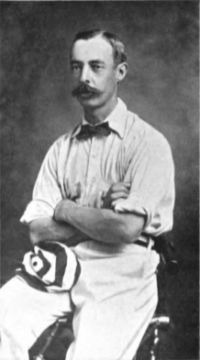
Portrait of James Dwight James Dwight,  Lawn-tennis

“ Thus the nearer a player is to the net the less space he leaves his opponent to place the ball in, but, on the other hand, the quicker he himself must be to judge and reach the ball. It is a great gain if you can volley the ball while it is still above the level of the net, as it can then be volleyed downward. If you allow the ball to drop much, you have got to volley upwards to get it over the net, and there can be little severity in your stroke, which moreover itself is a more difficult one to make. ”
Source: Gutenberg

Girls and Athletics

“ It is a fault to touch net while ball is in play, or to touch the ball with any part of person except the racket, or to touch ball with racket twice.
The receiver may hit the ball in the air (except serve) or after the first bounce, but may never hit after the second bounce.
A player in tennis must never be caught napping. Tennis calls for wide awake, quick playing. It is best to stand either near the net or back farther toward the service line. For most girls I would recommend the base line game. Never stand where your opponent can drop a ball directly at your feet; always be ready for her.
”
Source: Gutenberg

Get perspective with Kwize: daily news enlightened by great literature