Nitrous oxide, a colorless gas with applications in both chemistry and medicine, has been thoroughly investigated for its reactive characteristics and physiological impacts. Sir Humphry Davy, in his Researches Chemical and Philosophical, carefully examined its interactions with alkalis, its role in gas breakdown, and its possible medical significance, observing its ability to modify bodily functions without serious risk.
His experiments highlighted its dual role as both a chemical agent and a forerunner to anesthetic methods, while William James, though less directly involved, contributed to wider discussions on sensory and mental states. The theme thus connects scientific investigation with early explorations of human consciousness, revealing nitrous oxide as a link between laboratory advancements and medical application.
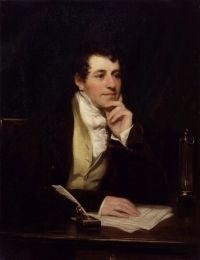 Sir Humphry Davy,
Researches Chemical and Philosophical…
Sir Humphry Davy,
Researches Chemical and Philosophical…
