Odds

Definition and stakes

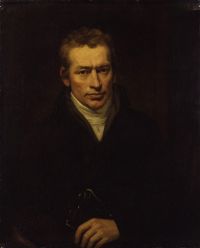
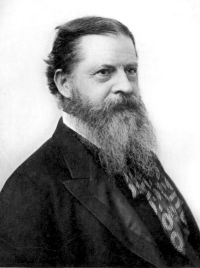
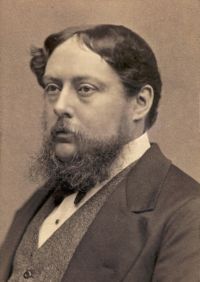
Portrait of Richard A. Proctor Richard A. Proctor,  Light Science for Leisure Hours

“ Thus, if the odds against a horse are 7 to 1, we infer that the cognoscenti consider his chance equal to that of drawing one particular ball out of a bag of eight.
A similar treatment applies when the odds are not given as so many to one. Thus, if the odds against a horse are as 5 to 2, we infer that the horse’s chance is equal to that of drawing a white ball out of a bag containing five black and two white balls—or seven in all.
”
Source: Gutenberg

Portrait of Richard A. Proctor Richard A. Proctor,  Light Science for Leisure Hours

“ Let us take as an illustration the case of a race in which four horses are engaged to run. If all these horses had an equal chance of winning, it is very clear that the case would correspond to that of a bag containing four balls of different colours; since, in this case, we should have an equal chance of drawing a ball of any assigned colour. Now, the odds against drawing a particular ball would clearly be 3 to 1. This, then, should be the betting against each of the three horses. If any one of the horses has less odds offered against him, he is a favourite. ”
Source: Gutenberg

Chapman Cohen,  Theism or Atheism: The Great Alternative

“ Moreover, if the odds are a million to one against the existence of the present arrangement existing, the odds would be equally great against the existence of any other arrangement. And as the odds are equally great against all—seeing that some arrangement must exist—there can be no logical value in using the argument against one arrangement in particular. ”
Source: Gutenberg

Get perspective with Kwize: daily news enlightened by great literature