Passenger car

Definition and stakes

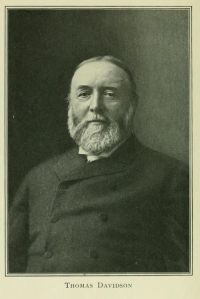
Portrait of Thomas Davidson Thomas Davidson,  Chambers's Twentieth Century Dictionary 1908… (1908)

“ Car (old form Carr) , kär, n. a vehicle moved on wheels, applied to very various forms—a large and splendid vehicle, as a triumphal car, a funeral car, the two-wheeled Irish jaunting-car; in Birmingham, a four-wheeled cab, as opposed to a hansom (cab) ; in America, applied to all vehicles for railway travelling, as passenger-car, palace-car, freight-car, &c.; in England, applied only to the carriages of street tramways: a railway carriage: (poet.) a chariot: the part of a balloon in which the aeronauts sit.—n. Car′man, a man who drives a car or cart: a carter. ”
Source: Wikisource

1911 Encyclopædia Britannica (1911)

“ In America the long open double-bogie passenger cars, as originally introduced by Ross Winans on the Baltimore & Ohio railway, are universally in use. They are distinguished essentially from the British type of carriage by having in the centre of the body a longitudinal passage, about 2 ft. wide, which runs their whole length, and each car having communication with those on either side of it, the conductor, and also vendors of books, papers and cigars, are enabled to pass right through the train. ”
Source: Wikisource

Get perspective with Kwize: daily news enlightened by great literature