Perspective (visual arts)

Definition and stakes

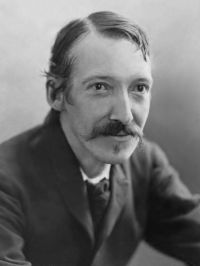
Portrait of I. A. Richards I. A. Richards,  Principles of literary criticism (1928)

“ With such an analysis, comparison and the elaboration of analogies involve no attempt to make one art legislate for another, no attempt to blur their differences or to destroy their autonomy.
In analysing the experiences of the visual arts the first essential is to avoid the word ‘see’, a term which is treacherous in its ambiguity. If we say that we see a picture we may mean either that we see the pigment-covered surface, or that we see the image on the retina cast by this surface, or that we see certain planes or volumes in what is called the ‘picture-space’.
”
Source: Gutenberg

De Witt H. Parker,  The Principles of Aesthetics

“ In literature alone of the arts, images from all departments of sense can be aroused. Visual images play a greater role there than in painting and sculpture, for the reason that, in the latter, visual sensations take their place—we do not image what we can see. In sculpture, the greater part of the imagery is of touch and motion—in the imagination, we feel the surfaces and move with the represented motions; the whiteness or blackness of the materials prevents the arousal of the image of the color of the body. ”
Source: Gutenberg

Charles-François Tiphaigne de La Roche,  Giphantia

“ The justness of the design, the truth of the expression, the gradation of the shades, the stronger or weaker strokes, the rules of perspective, all these we leave to nature, who, with a sure and never-erring hand, draws upon our canvases images which deceive the eye and make reason to doubt, whether, what are called real objects, are not phantoms which impose upon the sight, the hearing, the feeling, and all the senses at once. ”
Source: Gutenberg

Get perspective with Kwize: daily news enlightened by great literature