Pitch (music)

Definition and stakes

Hermann Smith,  The World's Earliest Music

“ When with the modern knowledge of musical instruments we examine the nature of those which they had in their command, we have every reason to doubt the practical application of those fine distinctions of the pitches of the musical notes insisted upon by their learned theorists. The instruments simply could not give them, the exactness was beyond their staying and playing powers. The strings of a lyre had not the delicate permanence of pitch requisite for such claims, and certainly the flutes could not have rendered intervals so accurate. ”
Source: Gutenberg

Various,  Popular Science Monthly (1889)

“ I would earnestly advise all those who profess to impart the divine art of song, like Prospero, to "drown their books," and study the production of the voice as an art, and not as a branch of Chinese metaphysics.
That the high concert pitch now generally used, especially in this country, throws an unnatural strain on even the finest voices, is a fact as to which most authorities are agreed. In the classical period of music, A (second space, treble clef) represented from four hundred and fifteen to four hundred and twenty-nine vibrations; this pitch suited the human voice admirably.
”
Source: Wikisource

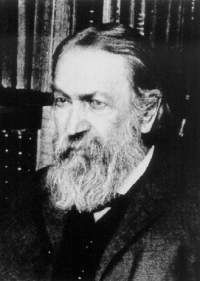
Portrait of Ernst Mach Ernst Mach,  Popular scientific lectures

“ Now that we have made ourselves acquainted with overtones and beats, we may proceed to the answer of our main question, Why do certain relations of pitch produce pleasant sounds, consonances, others unpleasant sounds, dissonances? It will be readily seen that all the unpleasant effects of simultaneous sound-combinations are the result of beats produced by those combinations. Beats are the only sin, the sole evil of music. Consonance is the coalescence of sounds without appreciable beats. ”
Source: Gutenberg

Get perspective with Kwize: daily news enlightened by great literature