Planetary transit

Definition and stakes

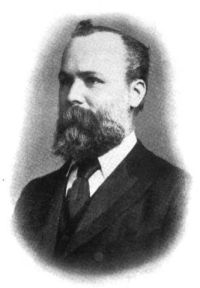
Portrait of Agnes M. Clerke Agnes M. Clerke,  A Popular History of Astronomy During the Nineteenth Century

“ The present period of coupled eccentric transits will, in the course of ages, be succeeded by a period of single, nearly central transits. The alignments by which transits are produced, of the earth, Venus, and the sun, close to the place of intersection of the two planetary orbits, now occur, the first a little in front of, the second, after eight years less two and a half days, a little behind the node. But when the first of these two meetings takes place very near the node, giving a nearly central transit, the second falls too far from it, and the planet escapes projection on the sun. ”

Source: Gutenberg

Martha Evans Martin,  The Ways of the Planets

“ Once in a while our relative positions are such that we see it pass like a black dot directly over the bright face of the sun. This is called a transit. But a transit does not occur at every inferior conjunction. It would so occur if the planet’s orbit and the earth’s were in exactly the same plane. But the small tilt that they have is sufficient to throw the planet, when it is passing the sun, into such an angle that it does not pass directly between the disc of the sun and us, but a little above or below. ”
Source: Gutenberg

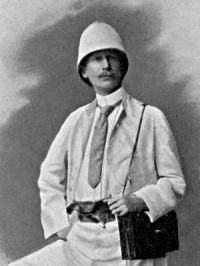
Portrait of John M. Bacon John M. Bacon,  The Dominion of the Air: The Story of Aerial Navigation

“ The actual meteoric train is known to travel in an elongated ellipse, the far end of which lies near the confines of the solar system, while at a point near the hither end the earth's orbit runs slantingly athwart it, forming, as it were, a level crossing common to the two orbits, the earth taking some five or six hours in transit. ”
Source: Gutenberg

Get perspective with Kwize: daily news enlightened by great literature