Punch (drink)

Definition and stakes

John Ashton,  Drinks of the World

“ To attempt offering one would only mislead. A certain inspiration must animate the artist. It has been asserted that no two persons make this drink alike. This remark is admirable, and might probably be applied not only to punch, but to every drink that has yet been composed.
It has been said that of punches there are at least threescore. Here follow a few of the many varieties: Brandy, Sherry, Gin, Whiskey, Port, Sauterne, Claret, Missisippi, Vanilla, Pine Apple, Orgeat, Curaçoa, Roman, Glasgow, Milk, and Regent’s, brewed by George IV.
”

Source: Gutenberg

John David Borthwick,  The gold hunters (1917)

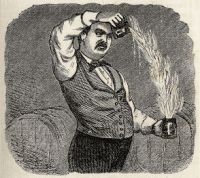
“ Hither small parties of men are continually repairing to “take a drink.” Perhaps they each choose a different kind of punch, or sling, or cocktail, requiring various combinations, in different proportions, of whisky, brandy, or gin, with sugar, bitters, peppermint, absinthe, curaçao, lemon-peel, mint, and what not; but the bar-keeper mixes them all as if by magic, when each man, taking his glass, and tipping those of all the rest as he mutters some sentiment, swallows the compound and wipes his moustache. ”
Source: Gutenberg

John Ashton,  Social England under the Regency…

“ The middle classes could not, of course, afford these wines, but they drank sound Port, Sherry, and Madeira, brown Brandy and Gin—Whiskey was almost unknown. But for conviviality, Punch, in bowls, was the drink. Green tea was introduced into the manufacture of Rum Punch—and may be now, for aught I know, if there is anybody living who knows how to make it—but here is a metrical recipe for Milk Punch, of the year 1815, which reads remarkably well. ”
Source: Gutenberg

Get perspective with Kwize: daily news enlightened by great literature