Quadratic equation

Definition and stakes

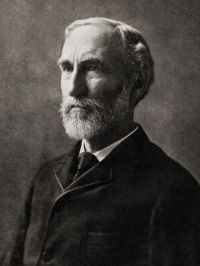
Portrait of Josiah Willard Gibbs Josiah Willard Gibbs,  Scientific Papers of Josiah Willard Gibbs (1906)

“ For then, we have the equation
(24) is easily computed from the formula
(25) which may be derived from equations (18) and (22) .
The quadratic equation (24) gives two values of the correction to be applied to the position of the body. When they are not too large, they will belong to two different solutions of the problem, generally to the two least removed from the values assumed. But a very large value of must not be regarded as affording any trustworthy indication of a solution of the problem.
”
Source: Wikisource

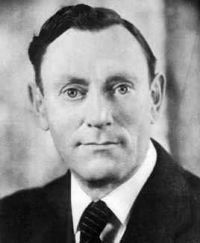
Portrait of David Hilbert David Hilbert,  Mathematical Problems (1902)

“ Our present knowledge of the theory of quadratic number fields [25] puts us in a position to attack successfully the theory of quadratic forms with any number of variables and with any algebraic numerical coefficients. This leads in particular to the interesting problem: to solve a given quadratic equation with algebraic numerical coefficients in any number of variables by integral or fractional numbers belonging to the algebraic realm of rationality determined by the coefficients. ”
Source: Gutenberg

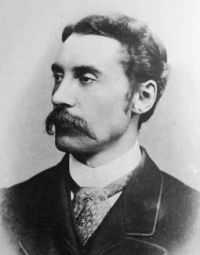
Portrait of Bertrand Russell Bertrand Russell,  Introduction to Mathematical Philosophy

“ They are required less for geometry than for algebra and analysis. We desire, for example, to be able to say that every quadratic equation has two roots, and every cubic equation has three, and so on. But if we are confined to real numbers, such an equation as has no roots, and such an equation as has only one. Every generalisation of number has first presented itself as needed for some simple problem: negative numbers were needed in order that subtraction might be always possible, since otherwise would be meaningless if were less than ”
Source: Gutenberg

Get perspective with Kwize: daily news enlightened by great literature