
“ There”—slamming her down on a cricket in the sitting-room—“sit down, and see if you can learn what the chief end of man is, afore meeting time. Flowers of a Sunday! or flowers any day, for the matter of that, I never could see the sense of ’em. Even the Bible says, ‘they toil not, neither do they spin.’ Gracious goodness—Sewsan Quip, Mrs. Snow’s kerriage has just started for meetin’. Get your things, all of you. Sewsan, see to that peddler’s child; mind that she don’t take no flowers to the Lord’s temple; John Quip, you shan’t wear them gloves ”
Quip
Definition and stakes
The theme of “quip” has been addressed by authors such as William Shakespeare and Fanny Fern. It is often associated with terms like Mr., dwarf, brass, Abraham and wharf.
Quotes about “quip”
 William Shakespeare,
As You Like It
(1623)
William Shakespeare,
As You Like It
(1623)
“ JAQUES And how oft did you say his beard was not well cut? TOUCHSTONE I durst go no further than the Lie circumstantial, nor he durst not give me the Lie direct; and so we measured swords and parted. JAQUES Can you nominate in order now the degrees of the lie? TOUCHSTONE O, sir, we quarrel in print by the book, as you have books for good manners: I will name you the degrees. The first, the Retort courteous; the second, the Quip modest; the third, the Reply churlish; the fourth, the Reproof valiant; the fifth, the Countercheck quarrelsome; the sixth, the Lie with circumstance ”
Quips and Quiddities: A Quintessence of Quirks…
“ He may state that, in those few cases where a piece of verse is given entire, it is distinguished by the presence of a heading. The epigrams, maxims, and anecdotes are, of course, reproduced as written—being, in their very nature, of the brevity essential to a quip.Further: on the principle that no book, however unpretending, should be without an Index, the Compiler has supplied one for the present volume.W.D.A."Shall I tell thee one thing, Poins?" ”
A. R. Narayanan, Truth and the Myth: Couplet Quips
“ The idiosyncrasies of the Heavenly Father and the earthlings, you and me included, are exposed, with a tinge of sarcasm.If you don't like any of the sharp, straight and sour quips it is certainly unpalatable for me too, but it is a fact we have to reconcile with.I have no enmity with anyone who feels targeted and hurt by these couplets; for I know, I myself am the bull's eye!We should point our index finger against each other; for none is perfect and invulnerable to mistakes or resistant to allurement to eat the forbidden fruit. ”
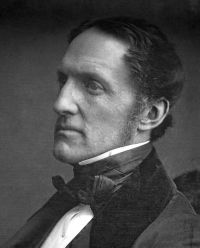 William Hickling Prescott,
History of the Conquest of Peru
William Hickling Prescott,
History of the Conquest of Peru
“ We must not hold the invention of the quipus too lightly, when we reflect that they supplied the means of calculation demanded for the affairs of a great nation, and that, however insufficient, they afforded no little help to what aspired to the credit of literary composition. ”
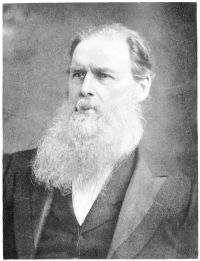 Edward Burnett Tylor,
Researches into the Early History of Mankind and the Development of Civilization
(1878)
Edward Burnett Tylor,
Researches into the Early History of Mankind and the Development of Civilization
(1878)
“ The quipu is a near relation of the rosary and the wampum-string. It consists of a cord with knots tied in it for the purpose of recalling or suggesting something to the mind. When a farmer's daughter ties a knot in her handkerchief to remember a commission at market by, she makes a rudimentary quipu. Darius made one when he took a thong and tied sixty knots in it, and gave it to the chiefs of the Ionians, that they might untie a knot each day, till, if the knots were all undone, and he had not returned, they might go back to their own land. ”
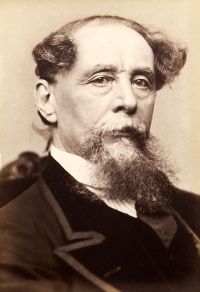 Charles Dickens,
The Old Curiosity Shop
(1841)
Charles Dickens,
The Old Curiosity Shop
(1841)
“ In the midst of this atmosphere, which must infallibly have smothered any other man, Mr Quilp passed the evening with great cheerfulness; solacing himself all the time with the pipe and the case-bottle; and occasionally entertaining himself with a melodious howl, intended for a song, but bearing not the faintest resemblance to any scrap of any piece of music, vocal or instrumental, ever invented by man. Thus he amused himself until nearly midnight, when he turned into his hammock with the utmost satisfaction. ”
Charles Dickens,
The Old Curiosity Shop
(1841)
“ As Mr Quilp folded his note (which was soon written: being a very short one) he encountered the gaze of the small servant. He looked at her, long and earnestly. ‘How are you?’ said the dwarf, moistening a wafer with horrible grimaces. The small servant, perhaps frightened by his looks, returned no audible reply; but it appeared from the motion of her lips that she was inwardly repeating the same form of expression concerning the note or message. ‘Do they use you ill here? is your mistress a Tartar?’ said Quilp with a chuckle. ”
Charles Dickens,
The Old Curiosity Shop — Chapter 11
(1841)
“ We'll never leave off, all the time we stop here--smoke away, you dog, or you shall swallow the pipe!''Shall we stop here long, Mr Quilp?' inquired his legal friend, when the dwarf had given his boy this gentle admonition.'We must stop, I suppose, till the old gentleman up stairs is dead,' returned Quilp.'He he he!' laughed Mr Brass, 'oh! very good!''Smoke away!' cried Quilp. 'Never stop! You can talk as you smoke. ”
Charles Dickens,
The Old Curiosity Shop — Chapter 6
(1841)
“ Mrs Quilp looked tremblingly in her spouse's face to know what this unusual courtesy might portend, and obedient to the summons she saw in his gesture, followed him into the next room.'Mind what I say to you,' whispered Quilp. 'See if you can get out of her anything about her grandfather, or what they do, or how they live, or what he tells her. I've my reasons for knowing, if I can. You women talk more freely to one another than you do to us, and you have a soft, mild way with you that'll win upon her. ”
Charles Dickens,
The Old Curiosity Shop
(1841)
“ By this time, certain vans had arrived for the conveyance of the goods, and divers strong men in caps were balancing chests of drawers and other trifles of that nature upon their heads, and performing muscular feats which heightened their complexions considerably. Not to be behind-hand in the bustle, Mr Quilp went to work with surprising vigour; hustling and driving the people about, like an evil spirit; setting Mrs Quilp upon all kinds of arduous and impracticable tasks; carrying great weights up and down, with no apparent effort; kicking the boy from the wharf, whenever he could get near him ”
 Charles Reade,
Masks and Faces; or, Before and Behind the Curtain…
Charles Reade,
Masks and Faces; or, Before and Behind the Curtain…
“ CIB. Nay, sir, I bring my wit in exchange for your wine; we barter our respective superfluities.QUIN. Good wine is no superfluity, Mr. Cibber; ’tis a necessary of life, just as much as good victuals.SOAP. I vow Mr. Cibber is as lively as ever, and doesn’t look a day older: does he, Mr. Snarl?SNARL. ’Tis that there’s no room on Mr. Cibber’s face for another wrinkle.CIB. (takes snuff) . Puppies!QUIN. Really this is too bad, the coffee is getting cold (goes to table, R.) .CLIVE. So, no wonder Quin is getting warm— (gives him coffee) . Here, bear! (Woffington presides over tea.) ”
Charles Dickens,
The Old Curiosity Shop
(1841)
“ The first sound that met his ears in the morning—as he half opened his eyes, and, finding himself so unusually near the ceiling, entertained a drowsy idea that he must have been transformed into a fly or blue-bottle in the course of the night,—was that of a stifled sobbing and weeping in the room. Peeping cautiously over the side of his hammock, he descried Mrs Quilp, to whom, after contemplating her for some time in silence, he communicated a violent start by suddenly yelling out—‘Halloa!’ ‘Oh, Quilp!’ cried his poor little wife, looking up. ”
Charles Dickens,
The Old Curiosity Shop
(1841)
“ Here she stood, for a few moments, quite transfixed with terror at the sight of Mr Quilp, who was hanging so far out of bed that he almost seemed to be standing on his head, and who, either from the uneasiness of this posture, or in one of his agreeable habits, was gasping and growling with his mouth wide open, and the whites (or rather the dirty yellows) of his eyes distinctly visible. It was no time, however, to ask whether anything ailed him; so, possessing herself of the key after one hasty glance about the room, and repassing the prostrate Mr Brass, she rejoined the old man in safety. ”
Charles Dickens,
The Old Curiosity Shop
(1841)
“ I say, sir—’ Mr Quilp affected to start, and looked smilingly round. ‘You let my mother alone, will you?’ said Kit. ‘How dare you tease a poor lone woman like her, making her miserable and melancholy as if she hadn’t got enough to make her so, without you. An’t you ashamed of yourself, you little monster?’ ‘Monster!’ said Quilp inwardly, with a smile. ‘Ugliest dwarf that could be seen anywhere for a penny—monster—ah!’ ‘You show her any of your impudence again,’ resumed Kit, shouldering the bandbox, ‘and I tell you what, Mr Quilp, I won’t bear with you any more. ”
Charles Dickens,
The Old Curiosity Shop — Chapter 48
(1841)
“ Do they thrive? Do they flourish? Are they growing into worthy citizens, eh?'Making his voice ascend in the scale with every succeeding question, Mr Quilp finished in a shrill squeak, and subsided into the panting look which was customary with him, and which, whether it were assumed or natural, had equally the effect of banishing all expression from his face, and rendering it, as far as it afforded any index to his mood or meaning, a perfect blank.'Mr Quilp,' said the single gentleman.The dwarf put his hand to his great flapped ear, and counterfeited the closest attention. ”
Charles Dickens,
The Old Curiosity Shop — Chapter 13
(1841)
“ Now, just as Mr Quilp laid his hand upon the lock, and saw with great astonishment that the fastenings were undone, the knocking came again with the most irritating violence, and the daylight which had been shining through the key-hole was intercepted on the outside by a human eye. The dwarf was very much exasperated, and wanting somebody to wreak his ill-humour upon, determined to dart out suddenly, and favour Mrs Quilp with a gentle acknowledgment of her attention in making that hideous uproar. ”
 Samuel Johnson,
The Works of Samuel Johnson, LL.D. in Nine Volumes…
Samuel Johnson,
The Works of Samuel Johnson, LL.D. in Nine Volumes…
“ A quibble is to Shakespeare, what luminous vapours are to the traveller; he follows it at all adventures it is sure to lead him out of his way, and sure to ingulf him in the mire. It has some malignant power over his mind, and its fascinations are irresistible. Whatever be the dignity or profundity of his disquisitions, whether he be enlarging knowledge or exalting affection, whether he be amusing attention with incidents, or enchaining it in suspense, let but a quibble spring up before him, and he leaves his work unfinished. ”
Charles Dickens,
The Old Curiosity Shop — Chapter 33
(1841)
“ To this amorous address Miss Brass briefly responded 'Bother!''Hard-hearted as the metal from which she takes her name,' said Quilp. 'Why don't she change it--melt down the brass, and take another name?''Hold your nonsense, Mr Quilp, do,' returned Miss Sally, with a grim smile. 'I wonder you're not ashamed of yourself before a strange young man.''The strange young man,' said Quilp, handing Dick Swiveller forward, 'is too susceptible himself not to understand me well. ”
Charles Dickens,
The Old Curiosity Shop
(1841)
“ Reach me yonder hat, my dear, and we’ll go directly.’ With that, Mr Quilp suffered himself to roll gradually off the desk until his short legs touched the ground, when he got upon them and led the way from the counting-house to the wharf outside, when the first objects that presented themselves were the boy who had stood on his head and another young gentleman of about his own stature, rolling in the mud together, locked in a tight embrace, and cuffing each other with mutual heartiness. ”
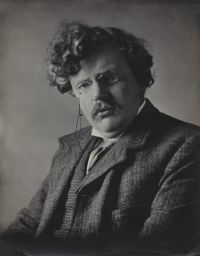 Gilbert Keith Chesterton,
Appreciations and Criticisms of the Works of Charles Dickens…
(1911)
Gilbert Keith Chesterton,
Appreciations and Criticisms of the Works of Charles Dickens…
(1911)
“ Quilp, pushing in his head and striking his nose with his fist. There is nothing better in the whole brutal exuberance of the character than that gesture with which Quilp punches his own face with his own fist. It is indeed a perfect symbol; for Quilp is always fighting himself for want of anybody else. He is energy, and energy by itself is always suicidal; he is that primordial energy which tears and which destroys itself. ”
Charles Dickens,
The Old Curiosity Shop — Chapter 62
(1841)
“ Deigning no other than a practical answer to this remonstrance, Mr Quilp raised the hot saucepan to his lips, and deliberately drank off all the spirit it contained, which might have been in quantity about half a pint, and had been but a moment before, when he took it off the fire, bubbling and hissing fiercely. ”
Charles Dickens,
The Old Curiosity Shop
(1841)
“ Over nobody had he such complete ascendance as Mrs Quilp herself—a pretty little, mild-spoken, blue-eyed woman, who having allied herself in wedlock to the dwarf in one of those strange infatuations of which examples are by no means scarce, performed a sound practical penance for her folly, every day of her life. ”
Charles Dickens,
The Old Curiosity Shop — Chapter 13
(1841)
“ Without further persuasion, the two boys fell upon each other, tooth and nail, while Quilp, holding up the cage in one hand, and chopping the ground with his knife in an ecstasy, urged them on by his taunts and cries to fight more fiercely. They were a pretty equal match, and rolled about together, exchanging blows which were by no means child's play, until at length Kit, planting a well-directed hit in his adversary's chest, disengaged himself, sprung nimbly up, and snatching the cage from Quilp's hands made off with his prize. ”
Charles Dickens,
The Old Curiosity Shop — Chapter 6
(1841)
“ So saying, Mr Quilp put his hat on and took himself off, and Mrs Quilp, who was afflicted beyond measure by the recollection of the part she had just acted, shut herself up in her chamber, and smothering her head in the bed-clothes bemoaned her fault more bitterly than many less tender-hearted persons would have mourned a much greater offence; for, in the majority of cases, conscience is an elastic and very flexible article, which will bear a deal of stretching and adapt itself to a great variety of circumstances. ”
Charles Dickens,
The Old Curiosity Shop
(1841)
“ Having dealt out these admonitions, the ladies fell to a more powerful assault than they had yet made upon the mixed tea, new bread, fresh butter, shrimps, and watercresses, and said that their vexation was so great to see her going on like that, that they could hardly bring themselves to eat a single morsel. It’s all very fine to talk,’ said Mrs Quilp with much simplicity, ‘but I know that if I was to die to-morrow, Quilp could marry anybody he pleased—now that he could, I know!’ There was quite a scream of indignation at this idea. Marry whom he pleased! ”
Charles Dickens,
The Old Curiosity Shop
“ Chuckling as though in very great glee, and recompensing himself for the restraint he had lately put upon his countenance by twisting it into all imaginable varieties of ugliness, Mr Quilp, rocking himself to and fro in his chair and nursing his left leg at the same time, fell into certain meditations, of which it may be necessary to relate the substance. ”
Charles Dickens,
The Old Curiosity Shop — Chapter 6
(1841)
“ In a few minutes Mr Quilp returned, and expressed the utmost surprise to find her in this condtiion, which he did very naturally and with admirable effect, for that kind of acting had been rendered familiar to him by long practice, and he was quite at home in it.'She's tired you see, Mrs Quilp,' said the dwarf, squinting in a hideous manner to imply that his wife was to follow his lead. 'It's a long way from her home to the wharf, and then she was alrmed to see a couple of young scoundrels fighting, and was timorous on the water besides. All this together has been too much for her. ”
Charles Dickens,
The Old Curiosity Shop
(1841)
“ Nevertheless, it was in this choice retreat that Mr Quilp ordered a cold collation to be prepared, and it was beneath its cracked and leaky roof that he, in due course of time, received Mr Sampson and his sister Sally. ‘You’re fond of the beauties of nature,’ said Quilp with a grin. ‘Is this charming, Brass? Is it unusual, unsophisticated, primitive?’ ‘It’s delightful indeed, sir,’ replied the lawyer. ”
Charles Dickens,
The Old Curiosity Shop
(1841)
“ Poor Mrs Quilp, who had looked in a state of helplessness from one face of condolence to another, coloured, smiled, and shook her head doubtfully. This was the signal for a general clamour, which beginning in a low murmur gradually swelled into a great noise in which everybody spoke at once, and all said that she being a young woman had no right to set up her opinions against the experiences of those who knew so much better; that it was very wrong of her not to take the advice of people who had nothing at heart but her good ”
Charles Dickens,
The Old Curiosity Shop — Chapter 5
(1841)
“ And here it may be remarked, that between this boy and the dwarf that existed a strange kind of mutual liking. How born or bred, and or nourished upon blows and threats on one side, and retorts and defiances on the other, is not to the purpose. Quilp would certainly suffer nobody to contract him but the boy, and the boy would assuredly not have submitted to be so knocked about by anybody but Quilp, when he had the power to run away at any time he chose.'Now,' said Quilp, passing into the wooden counting-house, 'you mind the wharf. ”
