“ What are the racial endowments of these risen negroes whom we are urged by lofty example to invite into our drawing-rooms upon terms of broadest equality—for upon other terms would be a mockery—as eligible associates, companions, suitors, husbands for our sisters and daughters?—for a sensible father or brother does not admit white men to his home on any other basis. Of what essential racial elements and sources is the negro, risen and unrisen alike? ”
Racial identity
Definition and stakes
The theme of “racial identity” has been addressed by authors such as Hubert H. Harrison, Booker T. Washington, Chicago Commission on Race Relations, Madison Grant and Emmett J. Scott. It is often associated with terms like negro, race, people, black and white.
Quotes about “racial identity”
Hubert H. Harrison, When Africa awakes (1920)
“ For the similarity of suffering has produced in all lands where whites rule colored races a certain similarity of sentiment, viz.: a racial revulsion of racial feeling. The peoples of those lands begin to feel and realize that they are so subjected because they are members of races condemned as “inferior” by their Caucasian overlords. The fact presented to their minds is one of race, and in terms of race do they react to it. Put the case to any Negro by way of test and the answer will make this clear. ”
Sparkling Gems of Race Knowledge Worth Reading
“ But who are the agents to bring about this grand change in the Negro race? Remember, just here, that all effectual revolutions in a people must be racial in their characteristics. You can't take the essential qualities of one people and transfuse them into the blood of another people, and make them indigenous to them. The primal qualities of a family, a race, a nation are heritable qualities. They abide in their constitution. They remain, notwithstanding the conditions and the changes of rudeness, slavery, civilizations, and enlightenment. ”
Emmett J. Scott, Booker T. Washington, Builder of a Civilization
“ The Negroes in America are, as you know, a mixed race. If that is an advantage we have it; if it is a disadvantage, it is still ours, and for the simple reason that the product of every sort of racial mixture between the black man and any other race is always a Negro and never a white man, Indian, or any other sort of man. ”
Hubert H. Harrison, The Negro and the nation (1917)
“ For this is all that our intellects can do in the case of a racial problem—to help us to understand. The actual work of adjustment must be fought out or worked out; becomes, that is to say, a struggle to be settled by the contending races with forces more complex than the purely intellectual ones of argument and proof. Let us first consider, then, the conditions under which the relations between the black and white races were established in America. ”
“ Probably one-third of the Negroes of the United States have distinct traces of white blood. This blending of the races has led to interesting human types, but racial prejudice has hitherto prevented any scientific study of the matter. ”
Chicago Commission on Race Relations, The Negro in Chicago: A Study of Race Relations and a Race Riot
“ Lying back of the current opinions about Negroes is a chain of circumstances involving the history of divers racial groups over hundreds of years. Slavery placed a stamp upon Negroes which it will require many more years to erase. ”
Carl E. Seashore, Why We Love Music (1941)
“ Numerous racial studies have been made on a large scale, comparing these capacities, for example, in different degrees of race mixture—as in the transition from pure blacks through mulattoes to whites in a large Negro community, or the comparison of racial groups in Hawaii, the school children in different European countries, Indians with whites, and distinctive races and primitive peoples in different parts of the world. ”
Merton Leland Miller and Lester Frank Ward, The American Journal of Sociology (1896)
“ Just as there are peoples belonging to the White, Caucasian or Eurafrican race who are almost black, so there are men of a light brown or yellow color who belong to the Black, Ethiopian or Austafrican race. Racial divisions are based not on any one character but on many taken together. But men differ not merely physically. ”
Various, The Journal of Negro History, Volume 3…
“ The strange distortions of fact and opinion which they record are significant, not so much for what they tell us of the Negro, as for what they reveal of the intensity of the racial conflict, and of the nature of the passions involved. Most books on the Negro in America published prior to 1900, and some books written since that time, are mainly valuable as source books for the social psychologist and the students of human nature. ”
Charles A. Ellwood, Sociology and Modern Social Problems
“ So we might go through the whole list of the conspicuous traits and tendencies of the American negro, and in practically every case we would find good reason for believing that these racial traits and tendencies are at least in part instinctive, that is, due to the influence of racial heredity.The question is frequently raised whether the negro is inferior by nature to the white man or not. ”
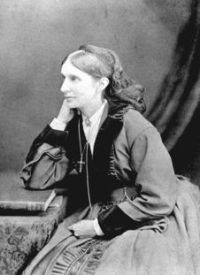 Josephine Elizabeth Grey Butler,
Native Races and the War
Josephine Elizabeth Grey Butler,
Native Races and the War
“ However much the Native may excel in certain qualities of the heart, still, until purged of the poison of racial contempt, that will be the expression of the practical conclusion of the white man regarding him ”
Sutton E. Griggs, The Hindered Hand; or, The Reign of the Repressionist
“ Furthermore the social influence is a tremendous force in the affairs of men, as all history teaches. To all that goes to constitute this powerful factor in your life as a people, you have seen fit to pronounce the Negro a stranger. The pride of the Negro race has risen to the occasion and there is a thorough sentiment in that race in favor of racial integrity. ”
Hubert H. Harrison, When Africa awakes (1920)
“ That point concerns the biological breed of persons who should be selected by Negroes as leaders of their race. We risk the offense this time because efficiency in matters of racial leadership, as in other matters, should not be too tender to these points of prejudice when they stand in the way of desirable results. For two centuries in America we, the descendants of the black Negroes of Africa, have been told by white men that we cannot and will not amount to anything except in so far as we first accept the bar sinister of their mixing with us. ”
Chicago Commission on Race Relations, The Negro in Chicago: A Study of Race Relations and a Race Riot
“ If Negroes were 100 per cent literate they would certainly be more sensitive to insults and more resentful. I should expect a great increase in racial differences, unless those Negroes imbibed a tendency to non-resistance. ”
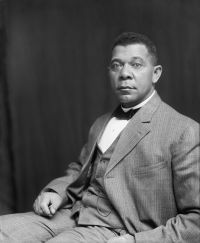 Booker T. Washington,
The Future of the American Negro
Booker T. Washington,
The Future of the American Negro
“ There are those among the white race and those among the black race who assert, with a good deal of earnestness, that there is no difference between the white man and the black man in this country. This sounds very pleasant and tickles the fancy; but, when the test of hard, cold logic is applied to it, it must be acknowledged that there is a difference,—not an inherent one, not a racial one, but a difference [Pg 32] growing out of unequal opportunities in the past. ”
Booker T. Washington,
Up from Slavery: An Autobiography
“ Then, when we rid ourselves of prejudice, or racial feeling, and look facts in the face, we must acknowledge that, notwithstanding the cruelty and moral wrong of slavery, the ten million Negroes inhabiting this country, who themselves or whose ancestors went through the school of American slavery, are in a stronger and more hopeful condition, materially, intellectually, morally, and religiously, than is true of an equal number of black people in any other portion of the globe. ”
Booker T. Washington,
The Future of the American Negro
“ Thus helped, those of both races in the South will soon throw off the shackles of racial and sectional prejudice, and rise above the clouds of ignorance, narrowness, and selfishness into that atmosphere, that pure sunshine, where it will be the highest ambition to serve man, our brother, regardless of race or previous condition. ”
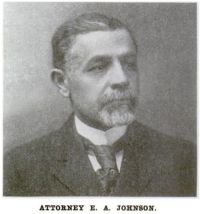 Edward A. Johnson,
Light Ahead for the Negro
Edward A. Johnson,
Light Ahead for the Negro
“ With 30 per cent of the Negro population illiterate, with a criminal record double that of any of the emigrant classes above outlined, with the News Distributing Bureau against it, with no political or social standing—pariahs in the land—with Northern capital endorsing serfdom, with their inability to lose their race identity, on account of their color—we realize how heavy the odds were against the Negro race at that time. ”
 Madison Grant,
The Conquest of a Continent; or…
Madison Grant,
The Conquest of a Continent; or…
“ Taking the country over, the Whites who have married Indians have not been of a high class. But the total number of Indians in the United States is so small that their future is probably that of being absorbed in the White race through miscegenation, unless it be for a few tribes cultivating a racial purity of their own and, with favorable economic conditions, perpetuating themselves for a long time to come. ”
Frederick Gymer Parsons, 1911 Encyclopædia Britannica (1911)
“ The colour of the human skin cannot, then, be regarded as an entirely trustworthy racial test, even blackness not being an exclusively negro characteristic. It serves, however, to divide Man into three fundamental types corresponding to the three great ethnic groups, viz. ”
George Washington Williams, History of the Negro Race in America from 1619 to 1880…
“ I commit this work to the public, white and black, to the friends and foes of the Negro, in the hope that the obsolete antagonisms which grew out of the relation of master and slave may speedily sink as storms beneath the horizon; and that the day will hasten when there shall be no North, no South, no Black, no White,—but all be American citizens, with equal duties and equal rights. ”
 W. E. B. Du Bois,
The Conservation of Races
W. E. B. Du Bois,
The Conservation of Races
“ We cannot reverse history; we are subject to the same natural laws as other races, and if the Negro is ever to be a factor in the world’s history—if among the gaily-colored banners that deck the broad ramparts of civilization is to hang one uncompromising black, then it must be placed there by black hands, fashioned by black heads and hallowed by the travail of 200,000,000 black hearts beating in one glad song of jubilee. ”
Gordon A. Stewart, Popular Science Monthly (1883)
“ By State laws and the decision of the Supreme Court they belong to the negro or the American-African race. By the law of nature they belong, either to the Anglo-American race, or are a race within themselves. It is no longer a doubtful question; their constant increase in numbers shows that they are engenesic, and capable of maintaining within themselves a race of their own. Can such a people as this mixed race, imbued with the instincts, capabilities, and ambitions common to their white blood, be forever thrust back upon the negro race? ”
Various, The American Missionary — Volume 42…
“ Shall a line be drawn which shall separate the Negroes, and assign them as a race to the position of inferiors irrespective of merit or character, and merely on the ground of race or color?To narrow the discussion, we leave out of view the civil or political aspect of the question and confine ourselves to the religious, and we propose to give a few illustrations. A Negro in every way qualified, in character, piety, and intelligence, applies for membership in a white church. Shall the color-line be drawn and he be refused admission for no other reason than that he is a Negro? ”
Edward A. Johnson,
Light Ahead for the Negro
“ No Negro gained any national reputation without first having been recognized by the white race, instead of his own. The Negroes recognized their leaders after the whites picked them out—not before.“The Negro nature at this time was still a pliable one, after many years of drill training, but it was much more plastic in the days of slavery, and for the first forty years after reconstruction. The master labored to subordinate the will of the slave to his own, to make him like clay in the hands of the potter. ”
Various, The American Missionary — Volume 32…
“ But there is no denying that the American negro bears the marks of his bondage, in his indolence, his untruthfulness, his dishonesty, his animalism. But these are all vices of the slaves, not of the men; of the condition, not of the race. The possibilities of the negro nature are to be estimated by its highest actual attainments in the most favored individuals. Two of the noblest races of history have come from an ancestry less promising than our Southern freedmen—the Israelites and our own ancestors. ”
 Eugene V. Debs,
The negro workers
(1923)
Eugene V. Debs,
The negro workers
(1923)
“ I never knew of any distinction on account of the color of the flesh of a human being. Indeed, when I think of what the colored people have been made to suffer at the hands of their supposedly superior race, every time I look a colored brother in the face I blush for the crimes that my race has committed against his race. ”
“ And it is not merely the demand of the white man that the Negro step aside by himself, for the Negro himself is drawing the colour line, and drawing it with as much enthusiasm as the white man. A genuine race-spirit or race-consciousness is developing. Negroes are meeting prejudice with self-development. ”
George Washington Williams, History of the Negro Race in America from 1619 to 1880…
“ But, fortunately for the Negro and for humanity at large, we live now in an epoch when race malice and sectional hate are disappearing beneath the horizon of a brighter and better future. The Negro in America is free. He is now an acknowledged factor in the affairs of the continent; and no community, state, or government, in this period of the world's history, can afford to be indifferent to his moral, social, intellectual, or political well-being. ”
Various, Tom Watson's Magazine, Vol. I, No… (1905)
“ The advance made by your race in America is the reflection of the white man’s civilization. Just that and nothing more. The negro lives in the light of the white man’s civilization and reflects a part of that light.He imitates an example kept before his eyes; copies models never out of his sight; echoes the words the white man utters; patterns after the manners and the methods of the whites around him, and thus reflects our civilization. ”
George Washington Williams, History of the Negro Race in America from 1619 to 1880…
“ Pouring over the venerable mountain terraces, an abundant stream from an abundant and unknown source, into the malarial districts, the genuine African has gradually degenerated into the typical Negro. ”
George Washington Williams, History of the Negro Race in America from 1619 to 1880…
“ Our new government is founded upon exactly the opposite ideas. Its foundations are laid, its corner-stone rests, upon the great truth, that the negro is not equal to the white man; that slavery, subordination to the superior race, is his natural and normal condition. ”
George Washington Williams, History of the Negro Race in America from 1619 to 1880…
“ Phillis Wheatley has been mentioned already. So, in the midst of darkness and oppression, the Negro race in America, without the use of the Christian church, schoolhouse, or printing-press, produced a poetess, an astronomer, a mathematician, and a physician, who, had they been white, would have received monuments and grateful memorials at the hands of their countrymen. But even their color cannot rob them of the immortality their genius earned. ”
Various, The Journal of Negro History, Volume 3…
“ To our reproach it must be said, that though for a century and a half we have had under our eyes the races of black and or red men, they have never yet been viewed by us as subjects of natural history. I advance it, therefore, as a suspicion only, that the blacks, whether originally a distinct race, or made distinct by time and circumstances, are inferior to the whites in the endowments both of body and mind. ”
Ulrich Bonnell Phillips, American Negro Slavery
“ Deep rooted prejudices entertained by the whites, ten thousand recollections by the blacks of the injuries they have sustained, new provocations, the real distinctions which nature has made, and many other circumstances, will divide us into parties and produce convulsions which will probably never end but in the extermination of the one or the other race ... ”
W. E. B. Du Bois,
The Gift of Black Folk: The Negroes in the Making of America
(1924)
“ A moment's thought will easily convince open minded persons that the contribution of the Negro to American nationality as slave, freedman and citizen was far from negligible. No element in American life has so subtly and yet clearly woven itself into the warp and woof of our thinking and acting as the American Negro. ”
Edward A. Johnson,
Light Ahead for the Negro
“ What to do with this class is a problem that perplexes the better element of Negroes, more, possibly, than it does the whites; since their shortcomings are generally credited to the whole Negro race, which is wrong as a fact and unjust in theory.“This vicious element in the race is a constant subject of discussion in Negro churches and in private conversation. It is a mistake to say that crime is not condemned by the better class of Negroes. ”
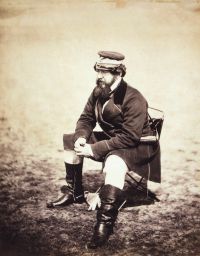 Sir William Howard Russell,
My Diary: North and South (vol…
Sir William Howard Russell,
My Diary: North and South (vol…
“ There were in attendance some good-looking little negro boys and men dressed in liveries, which smacked of our host’s Orientalism, and they must have heard our discussion, or rather allusion, to the question which would decide whether we thought they are human beings or black two-legged cattle, with some interest, unless indeed the boast of their masters, that slavery elevates the character and civilises the mind of a negro, is another of the false pretences on which the institution is rested by its advocates. ”
Related terms
Authors who wrote about “racial identity”
Hubert H. HarrisonBooker T. WashingtonChicago Commission on Race RelationsMadison GrantEmmett J. ScottMerton Leland Miller and Lester Frank WardVariousW. E. B. Du BoisCarl E. SeashoreJosephine Elizabeth Grey ButlerCharles A. EllwoodSutton E. GriggsEdward A. JohnsonFrederick Gymer Parsons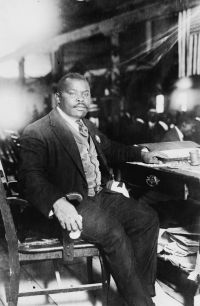 Marcus Garvey
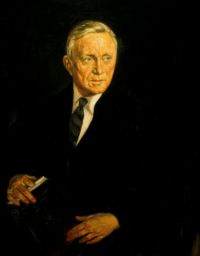 William O. DouglasMartin Luther King, Jr.
Booker T. WashingtonChicago Commission on Race RelationsMadison GrantEmmett J. ScottMerton Leland Miller and Lester Frank WardVariousW. E. B. Du BoisCarl E. SeashoreJosephine Elizabeth Grey ButlerCharles A. EllwoodSutton E. GriggsEdward A. JohnsonFrederick Gymer ParsonsMarcus GarveyWilliam O. DouglasMartin Luther King, Jr.