Radiophone

Definition and stakes

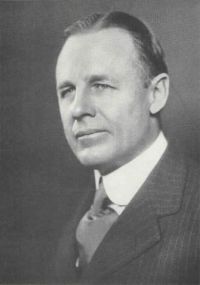
Portrait of Benedict Crowell Benedict Crowell,  America's Munitions 1917-1918

“ Military signals to-day include the telephone, the telegraph, radio telegraphy and telephony, the buzzer, the buzzerphone, panels, pyrotechnics, flags, smoke signals, pigeons, dogs, mounted orderlies, and runners. Each of these means of signaling is an adjunct to the others; when one fails, another is employed to get the message through. Some have special uses for branches of the service with peculiar requirements. The radiophone is especially suited for communicating from airplanes. Artillery fire is directed by wire and wireless communication. ”
Source: Gutenberg

Thomas Lomar Gray,  Encyclopædia Britannica, Ninth Edition (1888)

“ The principle of transmitting sound by the radiophone will be Radio- understood from fig. 18. M represents a mirror, from which a phone, beam of light is reflected through the lens I to a second mirror m, and m forms a diaphragm against the back of which the sound vibrations sent through the tube t are made to impinge. The beam of light, after being reflected from m, passes through the lower lens I, and thence as a nearly parallel beam to the parabolic reflector R. A photophonic receiver P, sup posed in this case to be a spiral of selenium wire wound on the surface of a cylinder, Fio. ”
Source: Wikisource

Get perspective with Kwize: daily news enlightened by great literature