Reaping hook

Definition and stakes

Thomas Baines,  Shifts and Expedients of Camp Life…

“ The shanks of horse-nails make very good fish hooks. These, when filed down to the proper thickness, must be laid, one by one, in a narrow groove made in a piece of hard wood, and the barb struck up with a chisel or the sloped edge of a knife. One smart, well-directed blow on the instrument usually effects this. The point is now to be filed up sharp, the wire gently heated in the fire, and twisted with pliers—or, in the absence of these, a split stick—into proper hook form, when it is to be subjected to the case-hardening process. ”
Source: Gutenberg

William Radcliffe,  Fishing from the Earliest Times

“ The progressive order of hooks used by the Indians or their predecessors in title in North America was, after the simple device of attaching the bait to the end of a fibrous line, (1) a gorge, a spike of wood or bone, sharpened at both ends and fastened at its middle to a line; (2) a spike set obliquely in the end of a pliant shaft; (3) a plain hook; (4) a barbed hook; (5) a barbed hook combined with sinker and lure. This series does not exactly represent stages of invention: the evolution may have been affected by the habits of the different species of fish or their increasing wariness. ”
Source: Gutenberg

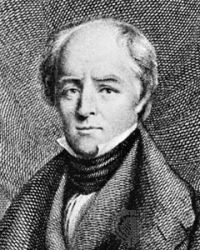
Portrait of Basil Hall Basil Hall,  The lieutenant and commander

“ Much dexterity is required in the hand which holds the line at this moment; for a bungler is apt to be too precipitate, and to jerk away the hook before it has got far enough down the shark's maw. Our greedy friend, indeed, is never disposed to relinquish what may once have passed his formidable batteries of teeth; but the hook, by a premature tug of the line, may fix itself in a part of the jaw so weak that it gives way in the fierce struggle which always follows. ”
Source: Gutenberg

Get perspective with Kwize: daily news enlightened by great literature