“ The communicator burped suddenly and the viewscreen came to life; a deep, dull red that brightened quickly. A tiny coal flared up, swelling in size and shifting from red to orange to yellow—the sun. Earth appeared as a hazy red dot that enlarged and resolved itself into a planet with distorted continents that trembled and changed, to resume their natural shapes and colors. Within a few seconds the sun was shining as ever, Earth loomed large and blue-green before them and the stars of Orion glittered unchanged beyond. Even their position in space was the same—they had not moved. ”
Red earth
Definition and stakes
The theme of “red earth” has been addressed by authors such as William Carpenter, Camille Flammarion, Wladislaw Somerville Lach-Szyrma, Percy Greg and Stephen Marlowe. It is often associated with terms like light, Sun, planet, Mars and atmosphere.
Quotes about “red earth”
active 19th century Harry Willson, The Use of a Box of Colours, in a Practical Demonstration on Composition…
“ When the horizon is tinged with red by the rays of the setting sun, the distant shadows, being blue or azure, mingling with the red, produces purple.The air between the earth and the sun, when it rises or sets, invests all objects with a degree of obscurity, which is whiter on the earth than towards the zenith.When the vapours descend to the earth at sunset, all objects that the sun's rays do not reach become confused and dark; but those that are tinged with its light will appear of the colour of that light, and distinctly marked in their outlines, though surrounded by obscurity. ”
Martha Evans Martin, The Ways of the Planets
“ In shape the great red spot is an immense oval as much as thirty thousand miles from east to west and seven thousand miles from north to south, which gives it a surface four or five times as large as the land area on the entire earth, and larger even than the whole surface of the earth including the oceans. ”
N. S. Shaler, The Red Sunsets — The Atlantic Monthly
“ The first scientific observers of the red sunsets generally inclined to the opinion that they were produced by the falling upon the earth of some clouds of finely divided matter, such as are thought to give rise to the zodiacal light, — cosmic vapor, as it has been unhappily called. ”
James Carpenter, The Moon: considered as a planet…
“ The circle of light would be, in fact, the ring of twilight round our globe, and it would only appear red in those places where the atmosphere chanced to be in that condition favourable for producing what on earth we know as red sunset and sunrise. We know that the sun, even in clear sky, does not always set and rise with the beautiful red glow, which may be determined by merely local causes, and will therefore vary in different parts of the earth. ”
 John Ruskin,
Modern Painters, Volume 5 (of 5…
“ It also becomes, first, a white earth, then proceeds to grow clear and hard, and at last arranges itself in mysterious, infinitely fine, parallel lines, which have the power of reflecting not merely the blue rays, but the blue, green, purple, and red rays in the greatest beauty in which they can be seen through any hard material whatsoever. ”
 Edward Sylvester Morse,
Mars and Its Mystery
“ If we consider man alone, we find him at Aden, on the Red Sea, at a temperature of 130° in the shade, and in Siberia at 70° below zero; grovelling in mines deep in the Earth, and living in great communities ten thousand feet above sea-level; fighting battles on the slopes of the Himalayas, at an altitude of 19,000 feet; nomadic on sterile tracts; sweltering under the glaring sun of the equator, and existing in regions of perpetual snow and ice, and without sunlight for six months of the year. ”
 Svante Arrhenius,
The Destinies of the Stars
“ It proved to be of a far more blue tinge than sunlight reflected from the Moon. Our conclusion must be that the Earth shines with a blue lustre. This is perfectly natural, as the diffused light which reaches us after having been scattered by particles suspended in the air (and by gas molecules as well) is a deep blue and there exists no reason why that part of the light which is thrown outward into space should be of a different colour. The Earth, therefore, is blue in contradistinction to Mars which is red, on account of its desert surface, and Venus which is bright white. ”
 A. Frederick Collins,
The Book of Stars: Being a Simple Explanation of the Stars and Their Uses to Boy Life
(1915)
“ That people could live on Mars is possible, for the Red Planet is like our Earth, in that it has land, water and air, weather and seasons, with a warm equator and ice-covered poles. Seen through a telescope he looks like Fig. ”
George P. Marsh, The Earth as Modified by Human Action
“ The checkered earth, too, is canopied with a heaven as variegated as itself. You see, high up in the sky, rosy clouds at noonday, colored probably by reflection from the ruddy mountains, while near the horizon float cumuli of a transparent, ethereal blue, seemingly balled up out of the clear cerulean substance of the firmament, and detached from the heavenly vault, not by color or consistence, but solely by the light and shade of their salient and retreating outlines. ”
Robert Hunt, The Poetry of Science; or, Studies of the Physical Phenomena of Nature
“ The blue colour of the sky, which is so much more agreeable to the eye than either red or yellow, is due to a tendency of the mixed gas and vapour to reflect the blue rays rather than red or yellow. The white light which falls upon the surface of the earth, without absorption or decomposition in its passage from the sun, is partially absorbed by, and in part reflected back from, the earth. The reflected rays pass with tolerable freedom through this transparent medium, but a portion of the blue rays are interrupted and rendered visible to us. ”
 James Russell Lowell,
Among My Books. First Series
“ Red Sea is the sun & moon calcinated & brought & reduced into water mineral which in some time, & most of the whole time, is red. 2ndly, the fat of mercurial wind, that is the fat or quintessence of sun & moon, earth & water, drawn out from them both, & flies aloft & bore up by the operation of our mercury, that is our fire which is our air or wind. ”
Ellsworth Douglass, Pharaoh's Broker
“ CHAPTER I Why Mars gives a Red Light Our telescope was now pointed exactly at Mars, and we were observing every feature as we approached him. Compared with the illuminated crescent of the Earth, which we had studied when we were observing the Andes, our present view was infinitely vaster and more comprehensive. We were approaching the illuminated side of a planet, whereas we had then been rapidly receding from the dark side of one partly lighted at its edge. ”
National Aeronautics and Space Administration, MER press briefing, February 2…
“ A little green area is on top of the rock is even brighter. Rock itself, blue spectrum is very dark. Typical for dark basaltic rocks we see here on Earth. What intrigued us was some spots on the rock. Red spectrum looks a lot like the blue spectrum. ”
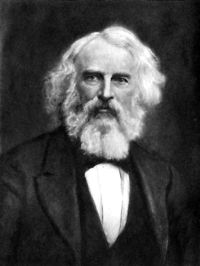 Henry Wadsworth Longfellow,
The Complete Poetical Works of Henry Wadsworth Longfellow
“ There is no light in earth or heaven But the cold light of stars; And the first watch of night is given To the red planet Mars. ”
 Voltairine De Cleyre,
And Thou Too
“ But the world moves on, and the piteous Earth Still groans in the monster pain; And the star that leads me points onward yet, Though the red drops fall like rain! ”
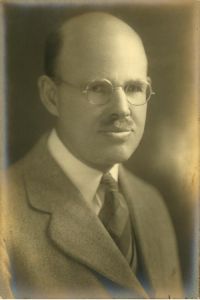 Ellsworth Huntington,
The Red Man's Continent: A Chronicle of Aboriginal America
(1919)
“ Today, no less than in the past, the tetrahedral form of the earth and the relation of the tetrahedron to the poles and to the equator preserve the conditions that favor rapid evolution. ”
 Ed Earl Repp,
The radium pool
(1929)
“ Crystals that ranged in color from deep, unfathomable red to emerald green danced before me. As though fighting for some control of a color-world the reds began to seep through into the blues and the greens.They suddenly merged into one solid color—the deep, unfathomable infra-red of the spectrum. The suddenness of the change caused my whole system to react in a terrific shudder. Remembering the scientist's words, I clenched my teeth for control over myself. Now I leaned forward tensely. Objects were slowly shaping themselves from the masses. It was the Red World! ”
 Camille Flammarion,
Popular Science Monthly
(1874)
“ May we attribute to the color of the herbage and plants, which no doubt clothe the plains of Mars, the characteristic hue of that planet, which is noticeable by the naked eye, and which led the ancients to personify it as a warrior? Are the meadows, the forests, and the fields, on Mars, all red? An observer, looking out from the moon, or from Venus, upon our own planet, would see our continents deeply tinged with green. But, in the fall, he would find this tint disappearing at the latitudes where the trees lose their leaves. ”
 Julia McNair Wright,
Nature readers
(1891)
“ The red light of Mars is supposed to be produced by the color of its surface, and by some it is considered that the vegetation on Mars may be red, as ours is green, and that to an observer on Mars, our planet would shine with a green light, as to us Mars shines in red. ”
Camille Flammarion,
Astronomy for Amateurs
“ But the red sun, too, accomplishes the law of its destiny. Hardly has it disappeared in the conflagration of its last rays, with which the West is flushed, when the blue orb reappears on the opposite side, shedding a pale azure light upon the world it illuminates, which knows no night. ”
David Morrison, Voyage to Jupiter
“ The most visible cloud interactions take place in the region of the Great Red Spot. Material within the Red Spot rotates about once every six days. Infrared measurements show that the Red Spot is a region of atmospheric upwelling, which extends to very high altitudes; however, the divergent flow suggested by this upwelling seems to be very small—one bright feature was observed to circle the Red Spot for sixty days without appreciably changing its distance from the spot’s center. ”
G. E. Mitton, The Children's Book of Stars
“ The sun appears much smaller to him than it does to us, and he receives considerably less light and heat. There are various spots on his surface, and one remarkable feature is a dark mark, which is called the 'great red spot.' If as we suppose what we see of the planet is merely the cloudy upper atmosphere, we should not expect to find anything permanent there, for the markings would change from day to day, and this they do with this exception—that this spot, dark red in colour, has been seen for many years, turning as the planet turned. ”
“ Pointing out to Eveena the striking difference of colour between the cultivated fields and gardens and the woods or natural meadows on the mountain sides, I learned from her that this distinction is everywhere perceptible in Mars. Natural objects, plants or animals, rocks and soil, are for the most part of dimmer, fainter, or darker tints than on Earth; probably owing to the much less intense light of the Sun; partly, perhaps, to that absorption of the blue rays by the atmosphere, which diminishes, I suppose, even that light which actually reaches the planet. ”
Garrett Putman Serviss, Edison's Conquest of Mars
“ Another shift in our course rapidly carried us out of the shadow of the earth and into the all pervading sunshine. Then the great planet beneath us hung unspeakable in its beauty. The outlines of several of the continents were clearly discernible on its surface, streaked and spotted with delicate shades of varying color, and the sunlight flashed and glowed in long lanes across the convex surface of the oceans. Parallel with the Equator and along the regions of the ever blowing trade winds, were vast belts of clouds, gorgeous with crimson and purple as the sunlight fell upon them. ”
G. E. Mitton, The Children's Book of Stars
“ The red stars have been described by various observers as resembling 'a drop of blood on a black field,' 'most magnificent copper-red,' 'most intense blood-red,' and 'glowing like a live coal out of the darkness of space.' Some people see them as a shining red, like that of a glowing cloud at sunset. Therefore there can be no doubt that the colours are genuine enough, and are telling us some message. ”
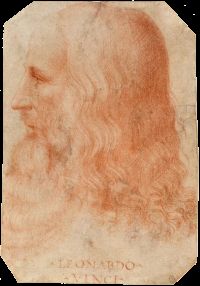 da Vinci Leonardo,
A Treatise on Painting
“ In the West we will suppose another opake body of a colour different from the first, but receiving the same light. This last will reflect its colour towards the East, and strike the first with its rays on the opposite side, where they will be stopped, and remain with their full colour and brightness. We often see a white object with red lights, and the shades of a blueish cast; this we observe particularly in mountains covered with snow, at sun-set, when the effulgence of its rays makes the horizon appear all on fire. ”
W. H. Davenport Adams, Everyday Objects; Or, Picturesque Aspects of Natural History
“ What a strange and curious radiance—like that of "a dome of many-coloured glass"—must be shed upon a planet by its red and green or yellow and blue suns! What striking contrasts, what fairylike changes, must be produced by a red day and a green day succeeding alternately to a white day, or a day of darkness! ”
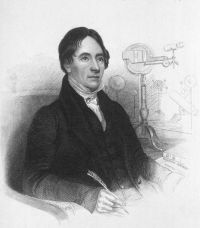 Thomas Dick,
The Practical Astronomer
“ It is now, therefore, universally acknowledged, that the light of the sun, which to us seems perfectly homogeneal and white, is composed of no fewer than seven different colours, namely Red, Orange, Yellow, Green, Blue, Indigo and Violet. A body which appears of a red colour has the property of reflecting the red rays more powerfully than any of the others; a body of a green colour reflects the green rays more copiously than rays of any other colour, and so of the orange, yellow, blue, purple and violet. ”
 Frances Fuller Victor,
Eleven Years in the Rocky Mountains and Life on the Frontier
“ It did not occur to any man that this poor, despised red man was the original discoverer, and sole occupant for many centuries, of every mountain seamed with quartz and every stream whose yellow sand glittered in the noonday sun. ”
M. A. Orr, Stars of the southern skies (1915)
“ What is the meaning of these different types of stars—the blue, the yellow, and the red? and can a star change its colour and type? Yes, we believe that all the blue stars, if they follow the normal course, will in countless ages become red, and though the life of the whole human race may perhaps not be long enough to witness a single instance, we feel confident that this process is going on. One walk through a forest is enough to teach us that a tree grows from seed to sapling, from maturity to decay, because we see trees around us in all these stages. ”
Thomas Wood, The Mosaic History of the Creation of the World
“ How amazing it is that this ponderous globe should be suspended in the fluid air, without any visible support, and upheld only by the sovereign will of its almighty Creator! His power, who “hangeth the earth upon nothing,” is inconceivably great; and the revolutions of this globe produce the most beneficial effects. The daily rotation of the earth causes the uniform succession of light and darkness; and its annual motion occasions the difference of the length of the days and nights, and the beautiful diversity of the seasons. ”
Robert Hunt, The Poetry of Science; or, Studies of the Physical Phenomena of Nature
“ I cannot doubt that the colour of watery vapour under certain circumstances is the principal or only cause of the red colour observed in clouds. The very fact that that colour chiefly appears in the presence of clouds is a sufficient refutation of the only explanation of the phenomena of sunset and sunrise, having the least plausibility, given by optical writers. If the red light of the horizontal sky were simply complementary to the blue of a pure atmosphere, the sun ought to set red in the clearest weather, and then most of all ”
 Hugh Miller,
The Cruise of the Betsey
“ It seems much more probable, however, that the red flush which characterizes the whole of that planet,—its oceans as certainly as its continents,—should be rather owing to some widely-diffused peculiarity of the surrounding atmosphere, than to aught peculiar in the varied surface of land and water which that atmosphere surrounds ”
“ There was the red star, a monstrous blotch of crimson swollen and brooding on the horizon and filling a quarter of the sky. There was the fleck of white high up near the top of the red giant, its white-dwarf companion in transit. ”
Hugh Miller,
The Cruise of the Betsey
“ The fields and dwellings of living men mingle in the landscape with old episcopal ruins and ancient burying-grounds; and yonder, well-nigh in the opening of the Frith, gleams ruddy to the sun,—a true blood-colored blush, when all around is azure or pale,—the tall Red Sandstone precipices of Dunnet Head. It has been suggested that the planet Mars may owe its red color to the extensive development of some such formation as the Old Red Sandstone of our own planet: the existing formation in Mars may, at the present time, it is said, be a Red Sandstone formation. ”

“ For thence it may be gather'd, that the Sea-Water reflects back the violet and blue-making Rays most easily, and lets the red-making Rays pass most freely and copiously to great Depths. For thereby the Sun's direct Light at all great Depths, by reason of the predominating red-making Rays, must appear red; and the greater the Depth is, the fuller and intenser must that red be. And at such Depths as the violet-making Rays scarce penetrate unto, the blue-making, green-making, and yellow-making Rays being reflected from below more copiously than the red-making ones, must compound a green. ”
Related terms
Authors who wrote about “red earth”
William CarpenterCamille FlammarionWladislaw Somerville Lach-SzyrmaPercy GregStephen MarloweF. T. IvesEllsworth DouglassFrancis J. GrundD. MortimoreJ. F. BlakeR. R. Winterbotham Edmond Hamilton
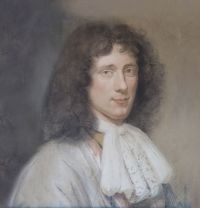 Christiaan Huygens
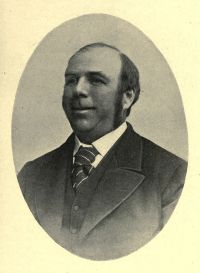 Robert S. BallGeorge F. Chambers
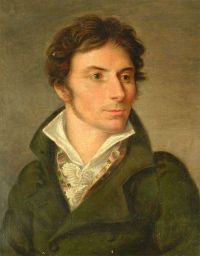 Lorenz OkenN. S. Shaler
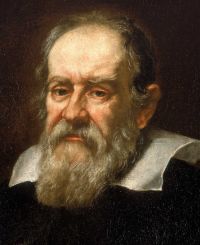 Galileo GalileiMartha Evans Martin
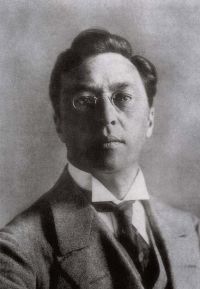 Wassily Kandinsky
Camille FlammarionWladislaw Somerville Lach-SzyrmaPercy GregStephen MarloweF. T. IvesEllsworth DouglassFrancis J. GrundD. MortimoreJ. F. BlakeR. R. WinterbothamEdmond HamiltonChristiaan HuygensRobert S. BallGeorge F. ChambersLorenz OkenN. S. ShalerGalileo GalileiMartha Evans MartinWassily Kandinsky