“ It is therefore necessary, as we shall see presently, to take particular precautions in working with a reflecting telescope, which is, so to speak, materially more tender as regards external conditions than the refractor. As regards light-grasp, the power of rendering faint objects visible, there is more room for honest variety of opinion. It was often assumed in earlier days that a reflector was not much brighter than a refractor of half the aperture, i.e., of one quarter the working area. ”
Refractor telescope
Definition and stakes
Quotes about “refractor telescope”
“ For casual observations and occasional use—all that most busy buyers of telescopes can expect—the refractor has a decided advantage in convenience. If one has leisure for frequent observations, and particularly if he can give his telescope a permanent mount, and is going in for serious work, he will do well not to dismiss the idea of a reflector without due deliberation.In any case it is good policy to procure an instrument from one of the best makers. And if you do not buy directly of the actual maker it is best to deal with his accredited agents. ”
J. S. Plaskett, The Dominion Astrophysical Observatory…
“ The reflecting telescope on the other hand has the [14] upper or outer end of the tube open and the light from the distant object is reflected (hence the name) from a concave mirror at the lower end of the tube, forming the image of the object at the top, where it can be viewed and magnified by the ocular as in the refractor.Each type of telescope has its astronomical advantages and disadvantages. The refractor is better suited for visual observations such as the measurement of double stars and the study of planetary detail and is less affected by temperature changes than the reflector. ”
Edmund Neville Neison, Popular Science Monthly (1880)
“ Which is the most powerful telescope in existence? There are the great refractors of Poltava and of Cambridge, United States, each of fifteen inches in diameter and twenty-three feet in focal length. There is the still larger refractor of Chicago, with an aperture of eighteen inches and a focal length of twenty-three feet. All these instruments are of high excellence in defining power, the essential point where Lord Rosse's breaks down. There is the reflector of Mr. Russels, with its metal speculum of two feet in diameter and its tube twenty feet in length. ”
James Baikie, Through the Telescope
“ If the observer wishes to have as much power as possible in proportion to his expenditure, and is not afraid to take the risk of a small amount of trouble with the adjustments and films, the reflector is probably the instrument best suited to him. If, on the other hand, he is so situated that his telescope has to be much moved, or, which is almost as bad, has to stand unused for any considerable intervals of time, he will be well advised to prefer a refractor. ”
“ If, like many really enthusiastic amateurs, he can get only an occasional evening for observing, and from circumstances has to use a portable mount set up on his lawn, or even roof, when fortune favors an evening’s work, he will find a refractor always in condition, easy to set up, and requiring a minimum of time to get into action. The reflector is much the more tender instrument, with, however, the invaluable quality of precise achromatism, to compensate for the extra care it requires for its best performance. ”
“ Figure 30 shows a complete modern refractor of four inches aperture on a portable equatorial stand with slow motion in right ascension and diagonal eye piece.Reflectors, used in this country less than they deserve, are, when properly mounted, likewise possessed of many parts. The smaller ones, such as are likely to come into the reader’s hands, are almost always in the Newtonian form, with a small oblique mirror to bring the image outside the tube. ”
William F. Denning, Telescopic Work for Starlight Evenings
“ Observer’s Aims.—If the intending observer merely requires a telescope to exhibit glimpses of the wonders which he has seen portrayed in books, and has no intention of pursuing the subject further than as an occasional hobby, he will do well to purchase a small refractor between 3 and 4 inches in aperture. Such instruments are extremely effective on the Sun and Moon, which are naturally the chief objects to attract attention, and, apart from this, appliances of the size alluded to may be conveniently used from an open window. ”
“ In fact if one were to take completely apart a well-made small refractor, including its optical and mechanical parts one would reckon up some 30 to 40 separate pieces, not counting screws, all of which must be accurately fitted and assembled if the instrument is to work properly. ”
James Baikie, Through the Telescope
“ Let us suppose, then, that the telescope has been acquired, and that it is such an instrument as may very commonly be found in the hands of a beginner—a refractor, say, of 2, 21⁄2, or 3 inches aperture (diameter of object-glass) . The question of reflectors will fall to be considered later. Human nature suggests that the first thing to do with it is to unscrew all the screws and take the new acquisition to pieces, so far as possible, in order to examine into its construction. Hence many glasses whose career of usefulness is cut short before it has well begun. ”
James Baikie, Through the Telescope
“ And now, having his telescope, whatever its size, principle, or form of mounting, the observer has to proceed to use it. Generally speaking, there is no great difficulty in arriving at the manner of using either a refractor or a reflector, and for either instrument the details of handling must be learned by experience, as nearly all makers have little variations of their own in the form of clamps and slow motions, though the principles in all instruments are the same. ”
Samuel Smiles, Men of Invention and Industry… (1884)
“ It is a refractor, made by Cooke and Sons of York. The object glass is three inches; the focal length forty-three inches; and the telescope, when drawn out, with the pancratic eyepiece attached, is about four feet. It was made after Mr. Robertson's directions, and is a sort of combination of instruments."Even that instrument," he proceeded, "good as it is for the money, tantalises me yet. A look through a fixed equatorial, such as every large observatory is furnished with is a glorious view. ”
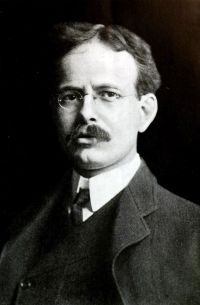
“ It suffers more than the refractor, as a rule, from scattered light, for imperfect polish of the film gives a field generally presenting a brighter background than the field of a good objective. After all the preference depends greatly on the use to which the telescope is to be put. For astrophysical work in general, Professor George E. Hale, than whom certainly no one is better qualified to judge, emphatically endorses the reflector. Most large observatories are now-a-days equipped with both refractors and reflectors. ”
James Baikie, Through the Telescope
“ The student can scarcely fail to be struck by the extreme solidity of the modern mountings, and by the way in which all the mechanical parts of the instrument are so contrived as to give the greatest convenience and ease in working. Comparing, for instance, Plate II., a 6-inch refractor by Messrs. Cooke, of York, available either for visual or photographic work, with the Dorpat refractor (Fig. 3) , it is seen that the modern maker uses for a 6-inch telescope a stand much more solid and steady than was deemed sufficient eighty years ago for an instrument of 96⁄10 inches. ”
David Gill, Encyclopædia Britannica, Ninth Edition (1888)
“ Were we called upon to design a great refractor we should abolish all such apparatus and provide the observer with a few conveniently placed small handles or keys for electrical connexions, and we should perform all motions of the telescope whatsoever by electromotors. There is no form of energy so convenient for the astronomer. ”
George Calver, New Edition of Hints on Silver-Glass Reflecting Telescopes Manufactured by Mr…
“ But 150 on a 3 inch is a high power for the quantity of light obtained, to say nothing of the separate consideration and advantage of long focus. Aperture is a quality or function of the telescope considered separately from light or focus. For instance, suppose a 5 inch speculum is so thinly silvered that it gives the exact degree of light as a 2-1/2 inch refractor, the defining and separating power of the 5 inch aperture would be very superior to the 2-1/2 inch. ”
George Calver, New Edition of Hints on Silver-Glass Reflecting Telescopes Manufactured by Mr…
“ After waiting a long time for clouds to clear away, I turned the tube on that exceedingly difficult test, δ Cygni. I consider this star to be one of the severest tests for any telescope, reflector, or refractor of any aperture in the whole heavens. The performance of the mirror upon it, with the full aperture, was simply MAGNIFICENT, the small close companion standing out clearly, well separated from its bright primary, although the night was not good. ”
James Baikie, Through the Telescope
“ A 101⁄2-inch reflector may be purchased new for rather less than the sum which will buy a 4-inch refractor. True, the reflector has not the same command of light inch for inch as the refractor, but a reflector of 101⁄2 inches should at least be the match of an 8-inch refractor in this respect, and will be immeasurably more powerful than the 4-inch refractor, which comes nearest to it in price. Second stands the ease and comfort so conspicuous in observing with a Newtonian. ”
J. Arthur Thomson, The Outline of Science, Vol. 1…
“ Thus the refractor and the reflector differ chiefly in their manner of gathering light. The powerfulness of the telescope depends on the size of the light-gatherer. A telescope with a lens four inches in diameter is four times as powerful as the one with a lens two inches in diameter, for the amount of light gathered obviously depends on the area of the lens, and the area varies as the square of the diameter.The largest telescopes at present in existence are reflectors. It is much easier to construct a very large mirror than to construct a very large lens ”
“ The fact is, that most of the time over most of the world seeing conditions are bad, so that the telescope does not have a fair chance, and on the whole the bigger the telescope the worse the chance. One famous English astronomer, possessed of a fine refractor that would be reckoned large even now-a-days, averred that he had seen but one first class night in fifteen years past. ”
Samuel Smiles, Men of Invention and Industry… (1884)
“ He found that before he could make a good achromatic telescope it was necessary that he should calculate his curves from data depending upon the nature of the glass. He accordingly proceeded to study the optical laws of refraction, in which his knowledge of geometry and mathematics greatly helped him. And in course of time, by his rare and exquisite manipulative skill, he succeeded in constructing a four-inch refractor, or achromatic telescope, of admirable defining power. ”
Robert P. Multhauf, Holcomb, Fitz, and Peate: Three 19th Century American Telescope Makers
“ One of several observers assigned by the Society to the observation of the transit of Venus in 1769, he constructed instruments of the most advanced types, apparently employing European lenses, and used the instruments himself. Of these, a 13⁄4-inch refractor mounted as a transit instrument stands in the hall of the Philosophical Society. It is probably the oldest extant American-made telescope. ”
Various, Scientific American Supplement…
“ I trust it has been shown that expensive telescopes are not necessarily required for practical work. My advice to an intending purchaser would be to put into the objective for a refractor, or into the mirror for a reflector, all the money he feels warranted in spending, leaving the mounting to be done in the cheapest possible manner consistent with accuracy of adjustment, because it is in the objective or in the mirror that the value of the telescope alone resides. ”
“ An instrument quite uncovered suffers from gusts far more than one housed under a dome, which is really the sum of the whole matter, save that a [Pg 243] dome to a slight extent does shelter the observer in extremely cold weather.Even very large reflectors can be housed in similar fashion if suitably mounted. For example in Fig. 176 is shown the 36 inch aperture reflector of the late Dr. Common, which was fitted with an open fork equatorial mounting. Here the telescope itself, with its short pier and forked polar axis, is shown in dotted lines.Fig. 175.—Sliding Housing for 11-inch Refractor. ”
Harold Dennis Taylor and David Gill, 1911 Encyclopædia Britannica (1911)
“ The Repsolds find it unnecessary to relieve the friction of the declination axis. Fig. 16.—Pulkovo Refractor. In such large telescopes it becomes a matter of the first importance to provide means of convenient access to the eye-end of the instrument. This the Repsolds have done in the Pulkovo telescope by means of two platforms, as shown in fig. 16. These platforms are capable of easy motion so that the astronomer may be conveniently situated for observing an object at any azimuth or altitude to which the telescope may be directed. ”
Garrett Putman Serviss, Pleasures of the telescope
“ When thus mounted, the telescope may be driven by clockwork, or by hand with the aid of a screw geared to a handle carrying a universal joint. The Star Image. And now for testing the telescope. It has already been remarked that the excellence of a telescope depends upon the perfection of the image formed at the focus of the objective. In what follows I have only a refractor in mind, although the same principles would apply to a reflector. With a little practice anybody who has a correct eye can form a fair judgment of the excellence of a telescopic image. ”
George Ellery Hale,
The New Heavens
“ The largest instruments of this type are the 36-inch Lick telescope and the 40-inch refractor of the Yerkes Observatory. Fig. 8. Erecting the steel building and revolving dome that cover the Hooker telescope. Reflecting telescopes, which are particularly adapted for photographic work, though also excellent for visual observations, are very differently constructed. No lens is used. The telescope tube is usually built in skeleton form, open at its upper end, and with a large concave mirror supported at its base. ”
James Sime, William Herschel and his work (1900)
“ The Church is a telescope that looks, or should look, even farther into space and time. While Herschel was giving life and power to the reflecting telescope, Dollond's followers in this country and Fraunhofer in Germany were restoring the refractor to the place from which it had been deposed. In 1825 the finest refractor that, up to that time, the world had ever seen was erected for Struve at the expense of the Russian Government in Dorpat. The tube was 13 feet in length, and the object-glass was 9 Paris inches in diameter. The weight of the whole was about 3000 Russian pounds. ”
Cecil Goodrich Julius Dolmage, Astronomy of To-day: A Popular Introduction in Non-Technical Language
“ In order to observe the latter we therefore employ what is called a terrestrial telescope, which is merely a refractor with some extra lenses added in the eye portion for the purpose of turning the inverted image the right way up again. These extra lenses, needless to say, absorb a certain amount of light; wherefore it is better in astronomical observation to save light by doing away with them, and putting up with the slight inconvenience of seeing the object inverted. ”
David Gill, Encyclopædia Britannica, Ninth Edition (1888)
“ This form of slow motion could be applied with advantage to the right ascension also, and probably to the separation of the segments of heliometers. Large equatorials (3) Of large equatorials we name first the great refractor at Large Washington of 26-inches aperture and 321/2-feet focal length. [27] Washington telescope. The mounting appears to be unworthy of the well-known excellence of the object-glass. To illuminate the micrometer an assistant is required to hold a lamp in his hand. No convenient means are provided for illuminating the declination axis ”
J. A. Gillet, The Heavens Above: A Popular Handbook of Astronomy
“ A telespectroscope of small dispersive power is shown in Fig. 171; a being the object-glass of the telescope, cc the tube of the telescope, and e the comparison prism at the end of the collimator tube. A more powerful instrument is shown in Fig. 172. A is the telescope, C the collimator tube of the spectroscope, P the train of prisms, and E the telescope tube. Fig. 173 shows a still more powerful spectroscope attached to the great Newall refractor (18) . ”