Remora

Definition and stakes

Edmund Selous,  The romance of the animal world (1905)

“ But the remora, when it uses its sucker, does not walk, or even swim, which is the equivalent of walking in a fish; all that is done for it by the shark or turtle, to which it attaches itself. It just swims underneath it, and presses itself against its under side, and there it is carried along as safely as if it were riding in its own carriage—indeed, much more so, for there is less likely to be an accident, and if ever there is, the remora can drop off without being hurt, as people generally are when they jump out of a carriage. ”
Source: Gutenberg

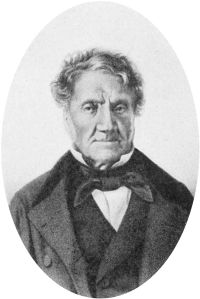
Portrait of Aimé Bonpland Aimé Bonpland,  Personal Narrative of Travels to the Equinoctial Regions of America…

“ I examined a remora of the South Sea during the passage from Lima to Acapulco. As he lived a long time out of the water, I tried experiments on the weight he could carry before the blades of the disk loosened from the plank to which the animal was fixed; but I lost that part of my journal. It is doubtless the fear of danger that causes the remora not to loose his hold when he feels that he is pulled by a cord or by the hand of man. The sucet spoken of by Columbus and Martin d'Anghiera was probably the Echeneis naucrates and not the Echeneis remora. ”
Source: Gutenberg

S. A. Ferrall,  A Ramble of Six Thousand Miles through the United States of America

“ The Indians of Jamaica and Cuba employed this fish as falconers do hawks. In calm weather, they carried out those which they had kept and fed for the purpose, in their canoes, and when they had got to a sufficient distance, attached the remora to the head of the canoe by a strong line of considerable length. When the remora perceives a fish, which he can do at a considerable distance, he darts away with astonishing rapidity, and fastens upon it. ”
Source: Gutenberg

Get perspective with Kwize: daily news enlightened by great literature