Rotary engine

Definition and stakes

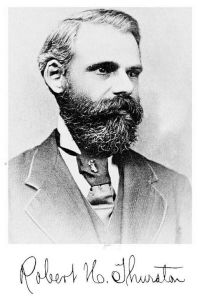
Portrait of Robert Henry Thurston Robert Henry Thurston,  A History of the Growth of the Steam-Engine

“ The most palpable of the advantages of the rotary engine are the reduction in the size of the engine, claimed to result from the great velocity of the piston; the avoidance of great accidental strains, especially noticed in propelling ships; and a great saving of the power which is asserted to be expended in the reciprocating engine in overcoming the inertia while changing the direction of the motions. These advantages adapt the rotary engine, in an especial manner, to the driving of a locomotive or steam fire-engine. ”
Source: Gutenberg

James Slough Zerbe,  Motors

“ Rotary Engines.—Many attempts have been made to produce a rotary type of steam engine, and also to adapt it for use as an internal combustion motor.
The problem is a complicated one for the following reasons: First, it is difficult to provide for cut-off and expansion. A rotating type, to be efficient, must turn at a high rate of speed, and this makes the task a more trying one. Second, the apparent impossibility of properly packing [196] the pistons. The result is a waste of steam, or the gas used to furnish the power.
”
Source: Gutenberg

A. Russell Bond,  Mechanics: The Science of Machinery

“ Many efforts have been made to produce a rotary engine in which the piston rotates instead of reciprocating, thus doing away with the work of overcoming inertia. However, there are serious obstacles to the construction of such an engine, and as yet no truly efficient and practical rotary engine has been built. ”
Source: Gutenberg

Get perspective with Kwize: daily news enlightened by great literature