Torque

Definition and stakes

1911 Encyclopædia Britannica (1911)

“ The typical torque is a circlet with twisted rope-like strands, the ends not joined together; the torque was usually worn with the opening in the front as seen in a figure of a Gaul in a sculptured sarcophagus in the Capitoline Museum at Rome. In mechanics, the term “ torque ” is used of the turning-moment of a system force, as in a series dynamo. ”
Source: Wikisource

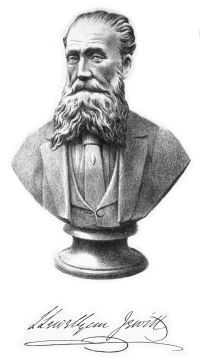
Portrait of Llewellynn Frederick William Jewitt Llewellynn Frederick William Jewitt,  Grave-mounds and Their Contents

“ There can be no doubt that the torque was worn both by 197 the ancient Briton and by his Roman conqueror, and therefore it is perhaps best, as it is at present not easy to say which of the known examples are to be attributed to the earlier and which to the later of these periods, to speak of them generally under this head.
The torque, or torquis, is said, by ancient writers, to have been first used by the Persians and by the nations of Northern and Western Europe.
”
Source: Gutenberg

Albert Francis Zahm,  Aërial Navigation

“ The static principle of the torsion wing is a familiar one in elementary mechanics. It is this: a torque of given magnitude and direction has the same effect on a rigid body whatever its point of application. The longitudinal torque, or moment, may therefore be exerted by the wings, by suitable rudders, by forward planes, by any auxiliary planes, or fins, however placed or moved for the purpose. Accordingly there seems to be an unlimited variety of concrete patentable devices available to the inventor for securing impactual torque about the longitudinal axis, or either of the other two axes. ”
Source: Gutenberg

Get perspective with Kwize: daily news enlightened by great literature