Rubble stone

Definition and stakes

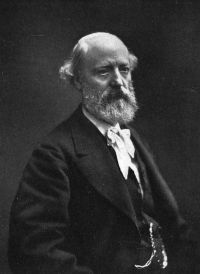
Portrait of Eugène-Emmanuel Viollet-le-Duc Eugène-Emmanuel Viollet-le-Duc,  How to build a house (1874)

“ The courses which form the plinth will be of hard stone, but you will observe that, except at the angles and for the air-holes, they are only a facing,—they are not parpings, that is, do not form the whole thickness of the wall. We have excellent rubble-stone, which, with the good mortar we employ, offers greater resistance to pressure than is required to carry two stories and a roof. Letting these rough stones tooth out on the inside we tie them better into the haunches of the barrel-vaults (Fig. 28) , and thus economise dressed stone. ”

Source: Gutenberg

James Bartlett,  1911 Encyclopædia Britannica (1911)

“ Walling.—There are broadly speaking two classes of stone walling: rubble and ashlar. Rubble walls are built of stones more or less irregular in shape and size and coarsely jointed. Ashlar walls are constructed of carefully worked blocks of regular dimensions and set with fine joints.
Random Rubble (fig. 3) is the roughest form of stonework. It is built with irregular pieces of stone usually less than 9 in. thick, loosely packed without much regard to courses, the interstices between the large stones being occupied by small ones, the remaining crevices filled up with mortar.
”
Source: Wikisource

James Bartlett,  1911 Encyclopædia Britannica, Volume 4… (1911)

“ When, therefore, suitable stone of both qualities can be obtained, the harder stone can be exposed to the weather, or to the action which the softer stone cannot resist, and made to form the main body of the structure of the latter so protected. The hard and the soft should be made to bear alike, and should therefore be coursed and bonded together by the mason’s art, whether the work be of stone wrought into blocks and gauged to thickness, or of rough dressed or otherwise unshaped rubble compacted with mortar. ”
Source: Wikisource

Get perspective with Kwize: daily news enlightened by great literature