Ashlar

Definition and stakes

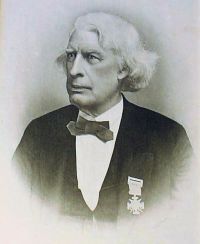
Portrait of Albert Gallatin Mackey Albert Gallatin Mackey,  Manual of the Lodge (1868)

“ They are called immovable jewels, because they are always to be found in the East, West, and South parts of the Lodge, being worn by the officers in those respective stations.
The movable jewels are the Rough Ashlar, the Perfect Ashlar, and the Trestle-Board. [9]
The rough ashlar is a stone as taken from the quarry in its rude and natural state.
The perfect ashlar is a stone made ready by the hands of the workmen, to be adjusted by the working tools of the fellow-craft. The trestle-board is for the master workman to draw his designs upon.
”
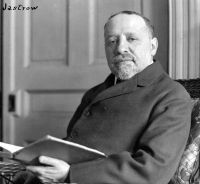
Source: Wikisource

Elizabeth A. Reed,  Persian Literature, Ancient and Modern

“ The word Asura, although used in a good sense in the early songs of the Rig-veda, becomes, in the later portions of that literature, as well as in the Brāhmaṇas and Purāṇas, a term which is applied only to evil spirits; they are represented as the constant enemies of the Hindū gods, always making attacks upon the sacrifices offered by devotees. In the Avesta, Asura, in the form of Ahura, becomes a component part of Ahura Mazda, which is the name of God among the 405Pārsīs, whose faith is called “the Ahura religion” [289] in order to distinctively indicate its opposition to the Deva religion. ”
Source: Gutenberg

Max Duncker,  The History of Antiquity, Vol. 2…

“ There is only one striking difference: the special protector of Assyria, Asshur, the god of the land, stands at the head of the gods in the place of El of the Babylonians. He it is after whom the land and the oldest metropolis is named, whose representatives the oldest princes of Assyria appear to have called themselves. The name of Asshur is said to mean the good or the kind; [62] which may even on the Euphrates have been an epithet of El, which on the Tigris became the chief name of the deity. ”
Source: Gutenberg

Get perspective with Kwize: daily news enlightened by great literature