Seal (heraldry)

Definition and stakes

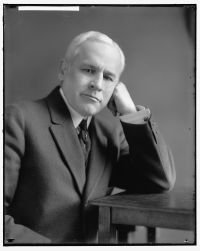
Portrait of Mark Antony Lower Mark Antony Lower,  The Curiosities of Heraldry

“ The earliest representation of arms upon a seal is of the date of 1187. [41] The embellishment of seals was one of the first as well as one of the most interesting and useful applications of Heraldry. Seals, at first rude and devoid of ornament, became, in course of time, beautiful pieces of workmanship, elaborately decorated with arms, equestrian figures, and tabernacle work of gothic architecture.
The Crusades are admitted by all modern writers to have given shape to heraldry.
”
Source: Gutenberg

Sir W. H. St. John Hope,  Heraldry for Craftsmen & Designers

“ These came into common use towards the end of the twelfth century, much at the same time that armory itself became a thing of life, and they were constantly being engraved for men, and even for women, who bore and used arms, and for corporate bodies entitled to have seals.
Moreover, since every seal was produced under the direction of its owner and continually used by him, the heraldry displayed on seals has a personal interest of the greatest value, as showing not only what arms the owner bore, but how they were intended to be seen.
”
Source: Gutenberg

G. W. Eve,  Heraldry as art: An account of its development and practice… (1907)

“ Fig. 2, the reverse of the Great Seal of Henry IV, a splendid example of the seal engraver’s art, is an interesting illustration of how armorials were borne by man and horse, as well as of their approximate proportion. An example of the influence of local considerations in modifying proportion is the group which occupies the middle of the canopy of the tomb, in Westminster Abbey, of Louis Robsart, Lord Bourchier, who was standard-bearer to Henry V. The shield is minimised as much as possible because its bearings appear large and bold on the carved banners at the sides ”
Source: Gutenberg

Get perspective with Kwize: daily news enlightened by great literature