Henry H. Gibson, American Forest Trees
“ It is an abundant seeder, and its favorite seedbed is moss, muck, decayed wood, and wet ground litter of various kinds. For the first few years seedlings are sensitive to frost, but not in later life. ”
Henry H. Gibson, American Forest Trees
“ It is an abundant seeder, and its favorite seedbed is moss, muck, decayed wood, and wet ground litter of various kinds. For the first few years seedlings are sensitive to frost, but not in later life. ”
 Albert Bigelow Paine,
A Little Garden Calendar for Boys and Girls
Albert Bigelow Paine,
A Little Garden Calendar for Boys and Girls
“ The root and a little of the lower stalk is from a seed, and upon this has been grafted or spliced with soft bands and wax, a bud from some choice kind of peach or apple or plum, or whatever the tree is to be, and this new bud grows and forms the tree. Sometimes a bud of the choice kind is merely inserted beneath the bark of another tree and grows and forms a new limb. By and by, when it bears fruit, the fruit will be of the kind that was on the choice tree, but the seed, though it looks just the same, may be altogether different. ”
G. F. Scott Elliot, The Romance of Plant Life
“ Once upon the ground, the seed has to germinate if it can; its root has to pierce the soil or find a way in between crevices of rocks or sharp-edged stones. All the time it is exposed to danger from birds, beasts, and insects, which are only kept off by its resin. But it is difficult to see, for its colour is just that of dead pine needles and its shape is such that it easily slips into crevices. Then the seven or eight small green seed leaves break out of the tough seed coat, and the seedling is now a small tree two inches high. ”
Various, The Girl's Own Paper, Vol. XX, No…
“ When in flower the branches spread rigidly, but as the seed ripens the leaves begin to wither and drop off, the branches curl inward, and the plant becomes coiled up so as to resemble a small ball. In this state it is loosened from the soil and is drifted about with the sand over the arid plains. Should rain fall, or should it be blown into the water, the branches expand, the pods open, the seeds fall out, and it is a remarkable and newly-discovered fact that in the short space of twenty hours the seeds germinate and root. The plant will retain its susceptibility for years. ”
Various, Birds and All Nature, Vol. 7, No…
“ So we plant seeds in rows on our dam-wall, and pull one up daily to see how it goes with them. Alladeen buried her wonderful stone, and a golden palace sprang up at her feet. We do far more. We put a brown seed in the earth, and a living thing starts out, starts upward—why, no more than Alladeen can we say—starts upward, and does not desist till it is higher than our heads, sparkling with dew in the early morning, glittering with yellow blossoms, shaking brown seeds with little embryo souls on to the ground. ”
A. A. Crozier, The Cauliflower
“ The bed having been thoroughly watered, the seed may be sown broadcast or in lines, and covered with a quarter of an inch of fine, dry, sandy soil, and shaded from bright sunshine. When the seedlings appear, gradually remove the shade. The most convenient form of bed is not more than four feet in width, the length being sufficient for the ground to be planted. One ounce of seed is sufficient for a bed fifty feet square, which will give sufficient plants for an acre if the seed is good. Sowing should be made once in ten days, from the middle of August till the end of September. ”
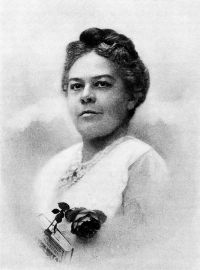 Mabel Osgood Wright,
The Garden, You, and I
Mabel Osgood Wright,
The Garden, You, and I
“ Also in fingering the seeds, you will know why some are slow in germinating: these are either hard and gritty, sandlike, like those of the English primrose, smooth as if coated with varnish, like the pansy, violet, columbine, and many others, or enclosed in a rigid shell like the iris-hued Japanese morning-glories and other ipomeas. Heart of Nature is never in a hurry, for him time is not. What matters it if a seed lies one or two years in the ground? ”
 Philip Henry Gosse,
Omphalos: An Attempt to Untie the Geological Knot
Philip Henry Gosse,
Omphalos: An Attempt to Untie the Geological Knot
“ Each seed is a long club-shaped body, with a bulbous base and a slender point, more or less produced. While it yet hangs from the branch, the radicle and crown of the root begin to grow, and gradually lengthen, until the tip reaches the soil, which it penetrates and thus roots itself; while those which depend from the higher branches, after growing for a while, drop, and, sticking in the mud, throw out roots from one end, and leaves from the other. ”
Mrs. Paynter, The Children's Book of Gardening
“ You should remove all stones and weeds, and break up the lumps of earth with your rake. The surface of your seed-bed, when ready, should be quite smooth and fine. If the seed to be sown is small, mix it with double its own quantity of sand, or dry sifted earth, as that helps you not [19] to sow too thickly. Do not choose a windy day if you can help it, or your seeds would blow away. For a big patch of seeds it is best to take your hoe and draw shallow trenches, one inch deep and twelve or fifteen inches apart. ”
George Wood Anderson, Unfinished Rainbows, and Other Essays (1922)
“ The seed is not only one of the smallest, being so little that it can slip unnoticed from your grasp, and hide within the crevice of a clod, mocking your solicitous search, but it is of most rapid growth. Within a fortnight it will overshadow the garden, and before the season is ended will tower twelve to fifteen feet in height, its sturdy branches affording shelter, and protected nests, for many birds. Divine thoughts within the brain are capable of this marvelous development. ”
Charles Lathrop Pack, The School Book of Forestry
“ When living tree seeds are exposed to proper amounts of moisture, warmth and air in a fertile soil, they will sprout and grow. A root develops which pushes its way down into the soil, while the leaf-bud of the plant, which springs from the other end of the seed, works its way upward toward the light and air. This leafy part of the seed finally forms the stem of the tree. But trees may produce plenty of seed and yet fail to maintain their proper proportion in the forest. ”
Sutton & Sons Ltd., The Culture of Vegetables and Flowers From Seeds and Roots
“ The plants in the seed-bed should be thinned to three inches, and must have water in dry weather. All the thinnings should be pricked out in the first instance to make them strong for planting, but the last lot may go direct to the beds to finish.The final planting must be on rich, light, dry soil, and water given to encourage growth. The distance for the curled varieties is a foot each way, and for the broad-leaved fifteen inches. In taking the last lot from the seed-bed, a crop should be left untouched to mature at twelve to fifteen inches apart. ”
“ Do you know how nature plants them? A seed starts and becomes a small plant on the surface of the leaf mould or a little beneath; little roots push downward and to right and left; and later, after getting a good hold below with numerous branchlets, the slender roots shorten and tug away at the tiny bulb above, as much as to say, "Come down a little into mother earth, for cold winter is approaching and there will be danger from frost." The young bulb is drawn down an inch more or less, the slender roots perish with the growing year, but the bulb is preserved. ”
Harry Roberts, The Book of Old-Fashioned Flowers
“ SEED-SOWING AND TRANSPLANTING The gardening beginner will be well advised to obtain the greater number of his perennials as plants; but there are some which are easily grown from seeds, and seed-sowing is the method by which all the hardy annuals and biennials are to be raised. In the case of annual and biennial plants, such as sweet-peas, mignonette, nasturtiums, convolvuluses, nigellas, and the rest, the seed may well be sown in the open borders or beds, if the soil be but well dug and finely divided. ”
 Henry Ward Beecher,
Pleasant Talk About Fruits, Flowers and Farming
Henry Ward Beecher,
Pleasant Talk About Fruits, Flowers and Farming
“ Every seeming seed planted, then, is a mere envelope of two or more seeds, and two or three plants come up, very much to the surprise of the inexperienced, for each husk. When a little advanced, they are to be thinned out to one in a place.We prefer planting very early, and in rows eight inches apart and at about one inch distant in the row. As the plants begin to gain size they make very delicate greens; and for this purpose are to be boiled, leaf, root, and all. Continue to thin out until one is left for every six inches for full growth. ”
A. R. Harding, Ginseng and Other Medicinal Plants
“ To prepare a seed-bed, simply rake off the forest leaves from a spot of ground where the soil is rich and loamy, then with your rake make a shallow bed, scatter the seeds over it, broadcast, being careful not to sow them too thick. ”
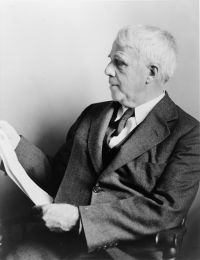 Robert Frost,
Mountain Interval — Putting in the Seed
(1920)
Robert Frost,
Mountain Interval — Putting in the Seed
(1920)
“ How Love burns through the Putting in the Seed On through the watching for that early birth When, just as the soil tarnishes with weed, The sturdy seedling with arched body comes Shouldering its way and shedding the earth crumbs. ”
Sutton & Sons Ltd., The Culture of Vegetables and Flowers From Seeds and Roots
“ A sowing in drills on a carefully prepared bed in the open ground is also desirable, and in some seasons it may produce the most valuable plants of the year. Asters come so true from seed that the bed may be arranged in any desired pattern. Thin the plants early, and continue the process until they are far enough apart for flowering. A distance of eight inches is sufficient for the miniatures, ten inches for the dwarfs, and twelve or fifteen inches for the tall varieties. ”
Mabel Osgood Wright,
The Garden, You, and I
“ We wish present visible growth, and so we must be willing to lend aid, and first aid to such seeds is to give them a whiff of moist heat to soften what has become more hard than desirable through man's intervention. For in wild nature the seed is sown as soon as it ripens, and falls to the care of the ground before the vitality [Pg 47] of the parent plant has quite passed from it. That is why the seed of a hardy plant, self-sown at midsummer, grows with so much more vigour than kindred seed that has been lodged in a packet since the previous, season. ”
Ellen Eddy Shaw, The Library of Work and Play: Gardening and Farming
“ First the ground should be made very fine. This is an easy matter if the planting is done in the hotbed, but more of a problem in the outdoor garden. It is foolish to plant at all if one does not intend to do things right. So work over the seed bed thoroughly. After all is fine and deeply worked, say to about a foot deep, the next thing to consider is this—how deep should a seed be planted?"The depth depends upon the size of the seed. Take such small seed as poppy, parsley, even lettuce, and these may be just sprinkled on the surface of the ground. ”
Henry Ward Beecher,
Pleasant Talk About Fruits, Flowers and Farming
“ Plant them in rows six inches apart, in a seed-bed. Keep them clean from all weeds. When grown from an inch to two inches high, transplant them to a prepared bed, placing them about fifteen inches apart each way. The ground should be rich, light, and gently hoed, at least once a week, to keep the surface open. If very large flowers are wanted, not more than three blooms should be allowed to one root. We prefer, however, to give the plant a rich soil and let it yield its flowers, large and small, to suit itself. The seed should be saved from the largest blossoms only. ”
Ellen Eddy Shaw, The Library of Work and Play: Gardening and Farming
“ Over the seed sift a little soil. Pansy seed is fine and small, so great care must be taken in the early waterings; better far to cover the bed with old sacking, and water the sacking. In this way, the seed is not washed away. The little sturdy plants should be covered over with leaves or straw for the wintertime. When early spring comes, you will be delighted with plants which are well along."Pansy flowers should always be kept well picked. Do not let the seed pods form if you desire continuous bloom. ”
Enos A. Mills, The Rocky Mountain Wonderland
“ Several thousand willow trees were thus successfully planted by this violent wind.Seeds are the chief means by which the forest is extended or produced. They are sown by wind and gravity, by water, by birds and beasts. I have dwelt at length upon the romance of seed-scattering in "The Spell of the Rockies," in the [Pg 216] chapter concerning "The Fate of a Tree Seed." Each species of tree has its own way of scattering its seeds. Once upon the earth, they and the seedlings that may spring from them have peculiar limitations and special advantages. ”
Albert Bigelow Paine,
A Little Garden Calendar for Boys and Girls
“ Each flower had two green sepals and five colored petals, also five stamens, so they knew it was an exogen, though it would have been harder to tell this from the thick, pulpy leaves and stem. The little seed-pod of each had a tiny cap which lifted off when the seeds were ripe, leaving a perfect cup, heaping full."You see, children," said the Chief Gardener, "weeds do not care to be either useful or ornamental. So they become rank and common, and lose their beautiful flowers. But somehow they never have any less seed. ”
The Illustrated Dictionary of Gardening…
“ The importance of selecting the best in each class scarcely needs suggestion, having regard to constitution as well as the quality of the flowers. The seed should be sown as soon as ripe, or early in March, in well-drained pots, filled with sandy soil, which must be well watered previous to sowing. When this operation is completed, the seed must be lightly covered with coarse sand, a sheet of glass placed over the pot, and the latter stood in the hand glass, where the offsets are rooted. ”
William George Freeman, 1911 Encyclopædia Britannica (1911)
“ The seed is now set; usually it is thoroughly mixed with a relatively large quantity of fine ashes, sand or meal, to facilitate thin and even sowing, and the surface of the bed is afterwards lightly brushed over with a broom; it is very important to avoid burying the seed at all deeply; a light covering of cloth or muslin, raised on short sticks, is often stretched over the bed. Great care is necessary in attending to the watering of the young and delicate seedlings, which are ready for transplanting in from fifty to sixty days after sowing. ”
Mabel Osgood Wright,
The Garden, You, and I
“ When the earth is all ready for the planting, and the [Pg 41] sweet, moist odour rises when you open the seed papers with fingers almost trembling with eagerness, it seems second nature to be lavish. If a few seeds will produce a few plants, why not the more the merrier? If they come up too thick, they can be thinned out, you argue, and thick sowing is being on the safe side. But is it? Quite the contrary. When the seedlings appear, you delay, waiting for them to gain a good start before jarring their roots by thinning. ”
 H. G. Wells,
The First Men in the Moon
(1901)
H. G. Wells,
The First Men in the Moon
(1901)
“ Every moment more of these seed coats ruptured, and even as they did so the swelling pioneers overflowed their rent-distended seed-cases, and passed into the second stage of growth. With a steady assurance, a swift deliberation, these amazing seeds thrust a rootlet downward to the earth and a queer little bundle-like bud into the air. In a little while the whole slope was dotted with minute plantlets standing at attention in the blaze of the sun. ”
Sutton & Sons Ltd., The Culture of Vegetables and Flowers From Seeds and Roots
“ The best way of making the seed-bed is to open a trench, putting a layer of decayed manure at the bottom, and mingling a further quantity with the soil when it is returned. The addition of some light compost or sand to the surface may or may not be necessary to prepare it for the seed. We prefer sowing in rows and lightly scratching the seed in. Some growers only sift a little sand over, and the practice answers well. Weeds must be removed with care until the seedlings appear, and these are a long time in coming. ”
 James John Howard Gregory,
Cabbages and Cauliflowers: How to Grow Them
James John Howard Gregory,
Cabbages and Cauliflowers: How to Grow Them
“ The planter follows with seed in a tin box, or any small vessel having a broad bottom, and taking a small pinch between the thumb and forefinger he gives a slight scratch with the remaining fingers of the same hand, and dropping in about half a dozen seed covers them half an inch deep with a sweep of the hand, and packs the earth by a gentle pat with the open palm to keep the moisture in the ground and thus promote the vegetation of the seed. ”
the Elder Pliny, The Natural History of Pliny, Volume 3…
“ The male tree blossoms at the shoots; the female buds without blossoming, the bud being very similar to an ear of corn. In both trees the flesh of the fruit shows first, and after that the woody part inside of it, or, in other words, the seed: and that this is really the case, is proved by the fact, that we often find small fruit on the same shoot without any seed in it at all. This seed is of an oblong shape, and not rounded like the olive-stone. ”
