Serial fiction

Definition and stakes

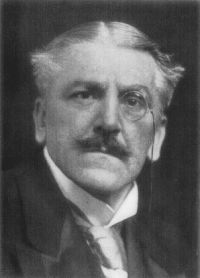
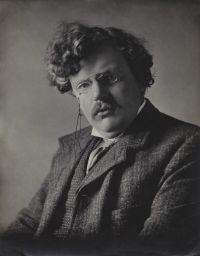
Portrait of J. Berg Esenwein J. Berg Esenwein,  Writing the Photoplay

“ We advise a rereading of the definition of the term "serials" given in Chapter III. In addition to what is there said, it may be stated that, as a rule, it is best not to write a complete serial—even though only in synopsis form—unless you have what is beyond question a sure market. As a matter of fact, most serials are written at present by big-name writers of fiction—such as Arthur B. Reeve—or "inside" writers, such as [Pg 194] George B. Seitz, who has been responsible for several successful Pathé serials. ”
Source: Gutenberg

James L. Harner,  Literary Research Guide — English Literature (2017)

“ Concludes with a selected bibliography of scholarship on serial novels. Since the periodicals are frequently difficult to obtain and few modern editions identify installments, Vann offers essential information to those studying the initial reception and structure of the more important Victorian serial novels. Reviews: Michael Lund, Studies in the Novel 19.4 (1987) : 503–05; Rosemary T. VanArsdel, Victorian Periodicals Review 19.2 (1986) : 78–79.
= M2660 = Wolff, Robert Lee, comp. Nineteenth-Century Fiction: A Bibliographical Catalogue Based on the Collection Formed by Robert Lee Wolff. 5 vols.
”
Source: Wikisource

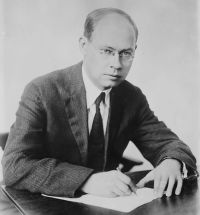
Portrait of Arthur B. Reeve Arthur B. Reeve,  The Best Ghost Stories

“ To every human being mystery appeals, be it that of the crime cases on which a large part of yellow journalism is founded, or be it in the cases of Dupin, of Le Coq, of Sherlock Holmes, of Arsene Lupin, of Craig Kennedy, or [Pg ix] a host of others of our fiction mystery characters. The appeal is in the mystery.
The detective's case is solved at the end, however. But even at the end of a ghost story, the underlying mystery remains. In the ghost story, we have the very quintessence of mystery.
”
Source: Gutenberg

Get perspective with Kwize: daily news enlightened by great literature