“ The prince had gone some way, when the king called after him. How he wished he had the seven-league boots on, or that he had the cap of darkness in his pocket! If he had been so lucky, he would now have got back to Gluckstein, and crossed the border with Lady Rosalind. A million of money may not seem much, but a pair of young people who really love each other could live happily on less than the cheque he had in his pocket. However, the king shouted very loud, as he always did when he meant to be obeyed, and the prince sauntered slowly back again. ”
Seven-league boots
Definition and stakes
The theme of “seven-league boots” has been addressed by authors such as Joseph Sparkes Hall, by the International Football Association Board, John Lord Peck, Belle Beach and Talbot Hughes. It is often associated with terms like boot, shoe, leather, foot and nail.
Quotes about “seven-league boots”
 Nikola Tesla,
My Inventions
(1919)
“ When natural inclination develops into a passionate desire, one advances towards his goal in seven-league boots. ”
by the International Football Association Board, The Laws of the Game (1895)
“ No player shall wear any nails, except such as have their heads driven in flush with the leather, or iron plates, or gutta percha, on the soles or heels of his boots or on his shin guards. If bars or studs on the soles or heels of the boots are used, they shall not project more than half-an-inch, and shall have all their fastenings driven in flush with the leather. ”
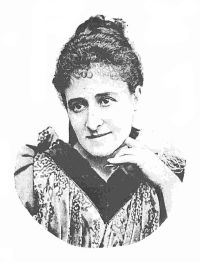 Ada S. Ballin,
Science of Dress
(1885)
“ In decided cases of rickets inch-broad strips of thin steel may be inserted between lining and leather from the top of the boot right down each side of the ankle; these may be made as high even as the knee, and will be found more comfortable, being very much lighter than the irons usually worn for incipient bandy legs. Not only does deformity result from the use of improper boots, but from the discomfort arising from them the natural activity of childhood is impeded, and the whole constitution suffers accordingly. ”
Joseph Sparkes Hall, The Book of the Feet: A History of Boots and Shoes
“ One very important thing to be attended to, is, that the golashes and toecaps of all boots should come above or below the joint of the great toe. Very frequently the edge of the leather comes at the very worst part of the foot; and, strange enough, sometimes we see a hard seam put exactly on the corn, and running across the bunion. If no leather be put at all, the boot or shoe being made entirely of stuff, frequently a secret enemy lurks between the outside and the lining, in the shape of a leather side-lining ”
Joseph Sparkes Hall, The Book of the Feet: A History of Boots and Shoes
“ Travellers find these boots great comforts, they take up very little room in the portmanteau, are{128} soon cleaned, and are on and off in an instant; if made of patent leather, they need only a wipe with an old silk handkerchief. No boothooks are ever required, the best hooks being nature’s own, the fingers, and the only bootjack ever wanted, is the toe of one boot applied to the heel of the other.Dress Pumps are almost the only shoes now worn; they are generally made of patent leather, and should be cut to sit well at the quarters. ”
Manley Hopkins, Once a Week (1863)
“ Well-fitted as is a well-fitting boot for walking, there is nothing comparable in-doors, for either sex, to the shoe and silk-stocking. White and pale-tinted kid-boots may be worn with discretion by ladies for dancing. They do not suit all persons, though there are some feet that would look well in a clod-hopper’s high-lows or anything else. The French kid shoe, with etherial lace-like thread stocking in the house, and the rosetted satin slipper over silken hose for evening wear, have always seemed to us to come near perfection. ”
Joseph Sparkes Hall, The Book of the Feet: A History of Boots and Shoes
“ Indeed, they were so wide at times, as to oblige the wearer to stride much in walking, a habit that was much ridiculed by the satirists of the day. There was a print published during this reign of a dandy in the height of fashion whose legs are “incased in boot-hose tops tied about the middle of the calf, as long as a pair of shirt-sleeves, double at the end like a ruff-band: the top of his boots very large, fringed with lace, and turned down as low as his spurs, which jingled like the bells of a morris-dancer as he walked.” ”
The Boot and Shoe Manufacturers' Assistant and Guide
“ For a sound, healthy foot, make the last one-fourth of an inch less on the ball, and three-eighths of an inch less on the instep.Patent leather boots, around the ankle must be full with the measure as the stitches contract. ”
Thomas Baines, Shifts and Expedients of Camp Life…
“ The army pattern boot or shoe, the native sandal, worn by aborigines of some countries, the shooting boot, and the light buck-skin shoe, all leave their well-marked and distinctive tracks. The particular manner in which a boot or shoe sole has been nailed or repaired will enable an experienced tracker to follow its print unerringly amongst fifty others; large or small, narrow or wide, the track will in almost all cases retain its individuality, except when cunning Europeans put on other men’s boots for the purpose of crime. ”
John Lord Peck, Dress and care of the feet (1872)
“ Each of the different kinds of boots has certain peculiar advantages which, in addition to its being fashionable, contribute to make it popular. The side-spring boot, that has been a favourite so long, seldom slips at the heel, and this is a decidedly good point; it also, by fitting closely at the ankles, gives a feeling of snugness and security which is comfortable, [Pg 140] while it admits of perfect freedom in all movements of the ankle in walking. ”
Belle Beach, Riding and Driving for Women
“ For the show ring and for park riding, patent-leather stiff-legged boots are correct, and are better suited to very formal occasions than plain calf boots. Patent-leather boots should always be made with stiff legs, as otherwise the varnish will crack. Plain calf boots are more serviceable and more comfortable than patent-leather for country riding, and are correct for the hunting-field. ”
Joseph Sparkes Hall, The Book of the Feet: A History of Boots and Shoes
“ Of the amplitude of its tops, the woodcut will give{50} an idea, it is copied from one worn by a courtier of Charles’s train, in the engravings illustrative of his coronation. The boot is decorated with lace all round the upper part, and that portion of the leg which the boot encases, seems fitted easily with pliant leather: over the instep is a broad band of the same material, beneath which the spur was fastened; and the heel is high, and toe broad, of all the boots and shoes then fashionable. ”
John Lord Peck, Dress and care of the feet (1872)
“ The necessity is the same in both these styles; there is only a difference in degree, which is greater in the low shoe and slipper than in the high gaiter and boot. The tightness at the ankle which prevents slipping, is supplied, more or less perfectly, in side spring gaiters, and those that are laced. Lacing compels the boot to fit closely, whether it does so easily or not. In men’s boots, where there is no lacing this effect is produced only by having them so small about the heel and ankle that the foot can hardly move at all after it is crowded inside. ”
Alice M. Hayes, The Horsewoman: A Practical Guide to Side-Saddle Riding…
“ James Fillis, in his interesting work, Breaking and Riding, says that for ladies’ wear he prefers “ordinary boots to long boots, which are too hard, and are consequently apt to cut the wearer under the knee, and to prevent her feeling the horse with her leg;” but as ordinary boots would not be considered sufficiently smart for hunting, or even hacking in the Row, the compromise I advocate will be found to answer all requirements. In ordering a pair of riding boots we should go to a good maker and have them of patent leather, which is smarter and cleaner than blacking leather. ”
John Lord Peck, Dress and care of the feet (1872)
“ A boot or shoe ought to fit easily, yet snugly and smoothly, all over the foot—around the heel and ankle as well as the forward part There is no necessity for pinching the instep or crowding the toes; no occasion for loose [Pg 134] leather at the ankle and heel; no propriety in wrinkles over the instep of a flat foot, nor having a slipper loose at the sides. All boots must have wrinkles at the ankle, and all kinds of covering must have some across the foot at the joints. There need not be any of marked size elsewhere, nor should these be as large as they commonly are. ”
Channing Arnold, The American Egypt: A Record of Travel in Yucatan
“ All day long these little roguish-eyed rascals wander round the plaza carrying their boot boxes and begging you to let them kneel in front of you and make your boots like looking-glasses. The boys are all so pretty and have got such winning smiles that you are insanely inclined to have your boots blacked every quarter of an hour. Joking apart, boot-blacking has been reduced to a science in Merida, and the operators put out of joint the noses of the London Boot Brigade. ”
John Lord Peck, Dress and care of the feet (1872)
“ Loose boots, that allow the heel to slip up and down, or the whole foot to slide forward at every step, are effective in the production of these annoyances. Hard, stiff leather is another quite efficient thing in this way. Whether the boot be tight or loose makes not much difference, if it be stiff and hard. Large wrinkles over the joint may sometimes have an effect of the same kind, especially if the leather is no softer “than it ought to be.” High heels, that pitch the foot forward, and keep it constantly bearing against the leather over the toes, have a great tendency to develop corns. ”
“ The stockings were brought over these in a roll above the knee. Up to this time tights were made of wool, worsted, fine cloth, frieze, and canvas. The slashings, pleating, and gatherings of the period were of a much neater character, and punched patterns and pricked materials came into use.Close-fitting high boots, generally with serrated tops and thick soles curving into a short heel, are features of this time. The shoe had a long front decorated with slashings (often caught with jewels) , and an oval toe which became almost pointed in the last years of this century. ”
“ Get boots like those of a man, low-heeled and with a straight line from heel to back of top. Don't have the tops wider than absolutely necessary not to bind, and don't have them curved or fancy in shape. Be sure that there is no elbow sticking out like a horse's hock at the back of the boot, and don't have a corner on the inside edge of the sole. And don't try to wear a small size! ”
The Boot and Shoe Manufacturers' Assistant and Guide
“ Shoes thus cut, and made on such lasts are almost invariably bent in the shank in order to conceal the ignorance of the manufacturer or designer. But the foot is sure to betray the deformity of the last and the cut of the uppers. Boots and shoes thus made are literally spoiled, unless the wearer can keep the ankle back to an angle of forty or forty-five degrees, which is the position of the foot when thrown forward, while in a sitting position.No. 5. represents a side view of a lady’s last for high-heeled boots, and its block. ”
John Lord Peck, Dress and care of the feet (1872)
“ Slipping of the boot at the heel, is almost always the fault of the boot-maker. It may come from bad cutting, from bad fitting of the upper, from bad lasting, and from badly shaped lasts upon which the boots are made. When the cutting is wrong—which affects men’s boots mainly—it is the leg through the ankle that is too large, or there is some defect that will not allow the upper to last properly. ”
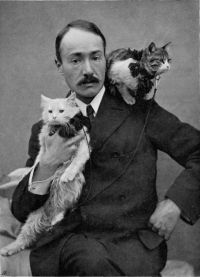 Arnold Henry Savage Landor,
In the forbidden land
“ I have no hesitation in pronouncing the Tibetan boots, from a practical point of view of utility, as the best in the world. They have all the advantages a boot should possess, especially those with flat soles of thick twisted cord. The upper part, being made of red and green felt, keeps the foot warm without preventing ventilation, and plenty of spreading room is left for the toes when walking. The felt gaiter, reaching to just below the knee, holds the soft sole of the boot flat under the foot, giving absolutely free action to the ankle. ”
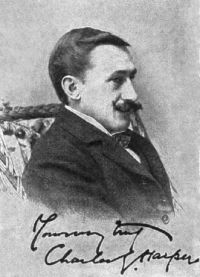 Charles G. Harper,
Stage-coach and Mail in Days of Yore…
“ Moreover, it makes people imitate sea-crabs, in being drawn sideways, as they are when they sit in the boot of the coach; and it is a dangerous kind of carriage for the commonwealth, if it be considered.” This boot, or this pair of boots—which did not in the least resemble, in shape or position, the fore and hind boots of a later age—was a method of carrying the outsides in days before the improvement of66 roads rendered it possible for any one to ride on the roof without incurring the danger of being flung off. ”
Joseph Sparkes Hall, The Book of the Feet: A History of Boots and Shoes
“ Originally, closing, making the boot, shoe, and slipper, and even ladies’ and children’s shoes, was the work of one individual; now they are separate branches, and the closer has not only risen in this country, but his work is universally celebrated from this circumstance, for its strength and beauty. Perhaps nothing in the way of workmanship is equal to what is termed blind-stabbing: the leather, held between the workman’s knees, is pierced with a small pointed awl, which he holds together with the flax or silken thread that is to follow, in his right hand ”
On Foreign Service; Or, The Santa Cruz Revolution
“ I hadn't nails in my boots, either, which made climbing all the more difficult.'Hold up, old chap; you can't afford to slip,' Gerald said, clutching me as I stumbled, a few minutes after we had started, 'it's a long way to the bottom.'I told him about my boots.'Boots are a nuisance,' he answered; 'those little chaps of mine looted an army boot-store yesterday; they think boots make them look more like real soldiers. They've never worn boots before, and will be footsore in an hour, but they will wear them. ”
Dion Clayton Calthrop, English Costume
“ As has been said before, the important people rejoiced in elegant footgear [Pg 35] of all colours. All the shoes buttoned with one button above the outside ankle. The boots were sometimes tall, reaching to the bottom of the calf of the leg, and were rolled over, showing a coloured lining. Sometimes they were loose and wrinkled over the ankle. They were both, boot and shoe, made to fit the foot; for in this reign nearly all the extravagances of the previous reign had died out, and it is rare to find drawings or mention of long shoes stuffed with tow or wool. ”
Louis Eugène Du Moulin, Two Years on Trek: Being Some Account of the Royal Sussex Regiment in South Africa
“ The pluck and endurance and indomitable perseverance shown by men with ill-fitting boots [Pg 35] proves devotion worthy of a better cause, but it has been a marvel to me for the last twenty years, why bitter experience has never taught the foot soldier to wear boots large enough for him. It is a well-known fact that after some marching has been done, a larger size in boots is required, as the feet swell and need more room ”
Mountain Craft (1920)
“ I dispense with toecaps, or have a very short one just covering the ends of the toes, as I have never found a bootmaker who could put on a toecap of the regular length without contracting the end of the boot and compressing the toes in a dangerous manner.The ordinary bootmaker knows nothing about an alpine boot, which is very different from a shooting boot. The fault of Swiss-made mountain boots is that the leather is very hard and the boots much too cumbersome and heavy. A guide’s equipment is the very last to be imitated. ”
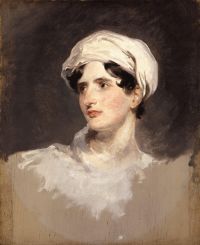 Lady Maria Callcott,
Journal of a Voyage to Brazil
“ The breeches are loose, and reach to the knee, and loose boots of brown leather are frequently seen on the better sort, though it is very common to see the spurs upon the naked heel, and no boot or shoe of any kind. ”
Joseph Sparkes Hall, The Book of the Feet: A History of Boots and Shoes
“ The leather best adapted for ladies’ boots is morocco or goat-skin, which, when properly dressed, is sufficiently strong and durable—kid being the skin of the young goat, is naturally finer and more delicate; the enamel or varnish leather, commonly called patent, is also very suitable, and being made of calf-skin, is strong. For the little toecaps and golashes of ladies’ boots it answers admirably, and as it requires no cleaning, always looks well, and the upper part of the boot is kept clean and tidy. ”
 Stephen Graham,
The gentle art of tramping
(1926)
“ I have tramped in little steel-soled boots in the Caucasus, and in plaited birch-bark boots, lapti, in the North, but I do not recommend novelties in footwear. It is difficult to better a new pair of Army boots. ”
Related terms
Authors who wrote about “seven-league boots”
Joseph Sparkes Hallby the International Football Association BoardJohn Lord PeckBelle BeachTalbot HughesAlice M. HayesArnold Henry Savage Landor Andrew LangAda S. BallinDion Clayton CalthropVariousCharles William AlcockNikola TeslaChanning ArnoldThomas Baines
 Emily PostCharles G. HarperJohn Mead GouldLouis Eugène Du MoulinLady Maria Callcott
Arnold Henry Savage LandorAndrew LangAda S. BallinDion Clayton CalthropVariousCharles William AlcockNikola TeslaChanning ArnoldThomas BainesEmily PostCharles G. HarperJohn Mead GouldLouis Eugène Du MoulinLady Maria Callcott