Siege artillery

Definition and stakes

James Mercur,  Attack of Fortified Places. Including Siege-works…

“ First Artillery Position.—Every siege begins with a bombardment, which is designed, as previously stated, to drive in the outlying posts of the defence, to silence, so far as possible, the artillery annoy and wear out the garrisons of the works to be attacked, to interrupt the communications between them, break up bomb and splinter proofs, destroy magazines and depots, and, if the enceinte can be reached by the artillery, to bring a fire upon the population which will lead to or hasten the surrender of the place. ”
Source: Gutenberg

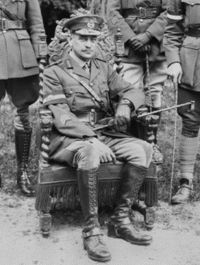
Portrait of Sir John Monash Sir John Monash,  The Australian Victories in France in 1918

“ All guns and howitzers of greater bore, up to the giant 15-inch, were known as Heavy and Siege Artillery.
Regarded from the point of view of mobility, all field guns and that wonderfully useful weapon, the 60-pounder, were horse-drawn, the larger ordnance were tractor-drawn, and the very largest were mounted on railway trains and hauled by steam locomotive.
Finally, as regards tactical utilization, some natures of ordnance were invariably employed for barrage or harassing fire, others for bombardment, others for counter-battery fighting, and yet others for anti-aircraft purposes.
”
Source: Gutenberg

Get perspective with Kwize: daily news enlightened by great literature