Sight (optics)

Definition and stakes

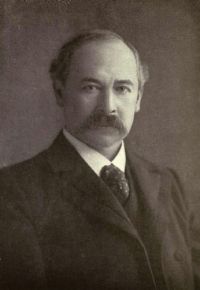
Portrait of Silvanus Phillips Thompson Silvanus Phillips Thompson,  Popular Science Monthly (1881)

“ Of all the senses none is more frequently the seat of such deceptive judgments than that of sight; and in the science of physiological optics a very considerable share of attention is claimed by optical illusions. For the purposes of convenience, we may draw a distinction between these illusions, which are the direct result of certain properties or imperfections of the eye as an optical instrument, and those which arise from obliquities of judgment in interpreting the sensations optically impressed upon the retina of the eye. ”
Source: Wikisource

Various,  Blackwood's Edinburgh Magazine…

“ The science of optics, in so far as it maintains, according to certain physiological principles, that in the operation of seeing we never get beyond the representations within the eye, is founded on the assumption, that the visible body has no visible eye belonging to it. Whereas we maintain, that the only eye that we have—the only eye we can form any conception of, is the visible eye that belongs to the visible body, as a part does to a whole; whether this eye be originally revealed to us by the touch, by the sight, by the reason, or by the imagination. ”
Source: Gutenberg

Hans Gross,  Criminal Psychology: A Manual for Judges…

“ He treats particularly the problem of optics, and physiological optics is the study of perception by means of the sense of sight. We see things in the external world through the medium of light which they direct upon our eyes. The light strikes the retina, and causes a sensation. The sensation brought to the brain by means of the optic nerve becomes the condition of the representation in consciousness of certain objects distributed in space.... ”
Source: Gutenberg

Get perspective with Kwize: daily news enlightened by great literature