“ The Hindus believe the sitar is a window to the soul. That the sound of the first note tells everything there is to know about a man. I want to see if you've actually understood anything since you've been here. What raga have you been studying?""Malkauns.""An ambitious choice. I seem to remember that's a devotional raga. For late evening. But the sun's almost down. We'll pretend it's the moon, just rising. Let's go inside, where you can sit."Hawksworth carried the sitar and followed numbly as Jadar led the way back into the tiny marble room. ”
Sitar
Definition and stakes
The theme of “sitar” has been addressed by authors such as Herbert Arthur Popley, James Hutton and Thomas Hoover. It is often associated with terms like Sita, Rama, Sisera, Barak and God.
Quotes about “sitar”
Herbert Arthur Popley, The Music of India (1921)
“ It provides a very good accompaniment for singing, and has more fulness of tone than the sitar and also very considerable possibilities of development. It seems hardly possible, however, that it will rival the violin in the power and beauty of its tone or in its range, but it will always be a good member of an Indian orchestra, and, like the viola, will come in very useful as a contrast. ”
James Hutton, A Popular Account of Thugs and Dacoits…
“ Another gang accomplished 160 miles in twelve days, in company with a party of sixty—men, women and a child—before they found an eligible occasion. [Pg 64] They preferred committing murder in the evening, when the travellers would be seated on the ground, mingled with themselves, talking, smoking, singing, and playing the sitar. Where it could be done without suspicion, three Thugs were allotted to every victim. ”
James Hutton, A Popular Account of Thugs and Dacoits…
“ A more horrible instance of woman-slaughter appears to have escaped unpunished, at least for a time. The Moonshee, Bunda Alee, in company with his wife, an infant daughter, and six servants, was taking to her bridegroom another daughter who had attained to a connubial age. On the journey he fell in with a numerous gang of Thugs, the leaders of whom contrived to ingratiate themselves with the Moonshee's party, and all travelled on together. One evening towards dusk some of the Thugs seated themselves, as usual, with the Moonshee at his tent door, and began to sing and play on the sitar. ”
 Swami Vivekananda,
The Complete Works of Swami Vivekananda…
Swami Vivekananda,
The Complete Works of Swami Vivekananda…
“ Sita is the name in India for everything that is good, pure and holy — everything that in woman we call womanly. If a priest has to bless a woman he says, "Be Sita!" If he blesses a child, he says "Be Sita!" They are all children of Sita, and are struggling to be Sita, the patient, the all-suffering, the ever-faithful, the ever-pure wife. Through all this suffering she experiences, there is not one harsh word against Rama. She takes it as her own duty, and performs her own part in it. Think of the terrible injustice of her being exiled to the forest! ”
 Plutarch,
Plutarch's Moralia — Isis and Osiris
(1927 & seq.)
Plutarch,
Plutarch's Moralia — Isis and Osiris
(1927 & seq.)
“ The upper part of the sistrum is circular and its circumference contains the four things that are shaken; for that part of the world which undergoes reproduction and destruction is contained underneath the orb of the moon, and all things in it are subjected to motion and to change through the four elements: fire, earth, water, and air. At the top of the circumference of the sistrum they construct the figure of a cat with a human face, and at the bottom, below the things that are shaken, the face of Isis on one side, and on the other the face of Nephthys. ”
Wilhelm Wägner, Epics and Romances of the Middle Ages
“ This was the temple where the Moors kept their idols, Mahomet and Apollo; two enormous figures carved in stone. The queen and her daughter, beautiful Sidrat, knelt before the idols praying for protection from the invaders. Suddenly Sidrat felt her hand grasped gently by an invisible hand. At first she was frightened, and then comforted, for she took it as a sign that her prayers were heard. But the unseen friend was Alberich, and not a heathen god. He whispered, “Your gods are dust; I am a messenger from another world, and have come to save you and to teach you to worship the true God.” ”
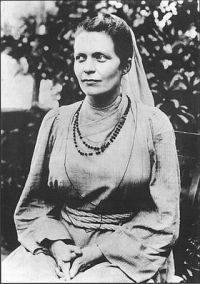 Sister Nivedita,
Kali the Mother
(1900)
Sister Nivedita,
Kali the Mother
(1900)
“ They are not arrived where the Mother's voice can reach them. This, in its own way is well. Yet, this image, so fearful to the Western mind, is perhaps dearer than any other to the heart of India. It is not, indeed, the only form in which the Divine Energy presents Herself to her worshippers. To the Sikh, She is absorbed, embodied in his sword; all women, especially as children, are Her incarnations; glorious Sita carries the great reality to many. ”
Donald A. Mackenzie, Indian Myth and Legend
“ O Sita! thy words scald me, for thou art as a mother unto me. I cannot answer thee. My heart is free from sin.... Alas! that fickle women with poisonous tongues should endeavour to set brother against brother.”Sita wept, and Lakshmana, repenting that he had spoken harshly, said: “I will obey thee and hasten unto Rama. May the spirits of the forest protect thee against hidden enemies. I am troubled because I behold evil omens. When I return, may I behold Rama by thy side.”Said Sita: “If Rama is slain I will die by drowning, or by poison, or else by the noose. I cannot live without Rama.” ”
The Rāmāyana, Volume 2. Āranya…
“ This alone is the means of slaying. Do thou heedfully listen to it! He has a wife of sterling worth in the world, and that slender-waisted one is known by the name of Sitā. She is in the full bloom of youth, and hath a symmetrical person—a jewel among womankind embellished with jewels. And neither a goddess, nor a Gandharbi, nor yet an Apsari, nor a Pannagi is equal to her; and what is a human female? Thrashing him, do thou in the mighty forest, carry away his wife. Without Sitā, Rāma shall cease to exist." Thereupon, the lord of the Rākshasas, Rāvana, happened to relish those words ”
The Rāmāyana, Volume 1. Bālakāndam and Ayodhyākāndam
“ And that Sitā whom formerly the very rangers of the sky could not see, is to-day beheld by the passers-by. Now summer's heat and winter's cold and the rains of the wet season will speedily stain Sitā, whose person is worthy of being dyed, and who used to daub her limbs with red sandal paste. Surely to-day Daçarātha speaks thus, possessed by some evil spirit; for the king ought by no means to banish his beloved son. Who ever exiles his son, albeit he be worthless? And what is to be said concerning a son that has fast secured all men's hearts by his behavior? ”
The Rāmāyana, Volume 1. Bālakāndam and Ayodhyākāndam
“ Ever steady in virtue, you do not yourself intend to stay here." Hearing these words, Daçarātha's son tied the dress on Sitā having a similar character with himself. When she had put on the upper and under garments, the preceptor of the king, Vasistha, his voice choked with the vapour of sorrow, dissuading Sitā, said unto Kaikeyi,—"O thou whose desires outrun thy sense of honor, O thou of perverted understanding O befouler of thy line, deceiving the monarch, thou stayest not within the pale of the promise. O thou bereft of good behavior, that noble lady, Sitā, should not go to the forest. ”
The Rāmāyana, Volume 2. Āranya…
“ Her whom thou knowest as Sitā staying in thine abode—know her for the Fatal Night that shall bring destruction down on all Lankā. Therefore, beware of thyself turning about thy neck the fatal noose in the shape of Sitā! Do thou rather study thy welfare. Thou shalt behold this city crowned with edifices and stalls, in flames fed by the wrath of Rāma, and consumed by the energy of Sitā. Do not bring to destruction thine friends and ministers, and kindred, and brethren and sons, and thine entire welfare,— thine enjoyments and wives and this Lankā. ”
H. A. Guerber, The Book of the Epic: The World's Great Epics Told in Story
“ Because Sita—the personification of vegetation—has now been abducted by the demon,—who typifies winter,—the whole earth shows signs of mourning, and the two brothers hurry back to the hut, their hearts filled with nameless apprehensions. ”
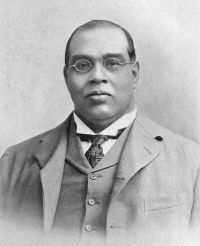 Romesh Chunder Dutt,
History of India
(1906)
Romesh Chunder Dutt,
History of India
(1906)
“ The people's suspicions could not be allayed, and Rama was too weak to act against his people. The earth, which had given Sita birth, opened and received its long-suffering child. The Vedic conception of Sita, as the field furrow, manifests itself in the epic in this incident; but to millions of Hindus, Sita is a real human character, a pattern of female virtue and female self-abnegation. ”
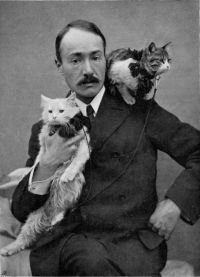 Arnold Henry Savage Landor,
Across Coveted Lands; or, a Journey from Flushing…
Arnold Henry Savage Landor,
Across Coveted Lands; or, a Journey from Flushing…
“ I was sorry to leave Sistan too, with its ancient ruins, its peculiar inhabitants, a mixture of all kinds, its quaint city, so strikingly picturesque especially at sunset, when, owing to the moisture in the air, beautiful warm colours appeared in the sky, and the thousands of camels, and sheep, moving like so many phantoms in clouds of dust, returned to their homes. The sad dingling of their bells sounded musical enough in the distance, and one saw horsemen dashing full gallop towards the city before the gates were closed, every man carrying a gun. ”
H. A. Guerber, The Book of the Epic: The World's Great Epics Told in Story
“ A moment later Sita sees an old hermit draw near to ask alms. While she is entertaining this holy guest, he frightens her by suddenly announcing that he is Ravana, king of the demons. As Sita resists all his advances, Ravana, suddenly resuming his wonted shape, snatches her up in his arms and whisks her off in his flying chariot. Notwithstanding the rapidity of his course, the king of the vultures, seeing them dart through the air and hoping to rescue the frantic Sita, attacks Ravana, only to fall mortally wounded to earth. ”

“ Siati won, and he set off, riding on a shark, as Arion rode the dolphin, to seek the home of the defeated deity. At length he reached the shores divine, and thither strayed Puapae, daughter of the god, looking for her comb which she had lost. ‘Siati,’ said she, ‘how camest thou hither?’ ‘I am come to seek the song-god, and to wed his daughter.’ ‘My father,’ said the maiden, ‘is more a god than a man; eat nothing he hands you, never sit on a high seat, lest death follow.’ So they were united in marriage. ”
“ So Barak went down from Mount Tabor, and ten thousand men followed him. 15 And Yahweh attacked Sisera, and all his chariotry, and all his army, with the edge of the sword, and Sisera got down from his chariot and fled on foot. 16 And Barak pursued the chariots, and the army, to Harosheth of the Nations, and all the army of Sisera fell by the edge of the sword, and there was not a single survivor. 17 And Sisera fled on foot to the tent of Jael, the wife of Heber the Kenite, because there was peace between Jabin king of Hazor and the house of Heber the Kenite. ”
Donald A. Mackenzie, Indian Myth and Legend
“ Ravana kept watch the while, and when he saw Lakshmana leaving the hermitage, he assumed the guise of a forest sage and went towards the lonely and sad-hearted Sita. The jungle had grown silent. Ravana saw that Sita was beautiful as the solitary moon at midnight when it illumines the gloomy forest. He spake, saying: “O woman of golden beauty, O shy one in full bloom, robed in silk and adorned with flowers, art thou Sri, or Gauri, [341] or the goddess of love, or a nymph of the forest? Red as coral are thy lips; thy teeth shine like to jasmine; love dwelleth in thine eyes so soft and lustrous. ”
Bible (1917)
“ Is there any man here? that thou shalt say: No.' 21Then Jael Heber's wife took a tent-pin, and took a hammer in her hand, and went softly unto him, and smote the pin into his temples, and it pierced through into the ground; for he was in a deep sleep; so he swooned and died. 22And, behold, as Barak pursued Sisera, Jael came out to meet him, and said unto him: 'Come, and I will show thee the man whom thou seekest.' And he came unto her; and, behold, Sisera lay dead, and the tent-pin was in his temples. 23So God subdued on that day Jabin the king of Canaan before the children of Israel. ”
Romesh Chunder Dutt,
History of India
(1906)
“ In both the heroes are myths pure and simple. Sita, the field furrow, had received divine honours from the tune of the Rig-Veda and had been worshipped as a goddess. When cultivation gradually spread in Southern India, it was not difficult to invent a poetical myth that Sita was carried to the south. And when this goddess and woman had acquired a distinct and lovely individuality, she was naturally described as the daughter of the holiest and most learned king on record, Janaka of the Videhas. But who is Rama, described in the epic as Sita's husband and the King of the Kosalas? ”
H. A. Guerber, The Book of the Epic: The World's Great Epics Told in Story
“ When Sita is left alone, Hanuman, in the guise of a tiny monkey, climbs down to her side, exhibits Rama's ring, which he has brought as a token, and receives from her in return a jewel, after he has assured her that she will soon be delivered. ”
H. A. Guerber, The Book of the Epic: The World's Great Epics Told in Story
“ This settled, the gorgeous procession slowly wends its way back to Oude, where for fourteen years every one does homage to Rama's golden sandals!Meantime life in the hermitage continues its peaceful course, the royal ascetics being disturbed only by the demons (Rakshasas) who haunt the forest and try to injure the hermits, simply because they are good. Sita is perfectly happy in this humble home because she enjoys the constant presence of her husband, who, taking her one day to visit an aged female ascetic, implores this woman to bestow a boon upon his faithful spouse. ”
John Campbell Oman, The Great Indian Epics (1900)
“ There were, she timidly assured her husband, three sins to which desire gave rise: untruthfulness, the coveting of other men’s wives, and the wish to indulge in unnecessary hostilities. Of untruthfulness, and of allowing his thoughts to stray towards other women, Sita unhesitatingly exonerated her lord; but she artfully insinuated that, in his dealings with the Rakshasas, he was giving way to the sin of provoking hostilities without adequate cause, and she advised his laying aside his arms during his wanderings in the forest ”
The Rāmāyana, Volume 1. Bālakāndam and Ayodhyākāndam
“ We and you, will serve Sitā, and Rāghava." Thus afflicted with grief, the women of the city spake unto their husbands. "In the forest Rāghava will attain for you the unattainable and protect what is attained; and Sitā being a female will do the same for these (women.) Who will take pleasure in residing in a dwelling where the heart dies within itself, which is devoid of delight, where the people are always agitated with anxiety and which is exceedingly disagreeable? If this kingdom devolves on Kaikeyi it will be divested of all virtues and will be like unto one without a master. ”
 L. W. De Laurence,
The Lesser Key of Solomon Goetia The Book of Evil Spirits
(1916)
L. W. De Laurence,
The Lesser Key of Solomon Goetia The Book of Evil Spirits
(1916)
“ His Seal is this, the which wear thou as aforesaid. (12.) Sitri.—The Twelfth Spirit is Sitri. He is a Great Prince and appeareth at first with a Leopard’s head and the Wings of a Gryphon, but after the command of the Master of the Exorcism he putteth on Human shape, and that very beautiful. He enflameth men with Women’s love, and Women with Men’s love; and causeth them also to show themselves naked if it be desired. He governeth 60 Legions of Spirits. His Seal is this, to be worn as a Lamen before thee, etc. ”
H. A. Guerber, The Book of the Epic: The World's Great Epics Told in Story
“ Then Sita and the goddess disappear, the earth closes once more, and the gods chant the praises of the faithful wife, showering flowers upon Rama, who grovels on the ground in his agony. A broken-hearted man, he then returns to his palace with his two sons, the first to sing this poem, whose verses are so sacred that those who listen to a few of them are forgiven many sins, while those who hear the whole epic are sure to achieve Paradise. ”
 Flora Annie Webster Steel,
In the Permanent Way
Flora Annie Webster Steel,
In the Permanent Way
“ A strange wild people are those who live in that close-packed, flat-roofed village upon the shale slope, where a footfall sends the thin leaves of mica-schist slithering away into the rushing river. There is no stranger country, no wilder people. For this is Sitâna, the place of refuge for every Mohammedan fanatic who finds the more civilised plains too hot even for his fiery faith ”
Clarence Leroy Andrews, The Story of Sitka
“ But when the sun sinks low in the west, with the long, lingering twilight of the North, and the soft, delicate rays touch and blend with the water and islands, the mountains and sky–then, in the mystery of the evening, is the supreme beauty of the land. To those who have really known and loved Sitka, there is no place on earth to compare. ”
