Sloe

Definition and stakes

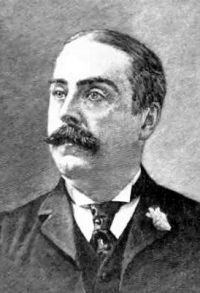
Portrait of Arthur Hamilton Clark Arthur Hamilton Clark,  The History of Yachting (1904)

“ The largest sloops, which sailed to the Cape Verd Islands, were in length 55 feet; breadth, 12 feet 6 inches; stem, 8 feet 6 inches; and stern-post, 9 feet 6 inches high. From the dictionary already quoted and published at Antwerp, 1599, we find Sloepe, Sloepken,—a little ship, skiff, or boat. It therefore seems probable that at this early period the term Sloepe was applied more to the type of vessel than to the rig. By degrees, as rigs multiplied among small craft, a single-masted vessel in Holland became known as a Sloepe—the germ of the American sloop and British cutter-rig. ”
Source: Wikisource

Christina Blackie,  Geographical etymology: a dictionary of place-names giving their derivations (1887)

“ Sliabh-cuailgne, now the Cooley Mountains, in Ireland; Sleibhe-Cuillinn (the Coolin or Cuchullin Hills) , in Skye; Slamannan (the sliabh or moor of the district formerly called Manan, parts of Stirling and Clackmannanshire) .
SLOG (A.S.) ,
a slough or marshy place; e.g. Slough, Co. Bucks; Sloby, Slawston, Slaugham (the dwelling on the marshy ground) .
SLUAGH (Gadhelic) ,
a multitude, a host; e.g. Ballinasloe (the ford-mouth of the hosts) , in Co. Galway; Srahatloe, i.e. Srath-a’-tsluagh (the river holm of the hosts) ; Knockatloe and Tullintloy (the hill of the hosts) , in Ireland.
”
Source: Gutenberg

The Boy Scouts Book of Campfire Stories

“ To cross these Slone had only to keep Wildfire's trail. And it was proof of Nagger's quality that he did not have to veer from the stallion's course.
It was hot down in the lowland. The heat struck up, reflected from the sand. But it was a March sun, and no more than pleasant to Slone. The wind rose, however, and blew dust and sand in the faces of horse and rider. Except lizards Slone did not see any living things.
Miles of low greasewood and sparse yellow sage led to the first almost imperceptible rise of the valley floor on that side. The distant cedars beckoned to Slone.
”
Source: Gutenberg

Get perspective with Kwize: daily news enlightened by great literature