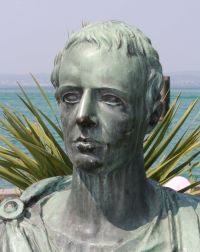
“ Songbird —my sweetheart's delight— she often plays with you, has you in her lap, giving her index fingertip to you teasing you to make sharp nips, when my shining object of love is pleased to play by some unknown dear reason and a small comfort from pain ”
Songbird
Definition and stakes
Songbirds, a diverse group of birds celebrated for their melodic vocalizations, have long fascinated human imagination through their complex songs and ecological roles. From Catullus’s affectionate depiction of a songbird as a companion to his beloved, to David Livingstone’s observations of their resilience in Africa’s arid landscapes, writers have examined their calls as both natural occurrences and emotional touchstones.
Olive Thorne Miller highlights the unfamiliarity of regional birds, while W. H. Hudson explores mimicry and the power of song, even noting its potentially deadly attraction. These viewpoints together reveal songbirds as links between nature’s cycles and human emotions, their tunes resonating through literature as symbols of life, enigma, and connection.
Quotes about “songbird”
Winthrop Packard, Literary Pilgrimages of a Naturalist
“ Often, too, some songbird will rouse from sleep as if he heard the cuckoo watchman, going his rounds, pipe him a sleepy bar or two of his day song, notes strangely vivid in the perfumed darkness, then drowse again with the melody half finished. ”
 David Livingstone,
Missionary Travels and Researches in South Africa
David Livingstone,
Missionary Travels and Researches in South Africa
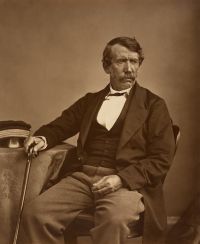
“ Some sing as loudly as our thrushes, and the king-hunter ('Halcyon Senegalensis') makes a clear whirring sound like that of a whistle with a pea in it. During the heat of the day all remain silent, and take their siesta in the shadiest parts of the trees, but in the cool of the evening they again exert themselves in the production of pleasant melody. It is remarkable that so many songbirds abound where there is a general paucity of other animal life. ”
Various, The Strand Magazine (1891)
“ T this season of the year there is no necessity to say one word in praise of our song birds. Their notes are to be heard on every hand, in delicious profusion. Whether it is the rich warbling of the thrush and blackbird, the thrilling song of the skylark, the sweet, low voice of the wood-pigeon, or the "link'd sweetness, long drawn out," of the nightingale, there is a charm of rich variety, which is always pleasing. It is difficult to put their melody into music. The timbre of the tone cannot be actually approached by any musical instrument. ”
 Olive Thorne Miller,
A Bird-Lover in the West
Olive Thorne Miller,
A Bird-Lover in the West
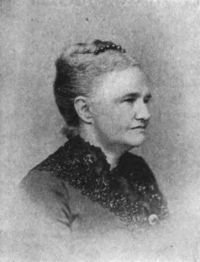
“ I felt myself a stranger indeed when I reached this pleasant spot, and found that even the birds were unfamiliar. No robin or bluebird greeted me on my arrival; no cheerful song-sparrow tuned his little pipe for my benefit; no phœbe shouted the beloved name from the peak of the barn. Everything was strange. One accustomed to the birds of our Eastern States can hardly conceive of the country without robins in plenty; but in this unnatural corner of Uncle Sam's dominion I found but one pair.The most common song from morning till night was that of the summer yellow-bird, or yellow warbler. ”
“ How distinct in their glories are the mature males of the golden, silver, the impeyan, or our own common pheasant; how drabbily alike are the females of all of them, and they themselves in their first early plumage! So, whilst the song of the blackbird, missel, song-thrush, fieldfare, or redwing are distinct, or suggest each other only by their general quality, all have a high, harsh, scolding note, which is very much the same, except in degree, though differing in the frequency with which it is employed. Loudest and harshest of all is the fieldfare, and this bird has hardly developed a song. ”
Olive Thorne Miller,
Little Brothers of the Air
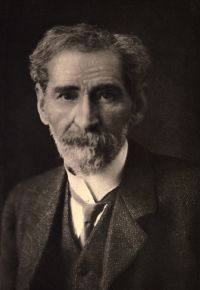
“ The notes seemed hard to get out; they were weak, uncertain, fluttering, as if the singer were practicing something quite new. But as the days went by they grew strong and assured, and at last were a joyous and loud morning greeting. I don't know [Pg 16] why I should be so surprised to hear a kingbird sing; for I believe that one of the things we shall discover, when we begin to study birds alive instead of dead, is that every one has a song, at least in spring, when, in the words of an enthusiastic bird-lover, "the smallest become poets, often sublime songsters." ”
 W. H. Hudson,
Birds in Town & Village
W. H. Hudson,
Birds in Town & Village
“ The bubbling cry is reproduced by both the marsh warbler and the starling. Again, it is my experience that when a nightingale starts singing, the small birds near immediately become attentive, often suspending their own songs and some flying to perch near him, and listen, just as they listen to the cuckoo. Birds imitate the note or phrase that strikes them most, and is easiest to imitate, as when the thrush copies the piping and trilling of the redshank and the easy song of the ring-ouzel, which, when incorporated into his own music, harmonizes with it perfectly. ”
W. H. Hudson,
Birds in Town & Village
“ The bird was singing its loudest one morning, and had been at it for some time, filling the whole place with its noise, when suddenly, in the middle of its song, it dropped down dead from its perch. To drop dead while singing is not an unheard of, nor a very rare occurrence in caged birds, and it probably happens, too, in birds living their natural life. Listening to a nightingale, pouring out its powerful music continuously, as the lark sings, one sometimes wonders that something does not give way to end the vocalist's performance and life at the same instant. ”
Phil Robinson, Birds of the wave and woodland
“ There are not, probably, many people who notice either their coming or their going, for spring and winter are supposed to be sufficient explanation in themselves for the commencement and cessation of song. Even those who have gardens do not always notice the little singing-birds from abroad, for their plumage is very modest in colour, their habits are shy and retiring, and their songs always sung from the cover of some brake of fern or bramble, some sequestered corner where only the vagabond butterfly catches sight of them as it goes flickering to and fro in its quest of flowers. ”
W. H. Hudson,
Argentine Ornithology, Volume 1…
“ During the cold season, when they live in companies, the singing-time is in the evening, when the birds are gathered in some thick-foliaged tree or bush which they have chosen for a winter roosting-place. This winter-evening song is a hurried twittering, and utterly unlike the serene note of the male bird heard on summer mornings. A little while after sunset the flock bursts into a concert, which lasts several minutes, sinking and growing louder by turns, and during which it is scarcely possible to distinguish the notes of individuals. ”
George H. Ellwanger, The story of my house (1890)
“ The woodpecker’s tap is a sound of industry. The mourning-dove’s notes express sorrow; the hermit-thrush’s, ecstasy; the veery’s, solitude; the white-throated sparrow’s, content. The voices of the bluebird and song-sparrow are sounds of welcome, an exordium of spring. The plaintive whistle of the wood-pewee, the liquid warble of the purple finch, and the refrain of many a companion songster, it would require the fine ear and fancy of the poet to interpret aright. Perhaps Frederick Tennyson well defines the sentiment they express in his melodious rendering of the blackbird’s song ”
Phil Robinson, Birds of the wave and woodland
“ A very little wind makes it sway, and this, with the bird’s strange ventriloquist powers, makes the song seem to sway, too, and as you watch it, the small creature grows quite mystical, with its notes, now near now far, and its beautiful little body swinging to and fro in the chequered shadow of the tall plumed reeds. And sometimes, while he is singing, the hen-bird, as if excited by his song, begins too, in a harsher voice but not unmusical, and once started you will hear the duet going on behind you long after you have left. ”
Olive Thorne Miller,
A Bird-Lover in the West
“ The morning bird chorus in the cottonwood grove where I spent my June was a great shock to me. If my tent had been pitched near the broad plains in which the meadow-lark delights, I might have wakened to the glorious song of this bird of the West. It is not a chorus, indeed, for one rarely hears more than a single performer, but it is a solo that fully makes up for want of numbers, and amply satisfies the lover of bird music, so strong, so sweet, so moving are his notes. ”
Various, The Atlantic Monthly, Volume 02…
“ As the notes of those birds that sing only in the night come with a double charm to our ears, because they are harmonized by silence and hallowed by the hour that is sacred to repose—in like manner does the Song-Sparrow delight us in tenfold measure, because he sings the sweet prelude to the universal hymn of Nature.His haunts are the pastures which have been half reduced to tillage, and are still partially filled with wild shrubbery; for he is not so familiar in his habits as the Hair-bird, that comes close up to our door-step, to find the crumbs that are swept from our tables. ”
Arthur Cleveland Bent, Life Histories of North American Shore Birds…
“ The male suddenly gets up from the snow-clad ground, and producing the most beautiful flutelike notes, following an oblique line with rapid wing strokes, mounts to an enormous height often so high that he can not be followed with the naked eye. Up here in the clear frosty air he flies around in large circles on quivering wings and his melodious far-sounding notes are heard far and wide over the country, bringing joy to other birds of his own kin. The song sounds now more distant, now nearer, when three or four males are singing at the same time. ”
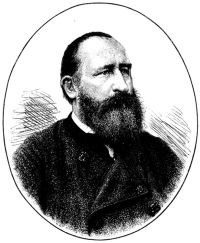 Alfred Edmund Brehm,
Cassell's book of birds; vol. 1
Alfred Edmund Brehm,
Cassell's book of birds; vol. 1
“ Did we require further proof, we have but to recollect that the song-bird is most alert with the music of its voice when its affections and interests are awakened by its mate during the time of rearing its young." It is, indeed, principally during the breeding-season that the singing power of birds is in full activity; and seeing that in general it is only the male that possesses the musical faculty, we may naturally suppose that its exercise is intended for the solace and amusement of his mate during her confinement to her nest. ”
 Julian Hawthorne,
Harper's New Monthly Magazine, Volume 101…
(1900)
Julian Hawthorne,
Harper's New Monthly Magazine, Volume 101…
(1900)
“ Then he slowly raises the wooden cage to his face, and whistles low to the brown bird, which had hitherto sat silent on its perch. The bird extends its slender body, lifts its head, and emits two or three penetrating chirps, which make themselves audible amidst the murmur and stir of the room. Then it fills its little lungs, its soft chest expands, and it bursts into song. Ah, what a song was that! But who can describe the singing of a bird? The voice of nature's heart, thrillingly pure and passionate as in the dawn of time, before man sinned ”
Travels in Virginia in Revolutionary Times
“ I know of no American bird that has the rich, mellow note of our blackbird, the sprightly note of the skylark, or the sweet and plaintive one of the nightingale. After having listened to the mocking-bird, there is no novelty in hearing the song of any other bird in the country ”
Olive Thorne Miller,
Upon The Tree-Tops
“ During these excursions into unknown regions he discovered that warm air came out of the register, and apparently thinking he had discovered summer, he perched on the water-cup that hung before it, spread his feathers, and seemed as happy as if he had really found that genial season.Who can describe the song of a bird? Poets and prose writers alike have lavished epithets on nightingale and mockingbird, wood thrush and veery, yet who, till he heard one, could imagine what its song was like? Yet I must speak of it.Singing was always a serious matter with my bird ”
R. L. Garner, The Speech of Monkeys
“ There is no doubt that each sound uttered by a bird is in unison with some note in the chromatic scale of music, but the intervals between the tones of the same bird do not coincide with those of the human voice. It is quite evident that birds possess an acute sense and ready faculty for music, and many of them show great aptitude in imitating the sounds of musical instruments; some varieties of birds, such as the southern mocking-bird, the thrush, and others, imitate with great success the sounds of other birds. ”
 John James Audubon,
Ornithological Biography
(1831)
John James Audubon,
Ornithological Biography
(1831)
“ The song of this species, if song it can with propriety be called, is heard at all hours of the day, the bird seeming determined to make up by quantity for defect in the quality of its notes. Mounted on the topmost branch of any low tree or bush, or on the end of a fence stake, it emits with rapidity six or seven notes resembling the sounds produced by smartly striking two pebbles together, each succeeding note rising in strength, although the song altogether is scarcely louder than the chirping of a cricket. ”
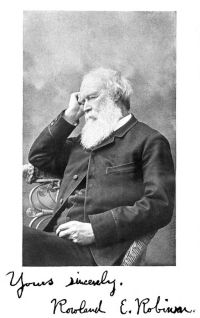 Rowland Evans Robinson,
In New England Fields and Woods
Rowland Evans Robinson,
In New England Fields and Woods
“ The song of the brooks has abated something of its first triumphant swell, and is often overborne now by the jubilant chorus of the birds, the jangled, liquid gurgle and raucous grating of the blackbirds, the robin's joyous song with its frequent breaks, as if the thronging notes outran utterance, the too brief sweetness of the meadowlark's whistle, the bluebird's carol, the cheery call of the phœbe, the trill of the song sparrow, and above them all the triumph of the hawk in its regained possessions of northern sky and earth. ”
John Weeks Moore, Complete Encyclopaedia of Music… (1880)
“ Instances of birds being taught a few bans of a very simple melody are not uncommon ; but cultivation to the point which this canary has reached must be exceedingly rare. The mocking bird would doubtless be a more apt pupil than any other. Its natural ear is certainly quickest, and its vocal power most versatile. The secret of teaching a bird to sing an air consists in playing the first notes over and over again upon some instrument agreeable to, the bird, taking care to suit the pitch exactly to the learner's capacity. ”
 Charles Darwin,
The Descent of Man and Selection in Relation to Sex…
Charles Darwin,
The Descent of Man and Selection in Relation to Sex…
“ That the habit of singing is sometimes quite independent of love is clear, for a sterile hybrid canary-bird has been described89 as singing whilst viewing itself in a mirror, and then dashing at its own image; it likewise attacked with fury a female canary when put into the same cage. The jealousy excited by the act of singing is constantly taken advantage of by bird-catchers; a male, in good song, is hidden and protected, whilst a stuffed bird, surrounded by limed twigs, is exposed to view. ”
 Elliott Coues,
Citizen Bird: Scenes from Bird-Life in Plain English for Beginners
Elliott Coues,
Citizen Bird: Scenes from Bird-Life in Plain English for Beginners
“ As I have told you before, all birds have some note or sound that they use to attract attention or call their mates; but it is only those whose voices are so highly developed that they can make really continuous musical sounds, that are called song birds. "The male is the only real singer in Birdland. Many females have pretty musical notes that they give when about the nest, and some scraps of song; one or two are quite good musicians, but the great chorus comes from the males. ”
Various, The Atlantic Monthly, Volume 02…
“ I have not observed that this bird is more prone to sing in the morning and evening than at noonday and at all hours.I have alluded to the fact that the finest singing-birds build their nests and seek their food either on the ground or among the shrubbery and the lower branches of trees, and that, when singing, they are commonly perched rather low. The Linnet is an exception to this general habit of the singing-birds, and, in company with the Warbling Fly-catchers, he is commonly high up in an elm or some other tall tree, and almost entirely out of sight, when exercising himself in song. ”
Edmund Selous, The Bird Watcher in the Shetlands (1905)
“ The female canary, robin, lark, and bullfinch all sing, especially when widowed, though their song is not equal to that of the male, whilst in the red oven-bird of Argentina both sexes frequently join one another for the express purpose of singing a duet. ”
Arthur Cleveland Bent, Life Histories of North American Wood Warblers…
“ The real construction of this song is lost unless the singer is close by, for then it will be found that each of the first three notes is a double one. It is a clear and pleasing song, of good carrying quality, and somewhat smooth when heard at a distance. During the nesting season the males will be heard in song much of the time during the day. The habit of the bird is to perch on or near the top of a young evergreen tree and sing repeatedly without shifting its perch, then to fly to another tree of similar character and repeat its actions. ”
Olive Thorne Miller,
A Bird-Lover in the West
“ It is monotonous as a frog chorus, but there is a merry thrill in the notes of the amphibian which are entirely wanting in the song. If it were not for the light-hearted tremolo of the chewink thrown in now and then, and the loud, cheery ditty of the summer yellow-bird, who begins soon after the pewee, one would be almost superstitious about so unnatural a greeting to the new day. The evening call of the bird is different. ”
