Spotted fever

Definition and stakes

Hints to Travellers, Scientific and General…

“ As a rule the disease begins with headache, stiffness of the neck and chilly sensations. There may be vomiting, and the temperature is raised. The mind is often confused, and the patient may be delirious. The skin eruption, which occurs especially on the back and about the joints, and which is responsible for the name “spotted fever,” is not very frequently seen, and can hardly ever be detected on a dark skin. In very bad cases there is violent delirium, laboured breathing, and a purulent discharge from the nostrils. ”

Source: Gutenberg

Charles Creighton,  A History of Epidemics in Britain…

“ Every year the bills have a small number of deaths from “spotted fever,” and the number of them [Pg 14] always rises in the weekly bills in proportion to the increase of “fever” in general, sometimes reaching twenty in the week when the other fevers reach a hundred. It would be a mistake to suppose that only the fevers called spotted were typhus, the other and larger part being something else. The more reasonable supposition is that the name of spotted was given by the searchers in cases where the spots, or vibices or petechiae of typhus were especially notable. ”
Source: Gutenberg

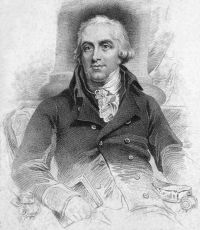
Portrait of Benjamin Rush Benjamin Rush,  Medical Inquiries and Observations…

“ It prevails chiefly in cool and cold weather, but is never epidemic; for the excreted matters which produce the fever do not float in the external atmosphere, nor are they communicated, so as to produce disease, more than a few feet from the persons who exhale them. They are sometimes communicated by means of the clothes which have been worn by the sick, and there have been instances in which the fever has been produced by persons who had not been confined by it, but who had previously been exposed to all the causes which generate it. ”
Source: Gutenberg

Get perspective with Kwize: daily news enlightened by great literature