“ Behind that curtain—the same world bounded by brick walls. Scenery with act numbers scrawled in charcoal across its back being shoved into place, hustling property men, frantic stage manager, nervous director giving last minute husky orders, anxiously repeated lines and cues, the final touches of make-up, restive feet striding dressing-room floors. There is the murmur of hushed voices, its excited undercurrent like a rising chant, the tremulo of uncertainty, the eager activity of that suspended moment of waiting for the curtain to lift. ”
Stage curtain
Definition and stakes
The theme of “stage curtain” has been addressed by authors such as James H. Head, Albert A. Hopkins, Irving Pichel, Mrs. Alec-Tweedie and Barrett H. Clark. It is often associated with terms like audience, actor, theatre, theater and play.
Quotes about “stage curtain”
 Thomas De Quincey,
Memorials and Other Papers — Volume 2
“ When one of our theatres let down an iron curtain upon the stage as a means of insulating the audience from any fire amongst the scenery, and sent men to prove the strength of this curtain by playing upon it with sledge-hammers in the sight and hearing of the public, who would not have laughed at the hollowness of the mummery, if the blows had been gentle, considerate, and forbearing? ”
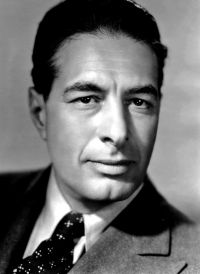 Irving Pichel,
On building a theatre
(1920)
“ The main curtain of the theatre, if it raises and lowers, is often operated from the fly-gallery. It is better, however, to have it operated from the stage level, on the same side of the stage as the fly-gallery or the pin-rail. The draw type of curtain is always handled from the stage floor. “Travelers” for these curtains can be more cheaply bought than made, and are kept in stock by any stage-rigging firm.It is well to have the stage flooring built in lateral sections resting on joists that run the width of the stage. ”
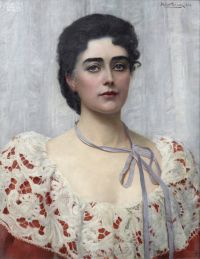 Mrs. Alec-Tweedie,
Behind the Footlights
“ It can be cold even in such a comfortable dressing-room, with the luxury of a fire, for the draughts outside, either on the stage or round it, in such a large theatre are incredible to an ordinary mind. Frequenters of the stalls know the chilly blast that blows upon them when the curtain rises, so they may form some slight idea of what it is like behind the scenes on a cold night. ”
“ A minute later the curtain went up, only to give the tumult a new impetus. The hapless actors looked at one another and at the front of the house. The curtain came down, and the popular and talented lessee himself stepped in front of it, dressed in his stage costume. But even him they would not hear. Then arose the unknown, middle-aged gentleman in the stalls, with the splendid temper and the gold eye-glasses—and him they would. ”
George H. Sandison, How to Behave and How to Amuse…
“ A curtain, preferably of some dark color, should be hung on each side, and a lambrequin, or valance, across the top. Where circumstances admit, the directions we give elsewhere as to the construction of a stage and proscenium for private theatricals, may be followed with advantage. In any case, a piece of fine gauze should be carefully stretched over the whole length and depth of the opening. This is found, by producing softer outlines, materially to enhance the pictorial effect. If it is practicable to have a raised stage, it will be found a great addition. ”
George M. Baker, The Merry Christmas of the Old Woman who Lived in a Shoe
“ A curtain, of same material or color as back stage, should be hung in rear of shank, that children standing behind may not be seen. A settee is placed behind it, on which the children in the dwelling stand. 1, 2, and 3 lie upon the stage, and stick their heads out when required. The characters can pass between the curtains at back, to their places. When the tree is disclosed, all the characters are in front, the settee is removed, the braces unfastened, and, at a signal, two boys run off the shoe, and others draw the curtains. ”
 Jerome K. Jerome,
On the Stage--and Off: The Brief Career of a Would-Be Actor
“ Another time I recollect was at a very small provincial theater. There was only one dressing-room in the whole place, and that the ladies had of course. We men had to dress on the stage itself. You can imagine the rest—the yell, the confusion; the wild stampede; the stage looking like the south bank of the Serpentine after 8 P. M.; the rapid descent of the curtain; the enthusiastic delight of the audience. ”
Winifred H. Mills, Marionettes masks and shadows
“ Few pleasures in life compare with the pleasure of creating something. In planning your scenery, much depends upon the plan and the type of stage you have chosen. No matter what the play or what the stage, you can make no mistake if you keep your backgrounds simple. Some of the greatest artists use no scenery. They produce their effects simply by means of curtains and lighting. Begin your experiment by using curtains. A light gray curtain for a back drop and the sides of your stage can give many charming effects, as you will discover when you begin experimenting with colored lights. ”
Charles E. Bolton, The Harris-Ingram Experiment
“ Groups of ushers, with white satin wands, conducted students in tasteful dresses, and invited guests to their seats. When the curtain rose it was difficult to decide which one most admired, the stage with its artistic setting, its young faces, sweet voices, and graceful movements, or the sympathetic audience of students and their friends. ”
Mrs. Alec-Tweedie,
Thirteen Years of a Busy Woman's Life
“ To keep these people out of the public-houses and well occupied for an evening seems worth even the pain and nervousness of standing alone on a stage, nearly as big as that of Drury Lane, with footlights before, and a huge white curtain for one’s slides behind. ”
Albert A. Hopkins, Magic, Stage Illusions and Scientific Diversions…
“ These doors are very useful, as they enable the artists to appear in response to encores, without raising the curtain, which means loss of time which is much needed in changing the scene. It is a wonderful sight to look through the little peep-hole in the door at the audience. Tier upon tier of splendidly clothed humanity rises up to the family circle at a dizzy height above. The whole is bright and gay, and is very different from the practical world behind the stage, where stand the stalwart stage hands ready for their duties ”
 Percy MacKaye,
Caliban by the Yellow Sands: A Community Masque of the Art of the Theatre
“ The curtain is painted to represent the street exterior of a house, in the Pompeian-Roman style. In the centre, set in a lintel frame, is [Pg 174] depicted a wide squat door, the stage platform forming its sill. Above the door is a window casement. Both door and window are devised to open and close practically. The top of the curtain is designed as an over-jutting tiled roof.With the Pantomimists come a group of Musicians, consisting of players on flutes, shields and cymbals, citherns and lyres, and two who wear fastened to their ankles pairs of scabilla, a kind of cymbal for the feet. ”
William Hazlitt, The Collected Works of William Hazlitt…
“ Only another moment, and amidst blazing tapers, and the dancing sounds of music, and light throbbing hearts, and eager looks, the curtain rises, and the picture of the world appears before us in all its glory and in all its freshness. Life throws its gaudy shadow across the stage ”
Frederica Seeger, Entertainments for Home, Church and School
“ If the stage is small, or it is desired that the same actors shall appear in various characters in succession, the figures may be exhibited in successive groups or compartments, the curtain being lowered to permit one party to retire and another to take their places. After the whole of the figures of a given chamber have been described, the assistants wind them all up, and they go through their various movements simultaneously, to a pianoforte accompaniment, which should gradually go faster, coming at last to a sudden stop, when the figures become motionless and the curtain falls. ”
E. K. Chambers, The Elizabethan Stage, Vol. 3 (1923)
“ This drawing was presumably effected by sliding the curtain laterally along a straight rod to which it was affixed by rings sewn on to its upper edge; there is no sign of any rise or fall of the curtain. The operator may be an actor upon the stage; in Bacon and Bungay Friar Bacon draws the curtains ‘with a white sticke’. He may be the speaker of a prologue. [238] Whether the ‘servitours’ of a theatre ever came upon the stage, undisguised, to draw the curtains, I am uncertain ”
E. K. Chambers, The Elizabethan Stage, Vol. 3 (1923)
“ The great majority of them, both out-of-door scenes and hall scenes, were acted on the open stage, under the heavens, with no more properties and practicable terrains than could reasonably be carried on by the actors, lowered from the heavens, raised by traps, or thrust on by frames and wheels. For more permanent background they had the scenic doors, the gallery above, the scenic curtain, and whatever the tire-man might choose to insert in the aperture, backed by an alcove within the tire-house, which the drawing of the curtain discovered. ”
Mary Emily Donelson Wilcox, Christmas under three flags (1900)
“ A platform raised about two feet above the floor and extending across the entire back of the hall serves as a stage, and some large, striped Mexican blankets do duty as a drop curtain. The actors remain all the time on the stage, those taking part in the scenes advance to the center, play their rôles, then retire to [80] the sides where those not acting gather behind the curtain and are supposed to be invisible. ”
Albert A. Hopkins, Magic, Stage Illusions and Scientific Diversions…
“ Before describing the ordinary English stage and that of the Metropolitan Opera House, a few generalities are in order. The audience really sees a very small proportion of the stage, for behind the curtain is an enormous rectangular [252] structure which is usually much higher than the roof of the auditorium. This great height is rendered necessary in order to raise the hanging scenes up bodily without resorting to the necessity of rolling them up. Great space is also needed for the ropes, pulleys, and other mechanism used for working the curtains, drop scenes, and borders. ”
Arthur J. Rees, The Hand in the Dark
“ When the curtain begins to rise again it is on a darkened stage, on which the objects are seen dimly at first, then clearer as returning intelligence, working slowly for the accommodation of the new setting, places the fresh impression in order with the throng of previously existing ideas. ”
James H. Head, Home Pastimes; or Tableaux Vivants
“ When all is ready for representation, the stage manager must give the signal to those in charge of the curtain, machinery below the stage, and colored fires at the same moment, so that all will work in unison. The whitish-blue fire should be burned in small quantities near the trap door and larger quantities of the same in the ante-rooms, which will reflect on the forms of the performers. The curtain should be drawn up quite fast, while the spectre, starting at the same time, should rise very slowly. ”
One-Act Plays by Modern Authors
“ The new methods of stage lighting make possible all kinds of color combinations and effects. The use of the plaster horizon (or of the cyclorama, a cheaper substitute, usually a straight semi-circular curtain enclosing the stage, made of either white or light blue cloth) , combined with high-powered lights set at various angles on the stage, makes outdoor effects possible, the beauty of which is new to the theatre. [15] Nowadays footlights are not invariably discarded, but where they are used they are wired so that groups of them can be lighted when other sections are dimmed or darkened. ”
James H. Head, Home Pastimes; or Tableaux Vivants
“ All should appear animated, while a few are pointing to the light in the distance. The alarm bells must be sounded while the curtain is raised, and a red fire burned at the left side of the stage, so as to throw a very little light on the extreme edge of the background, which should extend farther in on the scene while the tableau is exhibited. ”
A. E. Zucker, The Chinese theater (1925)
“ The use of the curtain in Chinese theaters is very rare; and the curtain itself is by no means like the curtain to which we are accustomed. When a relatively elaborate setting is about to be placed on the stage a curtain about ten feet high by about twenty feet wide is carried by stage hands to the front of the stage, and there stretched out to cut off the view of the audience. ”
“ Any carpenter can run up a temporary stage in a drawing room, from a slight sketch, in a day, without doing any damage to the walls. The curtain ought to be rehearsed as much as the play, till it goes up and down or pulls aside without a hitch. ”
 Juliana Horatia Ewing,
The Peace Egg and Other tales
“ A double drawing-room with folding doors is of course "made for theatricals." The difficulty of having only one exit from the stage—the door of the room—may be met by having a screen on the other side. But then the actors who go out behind the screen, must be those who will not have to come in again till the curtain has been drawn. ”
Various, St. Nicholas Book of Plays & Operettas…
“ Several strong tables—kitchen tables, for instance—ranged in line behind the screen, and as near to it as possible, would make an excellent platform, for as the actors walk close to the curtain, a wider flooring is not necessary. At each side of the stage and screen a heavy shawl or blanket should be hung, so that the actors may be concealed from the audience when not engaged in the performance. There should be but one light to throw the shadows. ”
 M. E. W. Sherwood,
Home Amusements
“ One door opening into a large hall is absolutely necessary, if no better arrangement can be made. The best stage is, of course, like that of a theatre, with areas all around and behind it, so that the actors have a space to retire into. This is difficult in a parlor, unless it be a very large one. The difficulty, however, has been and will be solved by the ingenious. Drawing up the big sofa in front of the footlights, and arranging a pair of screens and a curtain, has often served well for a parlor play. ”
George H. Sandison, How to Behave and How to Amuse…
“ The next consideration will be the curtain. The ordinary domestic curtains, hung by rings from a rod or pole, and opening in the middle, will serve as a makeshift; but where a really artistic series of tableaux is contemplated, the regular stage-curtain of green baize is decidedly to be preferred.The question of “background” will be the next point to be attended to. Tableaux vivants may be divided into two classes, the dramatic, i. ”
E. K. Chambers, The Elizabethan Stage, Vol. 3 (1923)
“ Half a century later still, it is used in the Restoration play of The Duke of Guise to indicate, not this normal back curtain, but a screen placed across the recess itself, or the inner stage which had developed out of it, behind ‘the scene’. [80] Webster’s use seems to be an individual one. Properly a ‘traverse’ means, I think, not a curtain suspended from the roof, but a screen shutting off from view a compartment within a larger room, but leaving it open above. ”
Robert Blachford Mansfield, School-life at Winchester College (1893)
“ We formed our stage by removing all the bedding from the beds on one side of Chamber, and laying the bed-boards [4] on them for a floor. A cord was fastened [74] across the room a few feet from the wall, from which lengths of paper-hangings were suspended to give it some appearance of a room, and (the toys being removed) to give room for the actors to pass from one side to the other without being seen by the audience; in front of all a green drop, or rather draw-curtain, was suspended.THE PLAY IN SEVENTH. ”
1911 Encyclopædia Britannica (1911)
“ In the modern theatre the word is applied to that part of the stage which is in front of the curtain and the orchestra, and sometimes to the whole front of the stage, including the curtain and the arch containing it, which separates the stage from the auditorium. ”
Albert A. Hopkins, Magic, Stage Illusions and Scientific Diversions…
“ The effects are produced by steam and a series of gauze curtains. The clouds really serve as a screen to prevent the scene shifters being viewed by the audience. A satisfactory effect can only be obtained when every detail is carried out with the greatest care. The superiority of this method over the conventional curtain is apparent. ”
Winifred H. Mills, Marionettes masks and shadows
“ Your imagination supplied the scenery and lighting. A small table turned upside down and placed on top of another table may have 48been your next invention. A curtain drawn about its three sides and your string of Christmas-tree lights gave you a very satisfactory little theater. As your stagecraft developed, you may have seen possibilities in a soap box or a dry goods box. By knocking out one side to make a proscenium opening and painting scenery on the back of the box or on to cardboards which you slipped in and out, you had a very real stage. ”
Related terms
Authors who wrote about “stage curtain”
James H. HeadAlbert A. HopkinsIrving PichelMrs. Alec-TweedieBarrett H. ClarkWinifred H. MillsJerome K. JeromeA. E. ZuckerMarshall EverettRobert Edmund Jones Ned Wayburn
 Rita Weiman
 Luigi PirandelloMary Emily Donelson Wilcox
 Edmond Rostand
 Elsie De WolfePercy MacKayeHenry Charles HorstmannHerman PinettiE. K. Chambers
Irving PichelMrs. Alec-TweedieBarrett H. ClarkWinifred H. MillsJerome K. JeromeA. E. ZuckerMarshall EverettRobert Edmund JonesNed WayburnRita WeimanLuigi PirandelloMary Emily Donelson WilcoxEdmond RostandElsie De WolfePercy MacKayeHenry Charles HorstmannHerman PinettiE. K. Chambers