
“ Edward Henry continued his way up the right-hand gallery staircase, and reached the auditorium, where to his astonishment a good deal of electricity, at one penny three farthings a unit, was blazing. Every seat in the narrow and high-pitched gallery, where at the sides the knees of one spectator would be on a level with the picture-hat of the spectator in the row beneath, had a perfect and entire view of the proscenium opening. ”
Proscenium
Definition and stakes
The proscenium, a vertical plane delineating the front of a theatrical stage, functions as both a physical frame and a symbolic boundary between performers and the audience. This architectural feature, frequently enclosed by an arch, has played a crucial role in shaping dramatic storytelling and spatial relationships. Playwrights such as Arnold Bennett and Arthur Wing Pinero clearly highlighted its structural significance, with Bennett emphasizing its visual presence in a theatre’s auditorium and Pinero describing its incorporation into stage layouts.
Metaphorically, authors like Maurice Hewlett and Plotinus invoked the proscenium’s symbolic meaning, likening life’s uncertainties to theatrical moments or fate’s unyielding storyline. These diverse perspectives highlight the proscenium’s dual nature: a tangible separator in theatre and a symbol of existential or narrative transitions in literature.
Quotes about “proscenium”
 Arthur Wing Pinero,
Trelawny of The "Wells": A Comedietta in Four Acts
Arthur Wing Pinero,
Trelawny of The "Wells": A Comedietta in Four Acts
“ The scene represents the stage of a theatre with the proscenium arch, and the dark and empty auditorium in the distance. The curtain is raised. The stage extends a few feet beyond the line of the proscenium, and is terminated by a row of old-fashioned footlights with metal reflectors. On the left, from the proscenium arch runs a wall, in which is an open doorway supposed to admit to the Green-room. Right and left of the stage are the "P." and "O. P." and the first and second entrances, with wings running in grooves, according to the old fashion. Against the wall are some "flats." ”
 Maurice Hewlett,
Lore of Proserpine
Maurice Hewlett,
Lore of Proserpine
“ Thus go the fairy kind, Whither Fate driveth; not as we Who fight with it, and deem us free Therefore, and after pine, or strain Against our prison bars in vain; For to them Fate is Lord of Life And Death, and idle is a strife With such a master ... ”
 Countee Cullen,
Color
(1925)
Countee Cullen,
Color
(1925)
“ And still I writhed and moaned, "The curse, the curse,Than animated death, can death be worse?""Dark child of sorrow, mine no less, what artOf mine can make thee see and play thy part?The key to all strange things is in thy heart." ”
 Plotinus,
Enneads — On Providence (I)
Plotinus,
Enneads — On Providence (I)
“ Murders, death in all its guises, the reduction and sacking of cities, all must be to us just such a spectacle as the changing scenes of a play; all is but the varied incident of a plot, costume on and off, acted grief and lament. ”
 Lewis Carroll,
Phantasmagoria and Other Poems
(1869)
Lewis Carroll,
Phantasmagoria and Other Poems
(1869)
“ Low spake the voice within his head, In words imagined more than said, Soundless as ghost's intended tread: "If thou art duller than before, Why quittedst thou the voice of lore? Why not endure, expecting more?" ”
Ashley Horace Thorndike, Tragedy
“ Much of the old stage effect reappears, as in the masques, funerals, ghosts, and exhibition of dead bodies, but there is a great increase in the number and ingenuity of melodramatic sensations. Each play is a chamber of horrors. ”
 Fyodor Sologub,
The Little Demon
Fyodor Sologub,
The Little Demon
“ And the ancient demon, the spirit of prehistoric confusion, of hoary chaos, rejoiced in the destruction of things, while the wild eyes of the madman reflected horror, like the horror of the death agonies of some monster. ”
 W. Somerset Maugham,
The Making of a Saint
W. Somerset Maugham,
The Making of a Saint
“ All the world was agog for great events—and nothing happened. It reminded me of a mystery play in which, after great preparation of dialogue, some great stage effect is going to be produced—a saint is going to ascend to heaven, or a mountain is to open and the devil spring out. ”
 Algernon Charles Swinburne,
The Age of Shakespeare
(1908)
Algernon Charles Swinburne,
The Age of Shakespeare
(1908)
“ Whether in dialogue or in monologue, 'The Revenger's Tragedy' is so equally admirable for instinctive obedience to nature and imaginative magnificence of inspiration, so equally perfect in the passionate harmony of its verse and the inspired accuracy of its locution, that years of study and elaboration might have seemed necessary to bring about this inexpressible improvement in expression of yet more sombre and more fiery thought or feeling. ”
James Herbert Walker, The Johnstown Horror!!!
“ The suddenness of the blow and the impossibility of communicating with the scene add to the terror of the event. The sickening spectacle of ruin and death which will be revealed when the veil of darkness is lifted is left to conjecture. ”
 John Wesley Powell,
Truth and Error — Chapter XXIII.
(1898)
John Wesley Powell,
Truth and Error — Chapter XXIII.
(1898)
“ If you strike one rock with another you can see its ghost as a spark of fire. When the clouds gather they are the ghosts of water; when angry they shine with lightning light, and when pleased the clouds shine as rainbows. These illustrations will serve to show how thoroughly, in the notion of the savage, ghosts and bodies are differentiated. The universe being considered as bodies and ghosts, and the bodies being considered as inert and the ghosts as active principles, we have the fundamental theory of savage reasoning. ”
 Marcel Proust,
The Guermantes Way
(1925)
Marcel Proust,
The Guermantes Way
(1925)
“ And we are like the person in the fairy-tale to whom a sorceress, on his uttering the wish, makes appear with supernatural clearness his grandmother or his betrothed in the act of turning over a book, of shedding tears, of gathering flowers, quite close to the spectator and yet ever so remote, in the place in which she actually is at the moment. ”
 A. C. Bradley,
Shakespearean Tragedy
(1912)
A. C. Bradley,
Shakespearean Tragedy
(1912)
“ One at least is obvious, and indeed it is followed not merely during the conflict but from beginning to end of the play. There are, of course, in the action certain places where the tension in the minds of the audience becomes extreme. We shall consider these presently. But, in addition, there is, all through the tragedy, a constant alternation of rises and falls in this tension or in the emotional pitch of the work, a regular sequence of more exciting and less exciting sections. ”
 John Cassell,
Cassell's Illustrated History of England
(1865)
John Cassell,
Cassell's Illustrated History of England
(1865)
“ Amid all this horror, the sight of ghastly death, and the ravings of delirium, whilst some brave souls devoted themselves to the assistance of the suffering and dying, crowds of others rushed to taverns, theatres, and places of debauch, and a strange maniacal mirth startled the silence of the night, and added horror to the work of death. ”
 R. M. Ballantyne,
The Coral Island
(1859)
R. M. Ballantyne,
The Coral Island
(1859)
“ I would not, for the sake of thrilling you with horror, invent so terrible a scene. It was witnessed. It is true; true as that accursed sin which has rendered the human heart capable of such diabolical enormities! ”
 John Ferriar,
An essay towards a theory of apparitions
(1813)
John Ferriar,
An essay towards a theory of apparitions
(1813)
“ Another great convenience will be found in my system; apparitions may be evoked, in open day,—at noon, if the case should be urgent, in the midst of a field, on the surface of water, or in the glare of a patent-lamp, quite as easily, as in the ‘darkness of chaos or old night.’ Nay, a person rightly prepared may see ghosts, while seated comfortably by his library-fire, in as much perfection, as amidst broken tombs, nodding ruins, and awe-inspiring ivy. ”
 Hippolyte Taine,
The Ancient Regime
Hippolyte Taine,
The Ancient Regime
“ Each narration, each portrait, each detail of action, might be detached and serve as a good example for schoolboys, along with the masterpieces of the ancient tribune. So strong is this tendency that, on the approach of the final moment, in the agony of death, alone and without witnesses, the character finds the means to plead his own frenzy and die eloquently. ”
“ The silent, sorrowing figure of the Angel of Death, sweeping through the city with flaming sword in hand and trailing robe of black—symbol of the train of sorrow he leaves behind him—is noble and dignified. ”
Robert Cleland, A Rich Man's Relatives (Vol. 1 of 3…
“ A premonition must have been upon her spirits--that impalpable tremor and exhilaration preceding a catastrophe which whets the perceptions to intenser enjoyment before the destroying assault, like advancing fire which illumines, expands, and glorifies ere it leaps on its prey and turns it into smoke and ashes. ”
John Oakesmith, The religion of Plutarch (1902)
“ In a beautiful passage, Timon compares death to initiation into the Great Mysteries—an initiation in which gloom and weariness and perplexity and terror are followed by the shining of a wondrous light, which beams on lovely meadows, whose atmosphere resounds with sacred voices that tell us all the secret of the mystery, and whose paths are trod by pure and holy men. ”
 Matilde Serao,
The Land of Cockayne: A Novel
Matilde Serao,
The Land of Cockayne: A Novel
“ They put all the repressed strength of fancy into that grand mystic dream that rises from the terrors of Hell to the supreme ecstasies of Paradise, having a horror of Purgatory, as if the flesh felt its warm flames; and, dreaming and dreaming on, they come to the last moment with eyes shut in invincible hope. ”
 Charles Spurgeon,
Accidents, Not Punishments
(1861)
Charles Spurgeon,
Accidents, Not Punishments
(1861)
“ God's voice has rung out of the dark tunnel,—has spoken from the sunset and from the glaring bonfire round which lay the corpses of men and women, and he has said to you, "Be ye also ready, for in such an hour as ye think not, the Son of Man cometh." ”
 Henry Fielding,
The Works of Henry Fielding, vol…
Henry Fielding,
The Works of Henry Fielding, vol…
“ Fust. This prologue was writ by a friend.PROLOGUE. When Death's sharp scythe has mowed the hero down, The muse again awakes him to renown; She tells proud Fate that all her darts are vain, And bids the hero live and strut about again: Nor is she only able to restore, But she can make what ne'er was made before; Can search the realms of Fancy, and create What never came into the brain of Fate. ”
Henry M. Brooks, The Olden Time Series, Vol. 5: Some Strange and Curious Punishments
“ The mind sickens, and sinks under the oppression of its own feelings. What then must be the dread reality! From some of the spectators we learn that it was a scene which transfixed in breathless horror almost every one who witnessed it. ”
Giuseppe Garibaldi, Rule of the Monk; Or, Rome in the Nineteenth Century
“ Here we have represented the most ghastly cartoons of death, judgment, purgatory, and hell; we behold angels and devils fighting for the souls of the departed, snakes devouring, fiends scorching, red-hot hooks tearing their flesh. ”
 Walter Pater,
The Renaissance: Studies in Art and Poetry
Walter Pater,
The Renaissance: Studies in Art and Poetry
“ So he lingers on; a revenant, as the French say, a ghost out of another age, in a world too coarse to touch his faint sensibilities too closely; dreaming, in a worn-out society, theatrical in its life, theatrical in its art, theatrical even in its devotion, on the morning of the world's history, on the primitive form of man, on the images under which that primitive world had conceived of spiritual forces. ”
Edward George Earle Lytton Bulwer, Eugene Aram (1832)
“ When Fate selects her human agents, her dark and mysterious spirit is at work within them; she moulds their hearts, she exalts their energies, she shapes them to the part she has allotted them, and renders the mortal instrument worthy of the solemn end. ”
by Henry James, The Altar of the Dead, The Beast in the Jungle…
“ They fell for him into categories, they fairly became familiar, the signs, for his own perception, of the alarm his presence and his vigilance created; though leaving him always to remark, portentously, on his probably having formed a relation, his probably enjoying a consciousness, unique in the experience of man. People enough, first and last, had been in terror of apparitions, but who had ever before so turned the tables and become himself, in the apparitional world, an incalculable terror? ”
William Winter, Shadows of the Stage
“ Striking the keynote thus, the rest followed in easy sequence. The ecstasy of the wooing scene, the agony of the final parting from Romeo, the forlorn tremor and passionate frenzy of the terrible night before the burial, the fearful awak [Pg 61] ening, the desperation, the paroxysm, the death-blow that then is mercy and kindness,—all these were in unison with the spirit at first denoted, and through these was naturally accomplished its prefigured doom. ”
John Ferriar,
An essay towards a theory of apparitions
(1813)
“ To those unfortunate persons, who feel a real dread of apparitions, I hope to offer considerations which will quiet their fears, and will even convert the horrors of solitude into a source of rational amusement. ”
 Jane Ellen Harrison,
Ancient Art and Ritual
Jane Ellen Harrison,
Ancient Art and Ritual
“ That disappoints some modern minds unconsciously avid of realism to the point of horror. Instead of a fine thrilling murder or suicide before his very eyes, the spectator is put off with an account of the murder done off the stage. ”
 John Ruskin,
The Stones of Venice, Volume 3…
John Ruskin,
The Stones of Venice, Volume 3…
“ And from the contemplation of death, and of the pangs which follow his footsteps, arise in men’s hearts the troop of strange and irresistible superstitions which, more or less melancholy or majestic according to the dignity of the mind they impress, are yet never without a certain grotesqueness, following on the paralysis of the reason and over-excitement of the fancy. ”
 James Ryder Randall,
Maryland, my Maryland, and other poems
(1908)
James Ryder Randall,
Maryland, my Maryland, and other poems
(1908)
“ But never flees Their sorcery of sorceries. Truth, Grace, and Love From worlds above— Hints of the Pure and Holy Dove— Divinely bright, These gems of sight Are throned upon their globes of light. ”
Atha Westbury, Australian fairy tales (1897)
“ Who shall describe the sensation of the poor mortal, as he felt himself falling—falling down—down, a blind mass, through the darkened air? Those who have fallen, or have leaped even from a moderate height, can have no conception of the frenzied terror that took possession of him for a moment. ”
John Ferriar,
An essay towards a theory of apparitions
(1813)
“ I have no doubt, that dismal and frightful images have been presented, in the same manner, to young persons, after scenes of domestic affliction, or public horror.From this renewal of external impressions, also, many of the phænomena of dreams admit an easy explanation. When an object is presented to the mind, during sleep, while the operations of judgment are suspended, the imagination is busily employed in forming a story, to account for the appearance, whether agreeable or distressing. ”
T. F. Thiselton-Dyer, The Ghost World
“ WRAITH-SEEING Closely allied to ‘second sight’ is the doctrine of ‘wraiths’ or ‘fetches,’ sometimes designated ‘doubles’—an apparition exactly like a living person, its appearance, whether to that person or to another, being considered an omen of death. ”
 Nathaniel Hawthorne,
The Marble Faun
(1860)
Nathaniel Hawthorne,
The Marble Faun
(1860)
“ Always some tragic incident is shadowed forth or thrust sidelong into the spectacle; and when once it has caught your eye you can look no more at the festal portions of the scene, except with reference to this one slightly suggested doom and sorrow. ”
 Henry Johnson Brent,
Was it a ghost? The murders in Bussey's wood
(1868)
Henry Johnson Brent,
Was it a ghost? The murders in Bussey's wood
(1868)
“ Let him alone with the night, and the night will give him such a tangled and convulsed spasm of horror as will make his very soul shriek aloud for two almost impossible things, yet awhile, death or the Lord’s pardon. ”
 George R. Sims,
Dagonet Abroad
George R. Sims,
Dagonet Abroad
“ You can see it all, if you have a spark of imagination—the whole bloody, revolting scene becomes so real that at last you turn away and hide your eyes, and cry ‘Faugh!'—come to your senses, and thank Heaven that such cruel days are over for ever. ”
Catherine Crowe, The Night-Side of Nature; Or, Ghosts and Ghost-Seers
“ In the above examples, the apparition, or wraith, has been in some way connected with the death of the person whose visionary likeness is seen; and, in most of these instances, the earnest longing to behold those beloved seems to have been the means of effecting the object. ”
 Lizzie Doten,
Poems of Progress
Lizzie Doten,
Poems of Progress
“ The monstrous blasphemy of creeds Which represent an angry God, Who tempts man sorely through his needs, And meets his failings with a rod— Eternal wrath, through blood appeased, The curse of God, salvation’s plan, Are nightmare visions, which have seized The slumbering consciousness of man. ”
John Ferriar,
An essay towards a theory of apparitions
(1813)
“ In a certain stage of putrefaction, the bodies of persons which have been immersed in water, rise to the surface, and in deep water, are supported in an erect posture, to the terror of uninstructed spectators. Menacing looks and gestures, and even words, are supplied by the affrighted imagination, with infinite facility, and referred to the horrible apparition. I insert a striking instance from Dr. ”
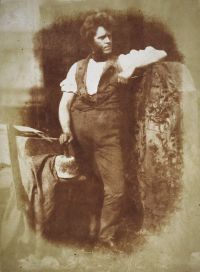 Hugh Miller,
Scenes and legends of the north of Scotland
(1869)
Hugh Miller,
Scenes and legends of the north of Scotland
(1869)
“ In the others, the mind, unsettled by suffering and terror, ceases to deduce the evils which are overwhelming it from the old fixed causes which govern the universe, and sends out imagination in quest of the new. Demons are abroad—death itself becomes a living spirit, voices of lamentation are heard in the air—spectres seen on the earth. ”
 H. B. Marriott Watson,
Diogenes of London (collection…
(1893)
H. B. Marriott Watson,
Diogenes of London (collection…
(1893)
“ In the red heart of the fire alone does sorcery linger; and here alone it is possible to be made free of exigent time, and to turn Space into Infinity. All that is illimitable and eternal pervades the thoughts that rise with the flames. ”
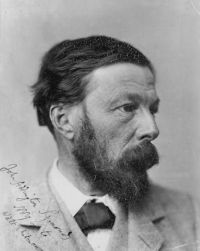 John Addington Symonds,
The Life of Michelangelo Buonarroti
John Addington Symonds,
The Life of Michelangelo Buonarroti
“ The picture, when we dwell long enough upon its details, emerges into prominence, moreover, as indubitably awe-inspiring, terrifying, dreadful in its poignant expression of wrath, retaliation, thirst for vengeance, cruelty, and helpless horror. ”
 G. E. Farrow,
The Wallypug in London
G. E. Farrow,
The Wallypug in London
“ The amplifications of the Scripture narrative are often conceived with high poetic insight, and this “Dream of the World’s Tragedy” is, despite some trifling incongruities, a lofty and not inadequate paraphrase of the supreme climax of the inspired narrative.’—Dublin Review. ”
Robert Aitkin Bertram, The Preacher's Complete Homiletic Commentary on the Books of the Bible…
“ We can imagine them in their dreams picturing to themselves the scenes of the approaching capture, the shouting, the onset, the slaughter, the devastation, the prisoners, the booty, the triumph, the glory—scenes, however, these which they were destined never to witness! ”
