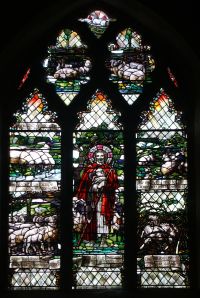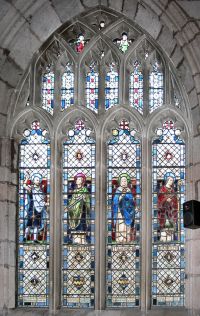
Stained glass

Definition and stakes

Portrait of Hugh Arnold Hugh Arnold Stained Glass of the Middle Ages in England and France

Stained glass is not one of the arts in which the method of production reveals itself at the first glance. Indeed, so few people when looking at a stained-glass window, whether a gorgeous and solemn one of the thirteenth or fifteenth century, or a crude and vulgar one of the nineteenth, realize the long and laborious process by which the result, good or bad, has been obtained, that a short description of that process as finally perfected some five hundred years ago may not be out of place here.
Source: Gutenberg

William Frederic Faber Stained Glass Windows: An Essay… (1900)

For, as we have said, the glory of true stained glass is in its rich, jewel-like color. Its reds, which the makers called “ruby,” its blues which they called “sapphire,” with its “emerald” greens, its “gold” and its “pearl,” never entered the field to compete with the achievements of the painter’s brush; to compare the delight they afford the beholder with that derived from a painting would be in a sense as impossible as a comparison between the fragrance of a flower and the cadence of a song.
Source: Gutenberg

William Frederic Faber Stained Glass Windows: An Essay… (1900)

A square yard of simple red stained glass is artistically more beautiful if composed of a hundred pieces leaded together than if it were in a single sheet. The differences in texture themselves produce a better result, and the black leads, scarcely discernible individually, contribute an additional element of pleasure. And in arranging pieces of different color side by side, intelligent leading design was itself the artist’s drawing, and effected results altogether admirable.
Source: Gutenberg

Get perspective with Kwize: daily news enlightened by great literature