Glassblowing

Definition and stakes

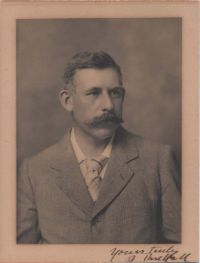
Portrait of Richard Threlfall Richard Threlfall,  On Laboratory Arts

“ The habit of constant and instinctive rotation is literally about one-third of the whole art of glassblowing. It is unlikely, however, that the beginner will discover that he has not got this habit, until a few failures draw his attention to it.
The glass tube being held in position lightly yet firmly, and the operator being sure that he feels comfortable and at his ease, and that the blow-pipe flame (a single flame in this instance) is well under control, the preliminary heating may be commenced.
”
Source: Gutenberg

T.-P. Danger,  The Art of Glass-Blowing

“ The word glass-blower, generally speaking, signifies a workman who occupies himself in making of glass and enamel, the instruments, vessels, and ornaments, which are fabricated on a larger scale in the glass-houses: but the domain of the sciences having laid the art of glass-blowing under contribution, the artists of the lamp have divided the labours thereof. Some apply themselves particularly to the construction of philosophical and chemical instruments; others occupy themselves with little ornamental objects, such as flowers, &c. ”
Source: Gutenberg

J. Sydney Lewis,  Old Glass and How to Collect it

“ The final stage with which we are concerned is that of blowing, since all table glass, worthy of being called table glass, is blown. In other words, every decanter, vase, tumbler, and wine glass of the better sort begins its existence as a bubble of molten glass at the end of an iron tube—the glass-blower’s tube—and owes its form to the delicate touches of simple tools held in a skilful hand and guided by a trained eye. It is this fact which gives glass its individuality. There is no hard-and-fast rigour of line, no mechanical uniformity of shape, such as is associated with machine-made goods ”
Source: Gutenberg

Get perspective with Kwize: daily news enlightened by great literature