Stone curlew

Definition and stakes

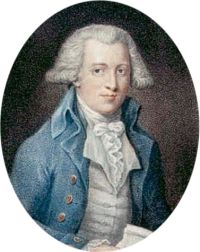
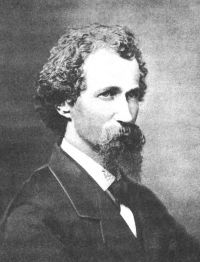
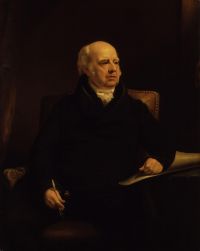
Portrait of Gilbert White Gilbert White,  The Natural History of Selborne

“ I am assured now that it is the stone curlew (charadrius oedicnemus) . Some of them pass over or near my house almost every evening after it is dark, from the uplands of the hill and North field, away down towards Dorton; where, among the streams and meadows, they find a greater plenty of food. Birds that fly by night are obliged to be noisy; their notes often repeated become signals or watchwords to keep them together, that they may not stray or lose each the other in the dark.
The evening proceedings and manoeuvres of the rooks are curious and amusing in the autumn.
”
Source: Gutenberg

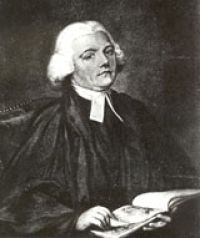
Portrait of Gilbert White Gilbert White,  The Natural History of Selborne

“ My Sussex friend, a man of observation and good sense, but no naturalist, to whom I applied on account of the stone curlew, oedicnemus, sends me the following account: ‘In looking over my Naturalist’s Journal for the month of April, I find the stone curlews are first mentioned on the seventeenth and eighteenth, which date seems to me rather late. They live with us all the spring and summer and at the beginning of autumn prepare to take leave by getting together in flocks. ”
Source: Gutenberg

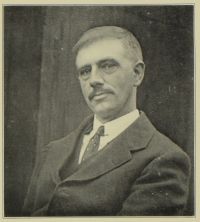
John Albert Leach,  An Australian Bird Book: A Pocket Book for Field Use

“ The Pratincole, or Swallow-Plover, is a representative of an Old-World family. Its long wings and long legs denote a rapid runner and a rapid flyer, so that it has little trouble in catching its insect food, either in the air or on the ground.
Our inland Stone-Curlew has a call very similar to that of the sea (true) Curlew, but it has a short, straight bill, instead of a long, arched bill. The proper name of the land Curlew is the Southern Stone-Curlew or Stone-Plover. It is the only Australian bird that seems to have the power of varying the color of its eggs.
”
Source: Gutenberg

Get perspective with Kwize: daily news enlightened by great literature