Stramonium

Definition and stakes

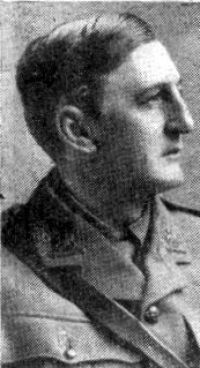
Portrait of Arthur B. Reeve Arthur B. Reeve,  Gold of the Gods

“ I asked Craig as we parted from him and rode uptown.
"You saw that?" he smiled. "It was pilocarpine, jaborandi, a plant found largely in Brazil, one of the antidotes for stramonium poisoning. It doesn't work with every one. But it seems to have done so with him. Besides, the caffeine in the coffee probably aided the pilocarpine. Then, too, I made them smoke cigarettes without the dope that is being fed them. Lockwood's case, for some reason, hasn't gone far. But did you notice how the treatment contracted the pupils of Whitney's eyes almost back to normal again?"
”
Source: Gutenberg

J. F. Blake,  Astronomical Myths: Based on Flammarions's "History of the Heavens"

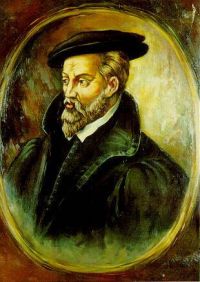
“ One of the greatest writers on ancient geography was Strabo, whose ideas we will now give an account of. He seems to have been a disciple of Hipparchus in astronomy, though he criticises and contradicts him several times in his geography. He had a just idea of the sphericity of the earth; but considered it as the centre of the universe, and immovable. He takes pains to prove that there is only [Pg 253] one inhabited earth—not in this refuting the notion that the moon and stars might have inhabitants, for these he considered to be insignificant meteors nourished by the exhalations of the ocean ”
Source: Gutenberg

George A. Jackson,  Popular Science Monthly (1880)

“ Ptolemy, we have said, prepared the science for the ages of darkness on which the world was soon to enter. In a sense, the first shadows of that darkness had already fallen. The science had gone backward perceptibly since the days of Eratosthenes. True, there was a larger fund of information in regard to the countries of the Roman Empire; but, as we see in Strabo, there was no scientific grasp of the world as a whole. ”
Source: Wikisource

Get perspective with Kwize: daily news enlightened by great literature