Substitutionary atonement

Definition and stakes

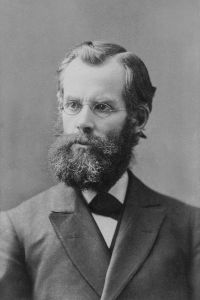
Portrait of Robert Green Ingersoll Robert Green Ingersoll,  The Works of Robert G. Ingersoll…

“ In the presence of this infinite horror, you complacently speak of the atonement,—a scheme that has not yet gathered within its horizon a billionth part of the human race,—an atonement with one-half the world remaining undiscovered for fifteen hundred years after it was made.
If there could be no suffering, there could be no sin. To unjustly cause suffering is the only possible crime. How can a God accept the suffering of the innocent in lieu of the punishment of the guilty?
According to your theory, this infinite being, by his mere will, makes right and wrong.
”
Source: Gutenberg

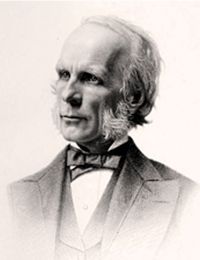
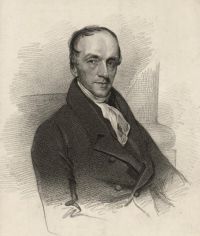
Henry Giles,  Unitarianism Defended

“ Now when a human reasoner lays down these preliminaries as necessary parts of the constitution of the divine mind, I am amazed that he has ever after the conscience to charge other men with rash speculations on the subjects of Theology, or with reasoning upon abstract principles about the things of God. Atonement is made for every sin: in that the Trinitarian is right. The sinner bears upon a burdened soul the weight of the cross, and faints in sorrow. Through a crucifixion and an agony does every erring heart return to God. ”
Source: Gutenberg

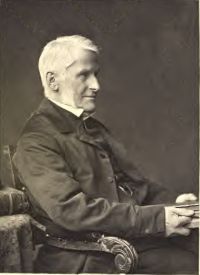
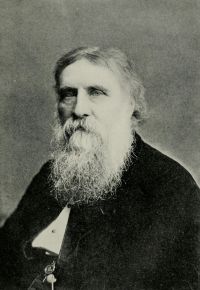
Portrait of George MacDonald George MacDonald,  Unspoken Sermons, Series I., II.…

“ But thus would no atonement be wrought—nothing be done to make up for the wrong God has allowed to come into being by creating man. There must be an atonement, a making-up, a bringing together—an atonement which, I say, cannot be made except by the man who has sinned.
Punishment, I repeat, is not the thing required of God, but the absolute destruction of sin. What better is the world, what better is the sinner, what better is God, what better is the truth, that the sinner should suffer—continue suffering to all eternity? Would there be less sin in the universe?
”
Source: Gutenberg

Get perspective with Kwize: daily news enlightened by great literature