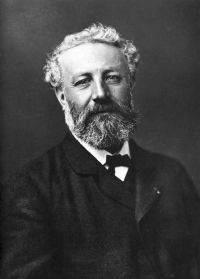
 Jules Verne,
Twenty Thousand Leagues under the Sea
(1870)
Jules Verne,
Twenty Thousand Leagues under the Sea
(1870)
“ The human mind delights in grand conceptions of supernatural beings. ”
Jules Verne,
Twenty Thousand Leagues under the Sea
(1870)
“ The human mind delights in grand conceptions of supernatural beings. ”
 Richard Jefferies,
World's End: A Story in Three Books
Richard Jefferies,
World's End: A Story in Three Books
“ Ever since the world began it has been the belief of mankind that desolate places are the special haunt of supernatural beings. ”
Sir Edgar MacCulloch, Guernsey Folk Lore
“ The agency of supernatural beings is an easy answer to the question, and some such cause is usually assigned for their origin by the tradition of the country. Sometimes they are the work of fairies, sometimes of giants and magicians, and sometimes they are said to be mortals changed into stone by an offended deity for some sacrilegious act, or heroes petrified as a lasting testimony of their exploits. ”
Dorothy Scarborough, The Supernatural in Modern English Fiction
“ But since the things of the spirit are intangible they must be represented in concrete form, as definite beings whom our minds can apprehend. Thus the poets and dramatists and story-makers must show us images to shadow forth spiritual things. As with a shudder we close the books that tell us horrifying tales of satanic spirits, of accursed beings that are neither wholly animal nor human, of mortals with diabolic powers, we shrink from the evils of the soul that they represent, and recognize their essential truth in the guise of fiction. ”
Various, Popular Science Monthly (1888)
“ Attempting to make the supernatural the object of thought, we find that we can only do so by ascribing to it the attributes of Nature. Thus, we form symbolical notions of it which vary with changing conditions of mental development. So arise anthropomorphic conceptions of supernatural beings, ideas of heaven and hell, the assumed connection of supernatural intelligences with natural phenomena, etc. This belief in supernatural interference induces fear, impels worship, and influences conduct. ”
Baron Thomas Babington Macaulay Macaulay, Critical, Historical, and Miscellaneous Essays…
“ They are made up of the images of the earth:—they are told in the language of the earth.—Yet the whole effect is, beyond expression, wild and unearthly. The fact is, that supernatural beings, as long as they are considered merely with reference to their own nature, excite our feelings very feebly. ”
Dorothy Scarborough, The Supernatural in Modern English Fiction
“ But, whatever be the reasons, there has been a continuity of the ghostly in literature, with certain rise and fall of interest. There is in modern English fiction, as likewise in poetry and the drama, a great extent of the supernatural, with wide diversity of elements. Beginning with the Gothic romance, that curious architectural excrescence that yet has had enormous influence on our [3] novel, the supernatural is found in every period and in every form of fiction. The unearthly beings meet us in all guises, and answer our every mood, whether it be serious or awed, satiric or humoresque. ”
 Erminnie A. Smith,
Myths of the Iroquois. (1883 N 02…
Erminnie A. Smith,
Myths of the Iroquois. (1883 N 02…
“ All the mysterious in nature, all that which inspired them with reverence, awe, terror, or gratitude, became deities, or beings like themselves endowed with supernatural attributes, beings whose vengeance must be propitiated, mercy implored, or goodness recompensed by thank-offerings. ”
Edwin Sidney Hartland, The Science of Fairy Tales
“ An extension of this thought sometimes even prohibits the hero from accepting a seat or a bed offered by way of hospitality on the part of the devil, or the sorceress, to whose dwelling his business may take him, or even to look at the fair temptress who may seek to entice him to eat. [20] The meaning of the superstition is not easy to trace, but it should be remembered that in the lower stages of human civilization no distinction is drawn between supernatural or spiritual beings who have never been enclosed in human bodies, and the spirits of the dead. ”
Dorothy Scarborough, The Supernatural in Modern English Fiction
“ In general, in modern fiction, man now makes his supernatural characters in his own image. Ghosts, angels, devils, witches, werewolves, are humanized, made like to man in appearance, passions, and powers. ”
A Plain and Literal Translation of the Arabian Nights Entertainments…
“ It is surely the strangeness, the unknown nature, the anomalous character of the supernatural agents here employed, that makes them to operate so powerfully on our hopes, fears, curiosities, sympathies, and, in short, on all the feelings of our hearts. ”
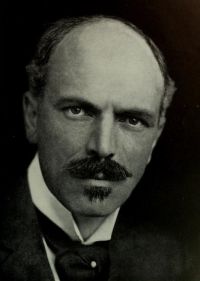 Maurice Hewlett,
Lore of Proserpine
Maurice Hewlett,
Lore of Proserpine
“ Now, it is a curious thing, accepted by all visionaries, that a supernatural being, a spirit, fairy, not-human creature, if you see it among animals, beasts and birds, on hills or in the folds of hills, among trees, by waters, in fields of flowers, looks at home and evidently is so. ”
Dorothy Scarborough, The Supernatural in Modern English Fiction
“ He renews his youth every forty years, growing suddenly from a decrepit man to a handsome, gifted youth, which naturally suggests complications of human love-affairs. Other elements of supernaturalism are used, as angels, demons, and so forth while the Æons and the Intermedii (whoever they are!) ”
The Other World; or, Glimpses of the Supernatural…
“ Everywhere, from time to time, the proximity of the unseen world and the existence of the Supernatural were made manifest: while, here and there, examples of special miraculous interventions evidently stood forth to show that neither the Arm of the Most High was shortened nor the faith of the followers of our Blessed Lord stunted in its growth. ”
C. A. Row, The Supernatural in the New Testament…
“ As I have observed, the principle is found energizing wherever man exists. Although in one age it may be more active than in another, it is alike the inheritance of the civilized man and the savage. It has displayed itself in the creations of the poet and the writer of fiction; in the various forms of religious thought; in the production of ghost-stories and pictures of the under-world; in the creation of the various forms of demonology, witchcraft and magic; in the milder form of fairy-tales; in charms and incantations, and in efforts to pry into the future. ”
Dorothy Scarborough, The Supernatural in Modern English Fiction
“ Literature, always a little ahead of life, has formed our beliefs for us, made us free with spirits, and given us entrance to immortal countries. The sense of the unearthly is ever with us, even in the most commonplace situations,—and there is nothing so natural to us as the supernatural. Our imagination, colored by our reading, reveals and transforms the world we live in. We are aware of unbodied emotions about us, of discarnate moods that mock or invite us. ”
Dorothy Scarborough, The Supernatural in Modern English Fiction
“ Poetry in general in all times has freely used the various elements of supernaturalism. The epic has certain distinct themes, such as visits to the lower world, visions of heaven, and conflict between mortal and divine powers, and brings in mythological characters, gods, goddesses, demigods, and the like. Fate is a moving figure in the older dramas, while the liturgical plays introduced devils, angels, and even the Deity as characters in the action. In the classical and Elizabethan drama we see ghosts, witches, magicians, as dramatis personæ. ”
Walter Richard Cassels, Supernatural Religion, Vol. 3…
“ History clearly demonstrates that, wherever ignorance and superstition have prevailed, every obscure occurrence has been attributed to supernatural agency, and it is freely acknowledged that, under their influence, inexplicable and miraculous are convertible terms. ”
 Josiah Royce,
The Sources of Religious Insight
Josiah Royce,
The Sources of Religious Insight
“ Thus near are we, in every exercise of our reasonable life, to the superhuman and to the supernatural. Upon the other hand, there is positively no need of magic, or of miracle, or of mysterious promptings from the subconscious, to prove to us the reality of the human and of the supernatural, or to define our reasonable relations with it. ”
Dorothy Scarborough, The Supernatural in Modern English Fiction
“ We notice in these scientific stories a widening of the sphere of supernatural fiction. It is extended to include more of the normal interests and activities of man than has formerly been the case. Here we notice a spirit similar to that of the leveling influence seen in the case of the ghosts, devils, witches, angels, and so forth, who have been made more human not only in appearance but in emotions and activities as well. Likewise these scientific elements have been elevated to the human. ”
C. A. Row, The Supernatural in the New Testament…
“ It is not too much to say, that there was hardly an occurrence in nature, and hardly an event of daily life, which was not influenced by these supernatural powers, and very frequently in a manner unspeakably grotesque. ”
William Bond, The History of the Life and Adventures of Mr…
“ I draw a reason from these prodigious practices of wizards, magicians, enchanters, &c., and from all the heathen idolatry and superstition, to prove that there is a Deity; for from these acts of theirs, being preternatural and above human wisdom, we may consequently infer that they proceed from a supernatural and immaterial cause, such as demons are. ”
Oliver Wendell Holmes, A Mortal Antipathy
“ But I have seen too much of the faith that deals in miracles to accept the supernatural in any shape,—assuredly when it comes from an old witch-like creature who takes pay for her revelations of the future. ”
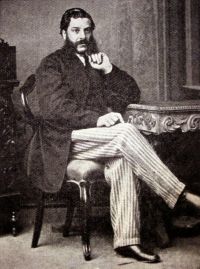 B. L. Farjeon,
A Secret Inheritance (Volume 1 of 3…
B. L. Farjeon,
A Secret Inheritance (Volume 1 of 3…
“ I loved the supernatural in book and fancy, and on rare occasions, when I was in a state of spiritual exaltation, a vague belief would steal upon me that I should one day possess the power of piercing the veil which shuts off the unseen from mortal eyes. ”
Dorothy Scarborough, The Supernatural in Modern English Fiction
“ In addition to the weird stories told with direct aim and art—ghosts for ghosts’ sake—there are tales where the supernatural element is of secondary importance, being used to teach some truth or ridicule some fallacy. ”
Dorothy Scarborough, The Supernatural in Modern English Fiction
“ There is at the present a definite revival of interest in the supernatural appearing in the drama, in poetry and in fiction, evident to anyone who has carefully studied the recent publications and magazines. Within the last few years, especially in the last two years, an astonishing amount of ghostly material has appeared. Some of these stories are of the hoax variety, others are suggestive, allegorical or symbolic, while others frankly accept the forces beyond man’s mortal life and human dominion. ”
Dorothy Scarborough, The Supernatural in Modern English Fiction
“ Her magic potion not only gives her length of days but protection against danger as well, for her rival’s dagger glances harmlessly away from her, and she is proof against chance and fate. She gains her immortal life partly by bathing in a secret essence or vapor whose emanations give her mystic force and immortal beauty. There are many other elements of supernaturalism in association with the not impossible She,—magic vision, reincarnation, a mystic light that envelops her body, the power to call up the dead, to reanimate the skeletons in the desert and raise them to dreadful life. ”
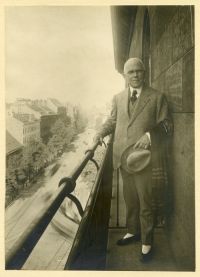 Stewart Culin,
China in America
Stewart Culin,
China in America
“ Accustomed to attribute almost every phenomenon of nature to the intervention of supernatural powers, to people every rock and tree with its familiar spirit, "to hear the menace of a god in the thunder, and see the beneficence of a deity in the rain," they have had little reason to question the truth of stories in which the occult and supernatural plays little greater part than it daily appears to in the course of their own lives. ”
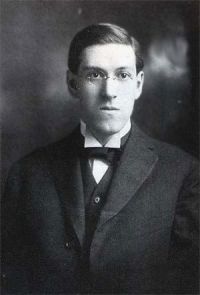 Howard Phillips Lovecraft,
The Recluse — Supernatural Horror in Literature
(1927)
Howard Phillips Lovecraft,
The Recluse — Supernatural Horror in Literature
(1927)
“ The phenomenon of dreaming likewise helped to build up the notion of an unreal or spiritual world; and in general, all the conditions of savage dawn-life so strongly conduced toward a feeling of the supernatural, that we need not wonder at the thoroughness with which man’s very hereditary essence has become saturated with religion and superstition. ”
Howard Phillips Lovecraft,
The Recluse — Supernatural Horror in Literature
(1927)
“ Because we remember pain and the menace of death more vividly than pleasure, and because our feelings toward the beneficent aspects of the unknown have from the first been captured and formalised by conventional religious rituals, it has fallen to the lot of the darker and more maleficent side of cosmic mystery to figure chiefly in our popular supernatural folklore. ”
 Robert Green Ingersoll,
Lectures of Col. R. G. Ingersoll…
Robert Green Ingersoll,
Lectures of Col. R. G. Ingersoll…
“ There are three theories by which men account for all phenomena—for everything that happens: First, the supernatural. In the olden time, everything that happened some deity produced, some spirit, some devil, some hobgoblin, some dryad, some fairy, some spook, something except nature. First, then, the supernatural; and a barbarian, looking at the wide, mysterious sea, wandering through the depths of the forest, encountering the wild beasts, troubled by strange dreams, accounted for everything by the action of spirits, good and bad. ”
Baron Edward Bulwer Lytton Lytton, The Haunted and the Haunters; Or…
“ Now, my theory is that the supernatural is the impossible, and that what is called supernatural is only a something in the laws of Nature of which we have been hitherto ignorant. Therefore, if a ghost rise before me, I have not the right to say, "So, then, the supernatural is possible;" but rather, "So, then, the apparition of a ghost, is, contrary to received opinion, within the laws of Nature,—that is, not supernatural." ”
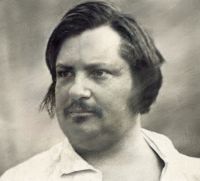 Honoré de Balzac,
The Works of Honoré de Balzac: About Catherine de' Medici…
Honoré de Balzac,
The Works of Honoré de Balzac: About Catherine de' Medici…
“ Miracles, spells, incantations, witchcrafts, in short all the facts that are incorrectly called supernatural, can only be possible and accounted for by the authority with which some other mind compels us to accept the effects of a mysterious law of optics which magnifies, or diminishes, or exalts creation, enables it to move within us independently of our will, distorts or embellishes it, snatches us up to heaven, or plunges us into hell—the two terms by which we express the excess of rapture or of pain. These phenomena are within us, not outside us. ”
Dorothy Scarborough, The Supernatural in Modern English Fiction
“ Supernatural Life The fiction dealing with immortal life shows, more than any other aspect of the subject, humanity’s deep hunger for the supernatural. Whether it be stories of continuance of earthly existence without death as in the legends of the undying persons like the Wandering Jew; or of supernaturally renewed or preserved youth as described in the tales of the elixir of life ”
The Other World; or, Glimpses of the Supernatural…
“ Now the purport of this volume is to show by examples of supernatural intervention—examples many of which have been gathered from quite recent periods—that Almighty God, from time to time, in various ways and by different human instruments, still condescendingly reveals to man glimpses of the world unseen, and shows the existence of that life beyond the grave, in which the sceptic and materialist of the present restless age would have us disbelieve, and which they themselves scornfully reject. ”
 Alexander Maclaren,
Expositions of Holy Scripture: Isaiah and Jeremiah
Alexander Maclaren,
Expositions of Holy Scripture: Isaiah and Jeremiah
“ The experience of all the world witnesses that whenever there comes, in reality, or in a man's conceptions or fancy, the contact of the supernatural, as it is called, with the natural, there is a shrinking, a sense of eerieness, an apprehension of vague possibilities of evil. ”
The Other World; or, Glimpses of the Supernatural…
“ How prone man becomes, by constantly contemplating the natural, [Pg 28] to thrust the Supernatural aside, is the experience of many. And this being so, how merciful is God to remind us of the next world, not only by the ordinary modes and channels appointed for so doing, by change, by revelation, by death; but occasionally by suddenly, strangely, and abruptly breaking in upon the usual order of events, and the ordinary course of nature, to let us see with our natural eyes, and hear with our ears, that He is. ”
Walter Richard Cassels, Supernatural Religion, Vol. 1…
“ Miracles which spring from such a hot-bed of superstition are too natural in such a soil to be objects of surprise and, in losing their exceptional character, their claims upon attention are proportionately weakened if not altogether destroyed. Preternatural interference with the affairs of life and the phenomena of nature was the rule in those days, not the exception, and miracles, in fact, had lost all novelty, and through familiarity had become degraded into mere commonplace. ”
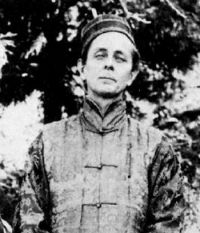 W. Y. Evans-Wentz,
The Fairy-Faith in Celtic Countries
W. Y. Evans-Wentz,
The Fairy-Faith in Celtic Countries
“ These Powers are not necessarily what the superstitious call ‘supernatural’. We realize now that there is nothing supernatural—that what used to be so called is simply something that we do not understand at present. ”
Dorothy Scarborough, The Supernatural in Modern English Fiction
“ In considering these various types of stories dealing with supernatural life, whether continued beyond the mortal span on earth, renewed by reincarnation, or taken up in another world after death, we find that several facts seem to appear with reference to the type chosen for [223] treatment by men as distinct from women, and vice versa. ”
 Joseph ConradJules VerneEdwin Sidney HartlandRichard Jefferies
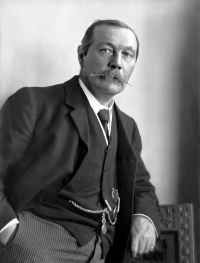 Arthur Conan DoyleHoward Phillips LovecraftRobert Green Ingersoll
 William Ralph IngeJosiah RoyceMaurice HewlettErminnie A. SmithBaron Thomas Babington Macaulay MacaulaySir Edgar MacCullochB. L. FarjeonStewart CulinWilliam Bond