G. L. Vandenburg, The Observers
“ He glanced at a list of technical schools. He would call each of them and ask them to submit a list of lab technicians. He would also look over the field of technicians still left in private enterprise. ”
The concept of a technician includes individuals with expertise in specialized technical areas, connecting theoretical understanding with real-world application. Authors such as G. L. Vandenburg emphasize the roles technicians play in industry, while the Webbs highlight their increasing importance within organizations. Fothergill and Horner observe the emergence of focused engineering positions, such as specialists in hydraulic systems or machine tools, illustrating a transition from generalists to those with niche competencies.
Bradley A. Fiske stresses the essential knowledge engineers must possess, and Katherine M. H. Blackford outlines the varied fields within engineering, ranging from civil to aerospace. Together, these viewpoints demonstrate technicians as vital, evolving professionals whose specialized skills drive contemporary industrial and scientific advancement.
G. L. Vandenburg, The Observers
“ He glanced at a list of technical schools. He would call each of them and ask them to submit a list of lab technicians. He would also look over the field of technicians still left in private enterprise. ”
by Sidney Webb and Beatrice Webb, The History of Trade Unionism (1920)
“ Equally significant is the recent development of organisa- tion among the industrial technicians, whether engineers, electricians, chemists, or merely foremen and managers ; among the workers in scientific laboratories, whether for research, medical, teaching, or administrative purposes ”
John Rowland Fothergill and Joseph Gregory Horner, 1911 Encyclopædia Britannica, Volume 8… (1911)
“ In many establishments now the designing of shop tools and fixtures is done in a department of the office specially set apart for that kind of work. The growing specialization of the engineer’s work is reflected in the drawing office. Specialists are sought after, and receive the highest rates of pay. A man is required to be an expert in some one branch, as electric cranes or hydraulic machines, steel works plant, lathes, or heavy or light machine tools. The days are past in which all-round men were in request. ”
 Bradley A. Fiske,
The Navy as a Fighting Machine
Bradley A. Fiske,
The Navy as a Fighting Machine
“ The chief engineer of any electric plant, of any municipal water-works, of any railroad, of any steamship must have the most profound and intimate knowledge of the details of construction and the method of operation of the machine committed to his charge. Recognition of this fact by the engineering profession is so complete and perfect as to be almost unconscious; and no man whose reasoning faculties had been trained by the exact methods of engineering could forget it for a moment. ”
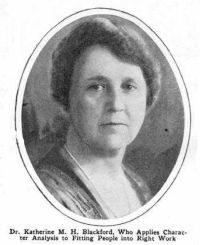 Katherine M. H. Blackford,
Analyzing Character
Katherine M. H. Blackford,
Analyzing Character
“ As the result we now have almost as many kinds of engineers as there are classes of industry. There is the civil engineer, the mining engineer, the construction, the irrigation, the drainage, the sewage disposal, the gas production, the hydraulic, the chemical, the electrical, the mechanical, the industrial, the efficiency, the production, the illuminating, the automobile, the aeroplane, the marine, the submarine, and who knows how many other kinds. Indeed, there are also social engineers, merchandising engineers, advertising engineers, and even religious engineers. ”
Popular Science Monthly (1874)
“ By having this little book at hand, the engineer will be saved the trouble of many a long calculation. How to become a Successful Engineer. By Bernard Stuart. New York: D. Van Nostrand. 127 pp., 18mo. Price, 50 cents. This little work, which is designed particularly for the mechanical engineer, but, in a more general way, also for the civil engineer, is more indicative than instructive. That is, it points out the studies to be pursued without explaining their nature, and it tells the apprentice what work he will find in the machine-shop, without detailing the method in which it is done. ”
 Herbert George Wells,
The Works of H. G. Wells
(1924)
Herbert George Wells,
The Works of H. G. Wells
(1924)
“ The black-faced, oily man one figures emerging from the engine-room serves well enough, until one recalls the sanitary engineer with his additions of crockery and plumbing, the electrical engineer with his little tests and wires, the mining engineer, the railway maker, the motor-builder, and the irrigation expert. ”
Isambard Brunel, The life of Isambard Kingdom Brunel…
“ The term ‘Consulting Engineer’ is a very vague one, and in practice has been too much used to mean a man who for a consideration sells his name, but nothing more. Now I never connect myself with an engineering work except as the Directing Engineer, who, under the Directors, has the sole responsibility and control of the engineering, and is therefore ‘The Engineer;’ and I have always objected to the term ‘Consulting Engineer.’ ...In a railway the only works to be constructed are engineering works, and there can really be only one engineer ”
Charles M. Horton, Opportunities in Engineering
“ No other branch so overlaps the other branches as does mechanical engineering. The work of the mechanical engineer is seen in almost every piece of construction reared by the civil man, just as it is seen in every bit of construction work of the mining and the electrical engineers. ”
J. A. Bensel, Transactions of the American Society of Civil Engineers…
“ We have a degree of civil engineer, regarded in its narrowest sense, of mining engineer, mechanical engineer, electrical engineer, and by necessity it would seem as if we should shortly add some particular title to designate the engineer who flies. ”
Charles M. Horton, Opportunities in Engineering
“ Called in as an expert in the matter of heating and lighting a building, say, the heating and lighting engineer will rigidly confine himself to this phase of the engineering venture and to no other, however he may find his work again and again overlapping the work of the structural engineer or the industrial engineer—phases concerning which he may possess important knowledge. ”
George Morrison Rolph, Something about sugar (1917)
“ The diversity of the mechanical work around a refinery is remarkable, and the engineer in charge must be a man of exceptional mechanical ability, as his duties include not only steam, electrical and civil engineering, but construction engineering of an advanced character. ”
Charles M. Horton, Opportunities in Engineering
“ The average consulting50 engineer is a man who has won to pre-eminence only through protracted study and hard work in one line. He is a specialist with a high reputation for accuracy and skill in that line. The basis of this skill, of course, lies in a broad general engineering experience, upon which is built a peculiar knowledge of a certain, and not infrequently isolated, branch of engineering. Heating and ventilating engineers are but specialists grown to such large numbers as to form a definite branch of engineering. ”
Charles M. Horton, Opportunities in Engineering
“ While to a fourth group of prospective students the quiet career, as represented in that of mechanical engineering, always a more or less thoughtful, studious life, may hold out its inviting side. The mechanical engineer, like the electrical engineer, is a man who generally commutes, a man who comes and goes daily between office and home, doing his work at regular hours within the four walls of his office—a quiet, professional man. ”
 A. T. Still,
Philosophy of Osteopathy
A. T. Still,
Philosophy of Osteopathy
“ Your first position is that of a master mechanic, who is capable of drawing plans and writing minutely a specification whereby the engineer may know what a well constructed machine is in every particular. He knows the parts and relations of both as constructor and operator, and you are supposed to be the foreman in the shop of repairs. The living person is the engine, nature the engineer, and you the master mechanic. ”
Loyce J. McIlhenny, Careers in Atomic Energy
“ The engineer is the how-to-do-it man. This technical man of action comes in many varieties—mechanical, electrical, [Pg 16] metallurgical, ceramic, industrial, civil, instrument, and chemical, to name a few. ”
 Philip Magnus,
Encyclopædia Britannica, Ninth Edition
(1888)
Philip Magnus,
Encyclopædia Britannica, Ninth Edition
(1888)
“ The ordinary hands gain a very limited and circumscribed acquaintance with the details of the manufacture in which they are engaged, and have little opportunity of acquiring that general knowledge of various departments of work, and of the structure of the machinery in use, which is essential to the foreman or overseer. It is in evening technical classes that this supplementary instruction, which it is the workman's interest to acquire and the master's to encourage, can be obtained. ”
 DeWolf Hopper,
Once a Clown, Always a Clown
(1927)
DeWolf Hopper,
Once a Clown, Always a Clown
(1927)
“ All engineers look alike in their working clothes, I have observed. An engineer opened the door, passed mistily through the gloom, removed the lamp from its bracket and lit his pipe at the flame. To my drowsy eyes he was the image of that Mobile and Ohio freight engineer, and the illusion brought back the scene so vividly that I had to put the pipe aside and go out into the air to shake myself together. ”
N. Hawkins, Maxims and Instructions for the Boiler Room
“ Engineers comprise various grades from the chief engineer of some large establishment, who is usually an accomplished mechanic, carrying along grave responsibilities, to the mere stopper and starter, who is engineer by courtesy only, and whose place is likely to be soon filled by quite another man, so far as qualifications are concerned. ”
Mervin James Curl, Expository Writing
“ Those men who became familiar with the natural sciences, and also with the shop methods of making machinery, and who brought both to bear on the problem of the production of machinery for specified conditions, combining the special knowledge of the scientist and the shop mechanic, were the first mechanical engineers; and the profession of mechanical engineering, which is the term applied to this sort of business, was created out of the efforts to improve power systems, so as to make them more efficient and adapted to all classes of service, and to render that service for the least cost. ”
Charles M. Horton, Opportunities in Engineering
“ The engineer can do much around his own home, if he so choose, that of itself is a source of great satisfaction. Engineers can swing doors, build fireplaces, landscape, erect fences, make garden, and can perform these tasks with a degree of neatness and skill that brings favorable comment from journeymen whose vocations this work is, and do the work without training whatsoever in the work. Wall-papering, painting, carpentering, laying up of brick, or the placing of a dry wall—plastering, glazing—the list is endless that as side-plays are possible to the man with an engineering training. ”
John Kimberly Mumford, Outspinning the Spider: The Story of Wire and Wire Rope
“ When these are answered the engineer is ready to begin work, which starts with the selection of materials and does not end till the man who is to use it has had specific instruction as to its peculiarities and care and protection. ”
Various, Scientific American Supplement…
“ As is seen above, the course of instruction in mechanical engineering includes some trade education. The engineer is dependent upon the machinist, the founder, the patternmaker, and other workers at the trades, for the proper construction of the machinery and structures designed by him. He is himself, in so far as he is an engineer, a designer of constructions, not a constructor. ”
Charles M. Horton, Opportunities in Engineering
“ Entering a house for the first time, and trained as a mechanical engineer, he will note the character of the woodwork, the decorations, the atmosphere, the arrangement of the furnishings, all with the same facility that he will note details upon entering for the first time a power-station or a manufacturing plant—things within his own province. ”
Charles H. Ham, Mind and Hand: Manual Training the Chief Factor in Education (1900)
“ But another conclusion follows more irresistibly, namely—that the mechanical engineer who devotes his attention to the construction and management of massive machinery, such as pumps, hydraulic and lever presses, looms, and steam-engines, whether locomotive, marine, or other, must, in order to be master of his profession, be thoroughly familiar with every step of their construction; and such familiarity can only be acquired by a course of practical study in the machine-tool shop. ”
David Stevenson, Life of Robert Stevenson, Civil Engineer
“ We know that the larger requirements of modern Engineering demand that its practice should be classified237 under distinct branches, such as harbours, navigations, water works, gas works, lighthouses, or railways, not to mention electrical and sanitary engineering, and other branches of modern growth, all of which cannot possibly be advantageously practised by any one member of the profession; for no one mind can grasp the theoretical knowledge, and no one life can compass the practical experience, to enable a man to attain eminence in all these departments of modern Engineering. ”
Alfred Powell Morgan, Wireless Telegraphy and Telephony Simply Explained
“ The numerous tools used by machinists are illustrated, and also the adjuncts of the lathe. In fact, the entire subject is treated in such a thorough manner as to make this book the standard one on the subject. It is indispensable to the manager, engineer, and machinist as well as to the student, amateur, and experimental, man who desires to keep up-to-date. ”
Katherine M. H. Blackford,
Analyzing Character
“ Of late years the profession of engineering has called to the youth of the land with an almost irresistible voice. The development of steam and gasoline engines, of the electric current, and of a welter of machinery called for engineers. The specialization of engineering practice into production, chemical, industrial, municipal, efficiency, mining, construction, concrete, drainage, irrigation, landscape, and other phases, has still further increased the demand. ”
James H. Stephenson, Farm Engines and How to Run Them…
“ The professional engineer, in writing a book for young engineers, is likely to forget that the novice is unfamiliar with many terms which are like daily bread to him. The present writers have tried to avoid that pitfall, and to define each term as it naturally needs definition. ”
Charles M. Horton, Opportunities in Engineering
“ This making of a choice is a momentous thing in a prospective engineer's life. It should be approached with all caution, and with due regard for the nature of the life he would lead after graduating from school. If he have a penchant for outdoor life, then the32 choice, in a way, is easy. He should select mining or civil engineering as his particular vocation. If he be of those who prefer to remain more or less indoors in the practice of his profession, mechanical or electrical engineering should be his choice. ”
Percy Keese Fitzhugh, Westy Martin on the Santa Fe Trail (1926)
“ I’d rather be the engineer. Why’d you like to be the fireman, Rip?”“They got better chances of seeing what’s going on while they’re riding and the engineer has to keep his mind and eyes straight ahead.” ”
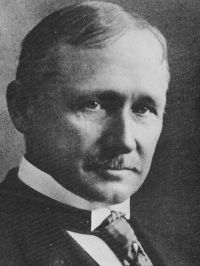 Frederick Winslow Taylor,
The Principles of Scientific Management
Frederick Winslow Taylor,
The Principles of Scientific Management
“ These instructions represent the combined work of several men in the planning room, each of whom has his own specialty, or function. One of them, for instance, is a specialist on the proper speeds and cutting tools to be used. He uses the slide-rules which have been above described as an aid, to guide him in obtaining proper speeds, etc. Another man analyzes the best and quickest motions to be made by the workman in setting the work up in the machine and removing it, etc. ”
 John Timbs,
Things to be Remembered in Daily Life
John Timbs,
Things to be Remembered in Daily Life
“ ENGINEERS AND MECHANICIANS. “No man can look back on the last twenty or thirty years without feeling that it has been the age of Engineers and Mechanicians. The profession has, in that period of time, done much to change the aspect of human affairs; for what agency during that period, single or combined, can be compared in its effects, or in its tendency towards the amelioration of the condition of mankind, with the establishment of railroads, of the electric telegraph, and to the improvement in steam navigation?” ”
 Andrew Dickson White,
Autobiography of Andrew Dickson White…
Andrew Dickson White,
Autobiography of Andrew Dickson White…
“ A very shrewd artisan said to me: ``When a young mechanical engineer comes among us fresh from college, only able to make figures and pictures, we rarely have much respect for him: the trouble with the great majority of those who come from technical institutions is that they don't know as much about practical methods and processes as we know.''I felt that there was truth in this, but, as things were, hardly dared tell this to the trustees. ”
Charles M. Horton, Opportunities in Engineering
“ No matter in which branch a man may go, always he will find evidence of the presence some time of the mechanical engineer. The mechanical engineer dominates all the other branches,37 as has been said before. He is given second place in the order of the branches merely because the civil engineer happened to be the first and oldest kind of engineer to be given recognition as a profession. ”
Chicago American Bureau of Engineering, Profits from scrap
“ Every piece of equipment we mention has been carefully developed in our own shop, every method recommended is one which we have found, by actual experience to be best for the purpose described.A strict observance of the instructions will save you all the experimenting we have done and save you many disappointments. If for any reason our instructions do not produce the results you think they should, remember it is a pleasure for our Engineers to help you solve your personal difficulties.AMERICAN BUREAU OF ENGINEERING President. ”
Charles M. Horton, Opportunities in Engineering
“ There is still a great scarcity of engineers. All branches feel the need—civil, mechanical, mining, chemical, automotive, electrical—the call goes out. It is a call just now, owing to the vast reconstruction period confronting the world, lifted in strident voice. ”
