“ We think, therefore, a theatre of war, whether large or small, with its military force, whatever may be the size of that, represents a unity which maybe reduced to one centre of gravity. At this centre of gravity the decision must take place, and to be conqueror here means to defend the theatre of war in the widest sense. ”
Theatre of war
Definition and stakes
The theme of “theatre of war” has been addressed by authors such as Carl von Clausewitz, baron de Antoine Henri Jomini, Siegfried Sassoon, Dutton Cook and George Bernard Shaw. It is often associated with terms like army, soldier, battle, military and strategy.
Quotes about “theatre of war”
Various, The New York Times Current History of the European War…
“ I never before heard of the possibility of witnessing a modern battle—the attack of warships, the fire of infantry and artillery, the manoeuvring of airships over the enemy's lines, the rolling up from the rear of reinforcements and supplies—all at one sweep of the eye; yet, after watching for three days the siege of Tsing-tau from a position on Prinz Heinrich Berg, 1,000 feet above the sea level and but three miles from the beleaguered city, I am sure that there is actually such a thing as a theatre of war. ”
“ We shall therefore still continue to advance towards the whole by one step at a time; that is, we shall consider the defence of a theatre in itself, and look for the thread by which the subjects already treated of connect themselves with it. The defensive, according to our conception, is nothing but the stronger form of combat. The preservation of our own forces and the destruction of those of the enemy—in a word, the victory—is the aim of this contest, but at the same time not its ultimate object. ”
“ Although the sum of all military events which happen in all the Theatres of War in one year is often called a Campaign, still, however, it is more usual and more exact to understand by the term the events in one single Theatre of War. But it is worse still to connect the notion of a Campaign with the period of one year, for wars no longer divide themselves naturally into Campaigns of a year’s duration by fixed and long periods in winter quarters. ”
“ If we wait for the enemy within our own theatre of war, however near the border of our territory the decision takes place, still this theatre of war is entered by the enemy, which must entail a sacrifice on our part ”
“ In this chapter on the defence of a theatre of war, if no great decision is proposed, we have only shown the tendencies of the action, together with its combination, and the relations and character of the same ”
Arthur Johnston, Narrative of the Operations of a Detachment in an Expedition to Candy…
“ Such a system could only answer in a country like that which I have been describing, where the theatre of war is almost always within certain limits, so that whatever be the fortune of the contest, the soldier is seldom removed above two, and never more than four days' march from his own abode. ”
“ That a defensive line parallel to the course of a formidable natural obstacle may lead to a cordon war is quite plain. It must, in most cases, necessarily lead to that if really the whole extent of the theatre of war could be directly covered in that manner. But most theatres of war have such an extent, that the normal tactical disposition of the troops destined for its defence would be by no means commensurate with that object ”
“ We therefore look upon the greater or less co-operation of the theatre of war, not as a special form of defence, but as nothing more than a discretionary introduction into the defence of the immovable means of resistance, just according as circumstances and the nature of the situation may appear to require. ”
John Forster, The Life of Charles Dickens, Vol…
“ At the first play he went to, the performance was stopped while the news of the last Crimean engagement, just issued in a supplement to the Moniteur, was read from the stage. "It made not the faintest effect upon the audience; and even the hired claqueurs, who had been absurdly loud during the piece, seemed to consider the war not at all within their contract, and were as stagnant as ditch-water. The theatre was full. It is quite impossible to see such apathy, and suppose the war to be popular, whatever may be asserted to the contrary." ”
Various, The Little Review, November 1915…
“ And after it all, out of an audience of two hundred and twenty—when they overflowed the Little Theatre they trooped to the Fine Arts Assembly Room—eighty-four stood up to announce their conviction that war is not evil, not avoidable, and should be prepared for by military methods, and some sixty others stood up to indicate their opposite conviction! ”
Various, Punch, or the London Charivari…
“ Besides, when a great war is going on it's a national duty to try and make people forget. My theatre, you perhaps are not aware, is a favourite resort for wounded soldiers, who are never so happy as when they are there. ”
 George Bernard Shaw,
Heartbreak House, Great Catherine…
(1919)
George Bernard Shaw,
Heartbreak House, Great Catherine…
(1919)
“ We are not brought up to care; and a sense of the national importance of the theatre is not born in mankind: the natural man, like so many of the soldiers at the beginning of the war, does not know what a theatre is. ”
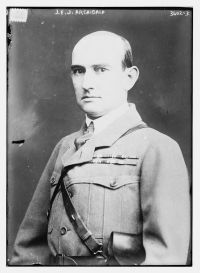 James F. J. Archibald,
Blue Shirt and Khaki: A Comparison
James F. J. Archibald,
Blue Shirt and Khaki: A Comparison
“ The public at home reads of battles, several of them perhaps occurring within a week; but those actions cover the entire theatre of the war, and consequently one command may rarely see two fights in succession. There is none of the glitter that the romancers depict; the glory begins and ends with the triumphal march through the streets to the transport. ”
Arthur Ruhl, Antwerp to Gallipoli: A Year of the War on Many Fronts…
“ When a people can hold back England and France with one hand and the Russian avalanche with the other, and, cut off from oversea trade and living on rations almost, yet, to take but one of the first examples, maintain the art of the theatre at a level which makes that of New York or London in the most spacious time of peace seem crude and infantile, one is confronted with a fact which a reporter in his travels must record—a force which, as the saying goes, "must be reckoned with." ”
Thomas Carlyle, History of Friedrich II of Prussia…
“ A thing, in short, that belongs peculiarly to soldier-students; who can undergo the dull preliminaries, most dull but most inexorably needed; and can follow out, with watchful intelligence, and with a patience not to be wearied, the multifarious topographies, details of movements and manoeuvrings, year after year, on such a Theatre of War. ”
Various, The Continental Monthly, Vol. 6…
“ The former, being used merely for the assembling of an army, or conducting it to the theatre of operations, need but little precision; the latter are performed upon the actual theatre of war, often in the presence of the enemy, and require care and skill for their proper conduct. The details of marches are of course governed by the nature of the country in which they are performed, but so far as practicable they are made in two methods—by parallel columns, or by the flank. ”
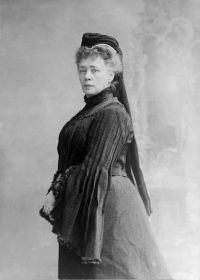 Bertha von Suttner,
Lay Down Your Arms: The Autobiography of Martha von Tilling
Bertha von Suttner,
Lay Down Your Arms: The Autobiography of Martha von Tilling
“ To tear charpie, to read the news in the papers, to stick pins with flags into our maps in order to follow the movements of the two armies, and try to solve the chess problems that followed from them in the sense that “Austria attacks and gives mate at the fourth move”; to pray continually in the churches for the protection of our loved ones and the victory of our country’s arms; to talk of nothing except the news that came in from the theatre of war ”
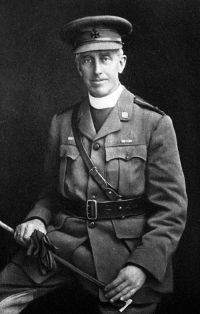 Frederick George Scott,
The Great War As I Saw It
Frederick George Scott,
The Great War As I Saw It
“ Every night the 4th Divisional concert party gave an entertainment in the theatre, which was crowded with men. A stranger could not have told from the roars of laughter that shook the audience from time to time that we were about to face the fiercest ordeal of the war. The 2nd Brigade was quartered round us first, and one night in the theatre an officer appeared in front of the stage between the acts and ordered all the officers and men of the 5th Battalion, who were present, to report at once to their headquarters. ”
George Bernard Shaw,
Heartbreak House, Great Catherine…
(1919)
“ In the meantime there is, for him, another history to write; for me, another comedy to stage. Perhaps, after all, that is what wars are for, and what historians and playwrights are for. If men will not learn until their lessons are written in blood, why, blood they must have, their own for preference. The Ephemeral Thrones and the Eternal Theatre To the theatre it will not matter. Whatever Bastilles fall, the theatre will stand. ”
George Bernard Shaw,
Heartbreak House, Great Catherine…
(1919)
“ The higher drama will be at no greater disadvantage than it was before the war; and it may benefit, first, by the fact that many of us have been torn from the fools' paradise in which the theatre formerly traded, and thrust upon the sternest realities and necessities until we have lost both faith in and patience with the theatrical pretences that had no root either in reality or necessity; second, by the startling change made by the war in the distribution of income. It seems only the other day that a millionaire was a man with œ50,000 a year. ”
Various, Punch - Volume 25 (Jul-Dec 1853…
“ The approval of Professor Airey may be very satisfactory as far as it goes, but until we can look upon the loss of £2605 0s. 8d. as an airy nothing, we can hardly reconcile ourselves to the facts we have called attention to. NEWS FROM THE THEATRE OF WAR.Our latest news from the Theatre of War is from Astley's Theatre, where the War with Russia is being carried out with unflagging energy. ”
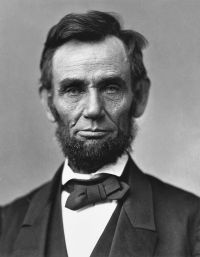 Abraham Lincoln,
Speeches & Letters of Abraham Lincoln…
Abraham Lincoln,
Speeches & Letters of Abraham Lincoln…
“ In the midst of a civil war of unequalled magnitude and severity, which has sometimes seemed to foreign States to invite and provoke their aggressions, peace has been preserved with all nations, order has been maintained, the laws have been respected and obeyed, and harmony has prevailed everywhere, except in the theatre of military conflict; while that theatre has been greatly contracted by the advancing armies and navies of the Union. ”
George Bernard Shaw,
Heartbreak House, Great Catherine…
(1919)
“ Now what had made serious drama possible to a limited extent before the war was that a play could pay its way even if the theatre were only half full until Saturday and three-quarters full then. A manager who was an enthusiast and a desperately hard worker, with an occasional grant-in-aid from an artistically disposed millionaire, and a due proportion of those rare and happy accidents by which plays of the higher sort turn out to be potboilers as well, could hold out for some years, by which time a relay might arrive in the person of another enthusiast. ”
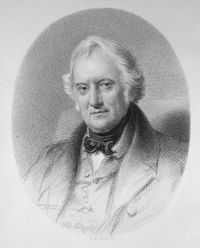 Richard Taylor,
Destruction and Reconstruction
Richard Taylor,
Destruction and Reconstruction
“ The cardinal principles on which the art of war is based are few and unchangeable, resembling in this the code of morality; but their application varies as the theatre of the war, the genius and temper of the people engaged, and the kind of arms employed. ”
baron de Antoine Henri Jomini, The Art of War
“ The theater of a war comprises all the territory upon which the parties may assail each other, whether it belong to themselves, their allies, or to weaker states who may be drawn into the war through fear or interest. When the war is also maritime, the theater may embrace both hemispheres,—as has happened in contests between France and England since the time of Louis XIV. The theater of a war may thus be undefined, and must, not be confounded with the theater of operations of one or the other army. ”
E. K. Chambers, The Elizabethan Stage, Vol. 3 (1923)
“ Nothing was more beloved by a popular audience, especially in an historical play or one of the Tamburlaine order, than an episode of war. A war scene was often only a variety of the open-country scene. Armies come and go on the road, and a battle naturally takes place in more or less open ground. It may be in a wood, or a tree or river may be introduced. [139] Obviously large forces could not be shown on the stage. ”
Various, Punch, or the London Charivari…
“ I desire with a full-hearted longing to return to that life of imagination where the most dreadful bloodshed ends at about eleven o'clock every evening, without leaving any impression on those who take part. Yes, give me again the life of the theatre and remove far away this brutal scenery of trenches and shells and bombs and quick-firers and men summoned from peace and ease to cut one another's throats because a histrion Kaiser has so willed it and none of his subjects dared to say him nay. ”
James De Mille, The Dodge Club; Or, Italy in MDCCCLIX
“ Especially the Day Theatres, places formed somewhat on the ancient model, with open roofs. In these the spectators can smoke. Here the performance begins at five or six and ends at dark. All the theatres on this season, day or night alike, burst forth into joy. The war was the universal subject. Cannon, fighting, soldiers, gunpowder, saltpetre, sulphur, fury, explosions, wounds, bombardments, grenadiers, artillery, drum, gun, trumpet, blunderbuss, and thunder! Just at that time the piece which was having the greatest run was THE VICTORY Of SOLFERINO! ”
 P. G. Wodehouse,
The Swoop! or, How Clarence Saved England…
P. G. Wodehouse,
The Swoop! or, How Clarence Saved England…
“ The battle might not affect the stalls and dress-circle, perhaps, but there could be no possible doubt that the pit and gallery receipts would fall off terribly. To the public which supports the pit and gallery of a theatre there is an irresistible attraction about a fight on anything like a large scale. When one considers that a quite ordinary street-fight will attract hundreds of spectators, it will be plainly seen that no theatrical entertainment could hope to compete against so strong a counter-attraction as a battle between the German and Russian armies. ”
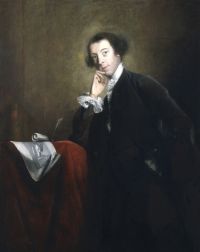 Horace Walpole,
The Letters of Horace Walpole, Earl of Orford…
Horace Walpole,
The Letters of Horace Walpole, Earl of Orford…
“ Even spectators are not amused—the whole war has passed like the riotous murmurs of the upper gallery before the play begins—they have pelted the candle-snuffers, the stage has been swept, the music has played, people have taken their places—but the deuce a bit of any performance!—And when folks go home, they will have seen nothing but a farce, that has cost fifty times more than the best tragedy! ”
baron de Antoine Henri Jomini, The Art of War
“ The quotations which follow are from my treatise on Great Military Operations:—"The general configuration of the theater of war may also have a great influence upon the direction of the lines of operations, and, consequently, upon the direction of the bases.Fig. 1. "If every theater of war forms a figure presenting four [Pg 80] faces more or less regular, one of the armies, at the opening of the campaign, may hold one of these faces,—perhaps two,—while the enemy occupies the other, the fourth being closed by insurmountable obstacles. ”
George Bernard Shaw,
Heartbreak House, Great Catherine…
(1919)
“ Although the newspaper I read at breakfast this morning before writing these words contains a calculation that no less than twenty-three wars are at present being waged to confirm the peace, England is no longer in khaki; and a violent reaction is setting in against the crude theatrical fare of the four terrible years. Soon the rents of theatres will once more be fixed on the assumption that they cannot always be full, nor even on the average half full week in and week out. ”
Anonymous, With a Highland Regiment in Mesopotamia
“ It is a question that often confronts one at a comic opera, always (p. 097) in the near neighbourhood of a gramophone, but never with such persistent irritation as when undergoing a bombardment from high explosive shell. Nothing is more trying to the nerves, for and from it there is no escape. This war has been defined as a war, not of infantry, nor of artillery, but of effective co-operation between the two. ”
Robert Edmund Jones, Continental stagecraft (1922)
“ The lights rise—or it would be more accurate to say, shoot down—upon the men and women workers standing in an irregular lozenge shape upon steep steps, which spread to the curtains at each side. Out of this crowd, in chorus and singly, come pleas for action, and visions of suffering which sweep the audience with emotion. The woman cries for a strike against war and against capital. Behind her rises The Nameless One, the bastard of War, to cry for armed revolt. His passion sweeps the masses, and the woman submits. ”
Frederick George Scott,
The Great War As I Saw It
“ Often when I have returned to my hut at night, I have stood outside in the darkness, looking over the fields towards the front, and as I saw the German flares going up, I said to myself, "Those are the foot-lights of the stage on which the world's greatest drama is being enacted." ”
Related terms
Authors who wrote about “theatre of war”
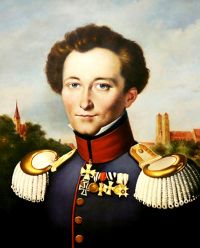 Carl von Clausewitzbaron de Antoine Henri Jomini
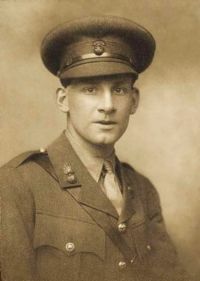 Siegfried Sassoon
 Dutton CookGeorge Bernard ShawBertha von Suttner
 Otokar FischerGeorge Francis Robert Henderson and Thomas Barclay
 Bernard Shaw
 Squire BancroftE. K. ChambersGilbert CannanVarious
 Philip Gibbs
 Henri Barbusse
 Leo Tolstoy
 Mark TwainSun Tzu
 Jack London
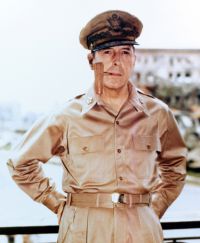 Douglas MacArthur