Tussock grass

Definition and stakes

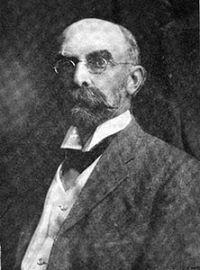
Portrait of James Clark Ross James Clark Ross,  A Voyage of Discovery and Research in the Southern and Antarctic Regions (1847)

“ Again, the Tussock-grass field, when fully established, must not be grazed indiscriminately by cattle. These creatures and the pigs have already diminished its abundance in the Falklands; for, after devouring the foliage, they eat down the stumps of the culms, greedily following them into the heart of the mass of roots from which they spring, for the sake of the white core just described; the rain-water lodges in the cavity thus formed, and decay so surely follows, that I have seen nearly half a mile of Tussock-grass plants entirely destroyed by no other means. ”
Source: Wikisource

Portrait of James Clark Ross James Clark Ross,  A Voyage of Discovery and Research in the Southern and Antarctic Regions (1847)

“ It must appear strange to all who know grasses only in the pastures of England, that the patches of Tussock resemble nothing so much as groves of small, low palm trees! This similarity arises from the matted roots of the individual plants springing in cylindrical masses, always separated down to the very base, and throwing out a waving head of foliage from each summit. Bogs and damp woods in Britain very frequently produce a sedge (carex paniculata) , whose mode of growth is, on a small scale, identical with that of the Tussock-grass, and to which the name of Tussock is applied. ”
Source: Wikisource

Various,  Encyclopaedia Britannica, 11th Edition…

“ The “tussock grass” is a wonderful and most valuable natural production, which, owing to the introduction of stock, has become extinct in the two main islands, but still flourishes elsewhere in the group. It is a reed-like grass, which grows in dense tufts from 6 to 10 ft. high from stool-like root-crowns. It forms excellent fodder for cattle, and is regularly gathered for that purpose. It is of beautiful appearance, and the almost tropical profusion of its growth may have led to the early erroneous reports of the densely-wooded nature of these islands.
The population slightly exceeds 2000.
”
Source: Gutenberg

Get perspective with Kwize: daily news enlightened by great literature