“ Every one put on goloshes to climb or descend the hill to church. The Vicar and his wife came stepping over from the Vicarage close by like a pair of storks and when the bell stopped ringing it was as though another cloak of silence had been flung over Bridnorth village. ”
Vicarage
Definition and stakes
The vicarage, a clergy residence linked to a church, functions both as a private dwelling and a symbol of religious and social order. Authors such as H.G. Wells portray it as a place of subtle conflict, where the vicar's role connects spiritual responsibility with community engagement, while Anthony Trollope explores its architectural and social significance within parish structures.
M.E. Braddon and Frances Hodgson Burnett emphasize its domestic nature, depicting it as a center of family and community life. These differing depictions highlight the vicarage’s dual role as a refuge and a miniature representation of societal norms, illustrating the changing position of the clergy in both rural and urban settings.
Quotes about “vicarage”
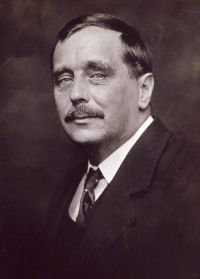 H. G. Wells,
The Wonderful Visit
(1895)
H. G. Wells,
The Wonderful Visit
(1895)
“ The Trouble of the Barbed Wire. XXXVIII. So, ingloriously, ended the Angel's first and last appearance in Society. Vicar and Angel returned to the Vicarage; crestfallen black figures in the bright sunlight, going dejectedly. The Angel, deeply pained that the Vicar was pained. The Vicar, dishevelled and desperate, intercalating spasmodic remorse and apprehension with broken explanations of the Theory of Etiquette. "They do not understand," said the Vicar over and over again. "They will all be so very much aggrieved. ”
H. G. Wells,
The Works of H. G. Wells
(1924)
“ She swept round upon the rigid girls. "Come!" The Vicar opened and shut his voiceless mouth. The world hummed and spun about him. There was a whirling of zephyr skirts, four impassioned faces sweeping towards the open door of the passage that ran through the Vicarage. ”
 Anthony Trollope,
The Vicar of Bullhampton
Anthony Trollope,
The Vicar of Bullhampton
“ I raise no question on this point, believing that there is none to be raised; but I respectfully submit to your lordship, whether such an erection as that contemplated by you will not be a lasting injury to the Vicarage of Bullhampton, and whether you would wish to inflict a lasting and gratuitous injury on the vicar of a parish, the greatest portion of which belongs to yourself.No doubt life will be very possible to me and my wife, and to succeeding vicars and their wives, with a red-brick chapel built as a kind of watch-tower over the Vicarage gate. ”
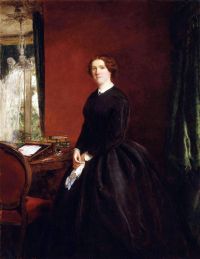 M. E. Braddon,
The cloven foot
(1879)
M. E. Braddon,
The cloven foot
(1879)
“ While at the Manor House all was bliss, life dawdled on comfortably enough at the Vicarage, where the good, easy-tempered, hard-working Vicar had begun to be reconciled to the idea that his only son was to be an idler all his life ”
H. G. Wells,
Tono-Bungay
(1909)
“ On the lowest fringe of these real Olympians hung the vicarage people, and next to them came those ambiguous beings who are neither quality nor subjects. The vicarage people certainly hold a place by themselves in the typical English scheme; nothing is more remarkable than the progress the Church has made—socially—in the last two hundred years. In the early eighteenth century the vicar was rather under than over the house-steward, and was deemed a fitting match for the housekeeper or any not too morally discredited discard. ”
M. E. Braddon,
The day will come
(1890)
“ November was half over, yet here the only signs of autumn were the grey sky, and the crimson of the Virginia creeper.The Vicar of Kettisford was one of those privileged persons who can speak with their enemies at the gate, assured of being backed up in their speech by a family contingent. The Vicarage seemed overflowing with young life, from the very threshold of the hall, where cricket-bats, a tricycle, a row of well-used tennis rackets, a stupendous array of hats, overcoats, and comforters, testified to that quiverful so esteemed in the patriarchal age. ”
 Frances Hodgson Burnett,
Robin
Frances Hodgson Burnett,
Robin
“ The rain was so plashing and streaming in rivulets among the mounds and stones of the burial ground of one of the most ancient and forgotten looking of such churches, when on a certain afternoon there came to the narrow soot-darkened Vicarage attached to it a tall, elderly man who wished to see and talk to the Vicar.The Vicar in question was an old clergyman who had spent nearly fifty years in the silent, ecclesiastical-atmosphered small house. He was an unmarried man whose few relatives living in the far North of England were too poor and unenterprising to travel to London. ”
“ The Vicarage people are dining to-night, so you won't have her on your hands entirely. The Vicar is David Grant, the novelist. I haven't read any of his novels, but I believe a lot of people do. I expect he's a clever man, and will cheer us up a bit.""I should think we shall have quite an hilarious evening—you and Lady Brent talking together, and me and Mrs. Brent and the Vicarage people.""I thought you rather liked Vicarage people. Don't make yourself superior to your company, there's a good girl. It's the worst sort of form—especially in the country." ”
“ I'm [Pg 85] afraid he has fallen and hurt himself. I must take the dog at once to Perkins's, or else I shall be late for evensong."The man went off straight toward the vicarage, and Walter Dene turned immediately with the dog in his arms into the village veterinary's.II.The servants from the vicarage were not the first persons to hit upon the dead body of the vicar. Joe Harley, the poacher, was out reconnoitring that afternoon in the vicar's preserves ”
River Lune Navigation Act 1749 (1749)
“ Occupiers of the vicarage lands impowered to take and along the Summer-Pasture, and to drive their cattle to and from water. The ways to be appointed by the trustees, or on their neglect, by the vicar. ”
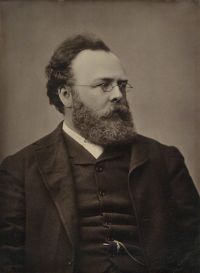 Robert Williams Buchanan,
Foxglove Manor: A Novel, Volume 1…
Robert Williams Buchanan,
Foxglove Manor: A Novel, Volume 1…
“ The vicar turned back into the churchyard, and following a narrow path that led across the sward through a wicket and a small beech plantation, entered the Vicarage with a pale, troubled face. CHAPTER II. AT THE VICARAGE. When he reached the house he found that his presence was needed at the bedside of a labourer, who had met with a serious accident a day or two before, and who was now sinking rapidly. Mr. Santley was a man who never begrudged time or trouble in the interests of his parishioners ”
Anthony Trollope,
The Vicar of Bullhampton
“ All this was of course told in detail to the Vicar; but the Vicar refused even to be interested by it. "Of course he did," said the Vicar. "If a man is to preach, what can he preach but his own views?"The tidings to be made in a pleasant spirit were not long waited for,—or, at any rate, the first instalment of them. On the 2nd of September there arrived a large hamper full of partridges, addressed to Mrs. Fenwick in the Earl's own handwriting. "The very first fruits," said the Vicar, as he went down to inspect the plentiful provision thus made for the vicarage larder. ”
Mrs. Hubback, The old vicarage (1856)
“ He never gave parties of any kind, not even to gentlemen; did not preserve his game, and did not either hunt or shoot; men were as much puzzled to account for his oddities as women. The neighborhood—that is, the part of the country inhabited by gentlemen’s families—lay almost entirely in the opposite direction to Hurstdene, and so far removed from the vicinity of the Vicarage, that the length and frequency of his visits to the Duncans passed unheeded and unheard of. ”
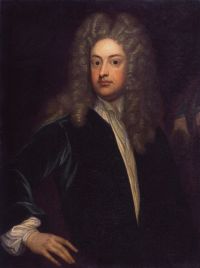 Joseph Addison,
The Tatler, Volume 4
Joseph Addison,
The Tatler, Volume 4
“ I do [Pg 129] not find, however, any great use made of this instrument till it fell into the hands of a learned and vigilant priest or minister (for he frequently wrote himself both one and the other) , who was some time Vicar of Bray. This gentleman lived in his vicarage to a good old age; and after having seen several successions of his neighbouring clergy either burnt or banished, departed this life with the satisfaction of having never deserted his flock, and died Vicar of Bray. ”
H. G. Wells,
The Works of H. G. Wells
(1924)
“ The Vicar stood aghast, with his smoking gun in his hand. It was no bird at all, but a youth with an extremely beautiful face, clad in a robe of saffron and with iridescent wings, across whose pinions great waves of colour, flushes of purple and crimson, golden green and intense blue, pursued one another as he writhed in his agony. Never had the Vicar seen such gorgeous floods of colour, not stained-glass windows, not the wings of butterflies, not even the glories of crystals seen between prisms, no colours on earth could compare with them. ”
H. G. Wells,
The Food of the Gods and How It Came to Earth
(1906)
“ There are vicars and vicars, and of all sorts I love an innovating vicar--a piebald progressive professional reactionary--the least. But the Vicar of Cheasing Eyebright was one of the least innovating of vicars, a most worthy, plump, ripe, and conservative-minded little man. It is becoming to go back a little in our story to tell of him. He matched his village, and one may figure them best together as they used to be, on the sunset evening when Mrs. Skinner--you will remember her flight!--brought the Food with her all unsuspected into these rustic serenities. ”
 Walter Scott,
The Lady of the Lake — Canto Sixth
(1810)
Walter Scott,
The Lady of the Lake — Canto Sixth
(1810)
“ Our vicar still preaches that Peter and Poule Laid a swinging long curse on the bonny brown bowl,That there's wrath and despair in the jolly black jack, And the seven deadly sins in a flaggon of sack;Yet whoop, Barnaby! off with thy liquor,Drink upsees [1] out, and a fig for the vicar!Our vicar he calls it damnation to sip The ripe ruddy dew of a woman's dear lip, Says, that Belzebub lurks in her kerchief so sly,And Apollyon shoots darts from her merry black eye; Yet whoop, Jack! kiss Gillian the quicker,Till she bloom like a rose, and a fig for the vicar! ”
H. G. Wells,
The Works of H. G. Wells
(1924)
“ The Vicar, going to call the Angel, found him dressed and leaning out of his window. It was a glorious morning, still dewy; and the rising sunlight, slanting round the corner of the house, struck warm and yellow upon the hillside. The birds were astir in the hedges and shrubbery. Up the hillside—for it was late in August—a plough drove slowly. The Angel's chin rested upon his hands and he did not turn as the Vicar came up to him. "How's the wing?" said the Vicar. "I'd forgotten it," said the Angel. "Is that yonder a man?" ”
H. G. Wells,
The Works of H. G. Wells
(1924)
“ As the time for dinner crept on and no Angel appeared the Vicar's imagination began to trouble him. "He will come in to dinner, surely," said the Vicar, caressing his chin, and beginning to fret about the house upon inconsiderable errands, as his habit was when anything occurred to break his routine. The sun set, a gorgeous spectacle, amidst tumbled masses of purple cloud. The gold and red faded into twilight; the evening star gathered her robe of light together from out the brightness of the sky in the West. ”
H. G. Wells,
The Wonderful Visit
(1895)
“ He detested people who laughed. "The things are curious," he said, turning to the Vicar. "If inconvenient"—to the Angel. "I never heard of such complete reduplication before—at least among animals. In plants it's common enough. Were you the only one in your family?" He did not wait for a reply. "Partial cases of the fission of limbs are not at all uncommon, of course, Vicar—six-fingered children, calves with six feet, and cats with double toes, you know. May I assist you?" he said, turning to the Angel who was struggling with the coat. "But such a complete reduplication, and so avian, too! ”
H. G. Wells,
The Food of the Gods and How It Came to Earth
(1906)
“ What difference has it made? "We are out of it all," said the Vicar. "We live in an atmosphere of simple and permanent things, Birth and Toil, simple seed-time and simple harvest. The Uproar passes us by." He was always very great upon what he called the permanent things. "Things change," he would say, "but Humanity--_aere perennius_." Thus the Vicar. He loved a classical quotation subtly misapplied. Below, Mrs. Skinner, inelegant but resolute, had involved herself curiously with Wilmerding's stile. III. No one knows what the Vicar made of the Giant Puff-Balls. ”
Roland Pertwee, The Old Card (1919)
“ The worthy Vicar, deserted by wife and child—beset by an intriguing woman—sinks down before his writing-desk and buries his face in his hands. After a few seconds of silent agony he rises, straightens himself—like a man determined to bear his burden with unbent back—and strides from the room. ”
H. G. Wells,
The Wonderful Visit
(1895)
“ The garments, indeed, made quite a terrestrial thing of him; the trousers were puckered transversely, and the shoes a size or so too large. He was charmingly affable and quite ignorant of the most elementary facts of civilisation. Eating came without much difficulty, and the Vicar had an entertaining time teaching him how to take tea. "What a mess it is! What a dear grotesque ugly world you live in!" said the Angel. "Fancy stuffing things into your mouth! We use our mouths just to talk and sing with. Our world, you know, is almost incurably beautiful. ”
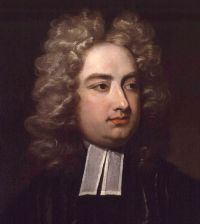 Jonathan Swift,
The Prose Works of Jonathan Swift…
Jonathan Swift,
The Prose Works of Jonathan Swift…
“ The vicar is likewise generally sure to find upon his admittance to his living, a convenient house and barn in repair, with a garden, and a field or two to graze a few cows, and one horse for himself and his wife. He hath probably a market very near him, perhaps in his own village. No entertainment is expected from his visitor beyond a pot of ale, and a piece of cheese. He hath every Sunday the comfort of a full congregation, of plain, cleanly people of both sexes, well to pass, and who speak his own language. ”
H. G. Wells,
The Food of the Gods and How It Came to Earth
(1906)
“ IV. But soon the Food was to enter upon a new phase of its work in him. In spite of the simple instructions of the Vicar--instructions intended to round off the modest natural life befitting a giant peasant, in the most complete and final manner--he began to ask questions, to inquire into things, to _think_. As he grew from boyhood to adolescence it became increasingly evident that his mind had processes of its own--out of the Vicar's control. The Vicar did his best to ignore this distressing phenomenon, but still--he could feel it there. The young giant's material for thought lay about him. ”
“ Shall be yours, and eke the glory; I am your servant, and your thrall.LET THE BELLS RING, AND LET THE BOYS SING LET the bells ring, and let the boys sing, The young lasses skip and play; Let the cups go round, till round goes the ground, Our learned old vicar will stay.Let the pig turn merrily, merrily, ah And let the fat goose swim; For verily, verily, verily, oh! Our vicar this day shall be trim.The stewed cock shall crow, cock-a-loodle-loo, A loud cock-a-loodle shall he crow ”
H. G. Wells,
Certain Personal Matters
“ To our vicar, a well-meaning, earnest, and extremely nervous man, he displays a methodical antagonism. Our vicar is the worst of all possible rural vicars—unripe, a glaring modern, no classical scholar, no lover of nature, offensively young and yet not youthful, an indecent politician. ”
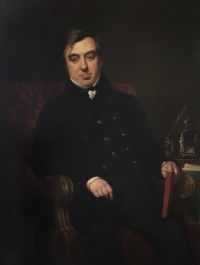 John Ayrton Paris,
Philosophy in Sport Made Science in Earnest
John Ayrton Paris,
Philosophy in Sport Made Science in Earnest
“ Annette, the vicar’s trusty servant, had watched the approach of the squire and his family, and, anticipating the honour of a passing visit, was busily engaged in removing the chequed covers from the cumbrous oaken chairs, and the various other bibs and tuckers with which his curiosities were invested, when the party entered the study. Lucky was it for the vicar’s repose, that the notice had been so short, or the tidy housewife would, without doubt, have scoured some of the antique commodities, and destroyed a crop of sacred verdure, which ages could not have replenished. ”
J. C. Snaith, The coming (1917)
“ But the outward aspect of John Smith had never had anything to say to the vicar, and this morning it had even less to say than usual.For the vicar’s attention had been caught by something else. Upon the young man’s finger was perched [Pg 23] a little, timid bird. He was cooing to it, in an odd, loving voice, and as the vicar came up he said: “Nay, nay, don’t go. This good man will do you no harm.” ”
The humour of Germany (1892)
“ The unfortunate dancing-master fell in a most unmasterly manner upon the floor, and as a falling pine uproots all blooming bushes that surround it, so he pulled down the little sylph that was frolicking about him.The Vicar, just about to open the door from without, heard the fall which shook the very foundations of the house, and entered hastily. It was partly this haste and partly the Vicar’s near-sightedness, which he was wont to forget in his absent-mindedness, which became the cause of a second accident. ”
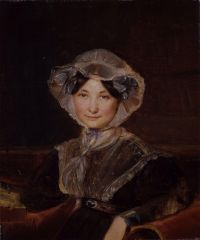 Frances Milton Trollope,
The Vicar of Wrexhill
Frances Milton Trollope,
The Vicar of Wrexhill
“ The vicar smiled again, and rising from his chair, put his head and shoulders out of the open window, looking carefully, as it seemed, in all directions; then, drawing them in again, he proceeded to open the door of the room, and examined the passage leading to it in the same cautious manner."My son Jacob is one of the finest young men in Europe, cousin Stephen," said the vicar, reseating himself; "but he is young, and as full of little childish innocent fooleries as any baby: so it is as well not to speak all we may have to say, without knowing that we are alone ”
