Wage slavery

Definition and stakes

Hubert H. Harrison,  The Negro and the nation (1917)

“ In the good old days the master took away the wealth produced by the slave in the simplest form; today he takes it away in the form of profits. But in one respect the wage-slave is worse off than the chattel slave. Under chattel slavery the master owned the man and the land; he had to feed and clothe the man. Under wage-slavery the man feeds and clothes himself. Under chattel slavery it was to the interest of the owner to give the slave work and to keep him from starving to death. Under wage-slavery, if the man goes out of work the employer doesn’t care ”
Source: Gutenberg

Hubert H. Harrison,  The Negro and the nation (1917)

“ To-day, fellow-sufferers, they tell us that we are free. But are we? If you will think for a moment you will see that we are not free at all. We have simply changed one form of slavery for another. Then it was chattel-slavery, now it is wage-slavery. For that which was the essence of chattel-slavery is the essence of wage slavery. It is only a difference in form. ”
Source: Gutenberg

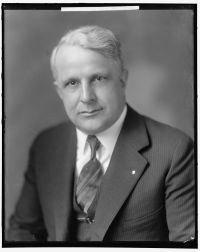
Portrait of James J. Davis James J. Davis,  The Iron Puddler: My Life in the Rolling Mills and What Came of It

“ To-day when I hear orators rolling out the word “slavery” in connection with American wages and working conditions, I have to laugh. For any man who has ever had a taste of peonage, to say nothing of slavery, knows that the wage system is not real slavery; it's not the genuine, lash-driven, bloodhound-hunted, swamp-sick African slavery. None is genuine without Simon Legree and the Louisiana bloodhounds. The silk-socked wage slave, toiling eight hours for six dollars, is not the genuine old New Orleans molasses slave. ”
Source: Gutenberg

Get perspective with Kwize: daily news enlightened by great literature